
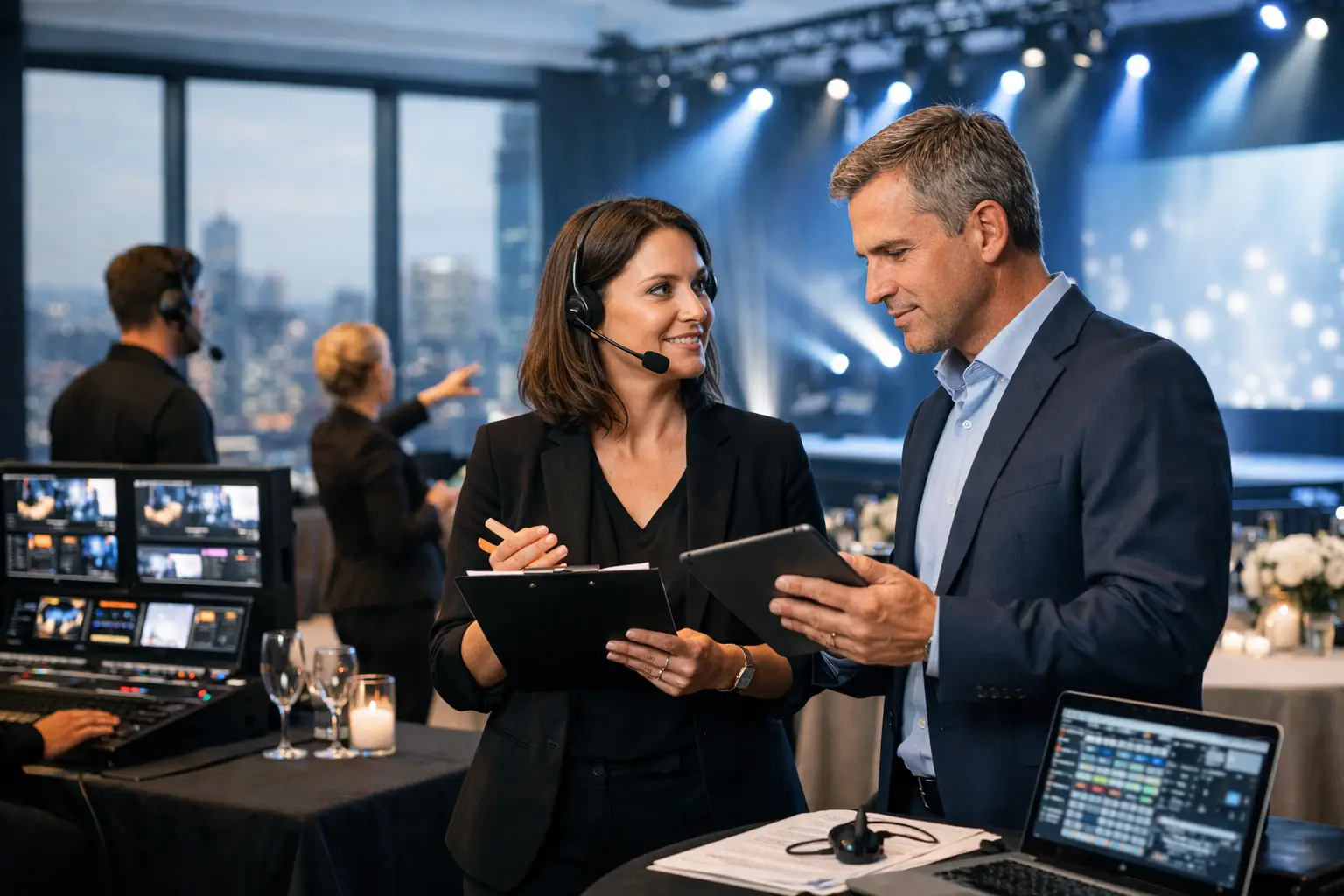
A full ballroom, a senior leadership team waiting backstage, a product reveal timed to the second – this is when the question of why hire event producers becomes very practical. A corporate event can look simple to guests while requiring hundreds of decisions behind the scenes. When those decisions sit with an experienced production team, your internal stakeholders can focus on their people, message, and business goals instead of chasing vendors or solving last-minute problems.
For conferences, annual dinners, launches, roadshows, retreats, and public-facing brand experiences, an event producer brings creative direction and operational control into one accountable plan. The result is not just a more polished event. It is a guest experience that feels effortless because the hard work has been planned, tested, and managed before anyone walks through the door.
Why hire event producers instead of managing it internally?
Internal teams often know the audience, company culture, and strategic message better than anyone else. That knowledge is essential. But event production is a specialist discipline with its own moving parts: venue limitations, permits, technical rehearsals, stage sightlines, crew call times, run sheets, contingency planning, guest flow, and vendor dependencies.
Asking a marketing manager, HR lead, executive assistant, or communications team to own all of this on top of their day job can create unnecessary pressure. They may be perfectly capable, but capability is not the same as having the time, production network, and show-day experience to manage every detail at speed.
An event producer becomes the central point of coordination. Rather than receiving separate updates from the venue, AV partner, caterer, emcee, performers, registration team, fabricator, and transport provider, your team works through one organized production lead. That clear ownership reduces crossed wires, duplicated work, and the familiar scramble of discovering a gap too late.
This does not mean handing over control. A good producer builds a collaborative process around your objectives, approvals, budget, and brand standards. Your organization sets the purpose. The production team translates that purpose into an experience that can actually be delivered on site.
Creative ideas need production discipline
A strong event concept can set the tone long before the program begins. It may turn an annual dinner into a celebration of shared progress, make a conference theme visible throughout the guest journey, or give a product launch a reveal moment that people remember and share.
However, the most ambitious ideas are only valuable when they work in the real world. Can the scenic build fit through the venue loading bay? Is the lighting design effective for both a live audience and event photography? Will a drone light show have the necessary operating conditions and approvals? Can the opening video, music, presenter entrance, and stage lighting all hit their cues without delay?
Event producers assess these questions early. They know where to push creative ambition and where to simplify for reliability, budget, or safety. This is one of the most valuable trade-offs in live events: choosing impact that is achievable over an idea that looks impressive in a presentation but is difficult to execute under show conditions.
A story guests can feel
Production is not only about equipment and schedules. It is also about pacing. From registration through the final send-off, guests notice whether an event has momentum. They feel it when arrivals are confusing, transitions drag, speakers overrun, or a room loses energy between program segments.
A producer maps the experience as a whole. That includes the welcome moment, signage, seating plan, stage content, walk-on music, award presentations, meal service, entertainment, and departure flow. Each element has a function, but together they should support one clear story.
For a leadership conference, that may mean creating a focused, confident environment that keeps delegates engaged through a full-day agenda. For a dinner and dance, it may mean balancing formal recognition with genuine celebration. For a launch, it may mean building anticipation without making guests wait too long for the main announcement.
The value is most visible before show day
Many event problems begin quietly during pre-production. A venue may have restricted setup hours. A screen size may not suit the room layout. A keynote presentation may use a format that does not play correctly. A supplier may assume another vendor is covering power, rigging, or internet access.
An experienced producer surfaces these dependencies early and assigns clear responsibilities. Detailed event plans typically cover venue access, floor plans, technical specifications, production schedules, showflow, staffing, equipment, safety requirements, and contingency procedures. This level of planning gives clients visibility without forcing them to manage every operational conversation.
Venue sourcing is a good example. The right venue is not simply one that looks attractive or fits a headcount. It needs to match the event format, budget, guest profile, accessibility needs, production requirements, and desired atmosphere. A theater-style conference, a gala dinner, and a hands-on team-building program may all need very different spaces, even with the same number of attendees.
Producers also help protect the event budget by defining scope clearly. They can distinguish between essential production items and optional enhancements, then advise where investment will be most noticeable to guests. Spending more on an elaborate centerpiece may not be as effective as investing in clean audio, confident stage lighting, smoother registration, or a better program flow.
Show-day control protects the guest experience
No matter how complete the pre-event plan is, live events require calm decision-making on the ground. Speakers arrive late. Weather shifts. A guest needs accessibility support. A flight is delayed. A video cue changes minutes before doors open. These situations are normal, not signs that planning has failed.
The difference lies in how they are handled. An event producer runs the command center behind the experience, coordinating crew, technical teams, venue operations, artists, and front-of-house staff against the showflow. While guests see a polished program, the production team is monitoring timing, resolving issues, and adjusting without unnecessary disruption.
This on-ground coordination is especially valuable for high-visibility events. When executives, clients, media, partners, or large employee groups are present, small delays can affect confidence in the entire experience. A producer anticipates pressure points such as registration peaks, room resets, speaker changes, meal transitions, and crowd movement around interactive zones.
The aim is not to make an event feel overly controlled. It is to make it feel natural. Guests should know where to go, hear what they need to hear, and stay engaged without ever seeing the operational work happening around them.
When hiring a producer makes the most sense
Not every gathering needs a full production team. A small internal meeting in a familiar office may be handled effectively by an internal coordinator, especially if the format is simple and the stakes are low. Hiring a producer is most valuable when complexity, visibility, or risk increases.
That includes events with multiple vendors, custom staging or AV production, external speakers or entertainers, large guest counts, executive attendance, brand launches, hybrid elements, tight turnaround times, or unfamiliar venues. It is also a smart choice when your internal team needs to stay present with guests rather than spend the day on radios, schedules, and troubleshooting.
For first-time event planners, the value is strategic guidance as much as execution. For experienced teams, it is often the confidence of having a reliable partner who can take an approved concept and drive it through to completion without constant client intervention.
What to expect from a capable event producer
The right production partner should ask thoughtful questions before proposing solutions. What must guests think, feel, or do after the event? Who is attending? What is non-negotiable? What does success look like for leadership, employees, customers, or partners? These answers shape the concept, format, and production priorities.
From there, expect a clear proposal that connects creative ideas to practical delivery. It should explain the event scope, milestones, estimated budget, roles, production requirements, and areas where decisions are needed from your team. As plans develop, communication should remain structured and direct, with visibility into progress and no surprises hidden in the final weeks.
Teamup Event approaches this work as both storytellers and production partners, bringing creative concepts, technical production, vendor management, and on-site coordination into one carefully managed process. The goal is to give clients control where it matters while removing the coordination burden that drains internal teams.
The best reason to bring in an event producer is simple: your people should experience the event, not spend it trying to hold it together. With the right expertise behind the scenes, ambitious ideas can arrive as memorable, beautifully run moments that reflect well on everyone in the room.