
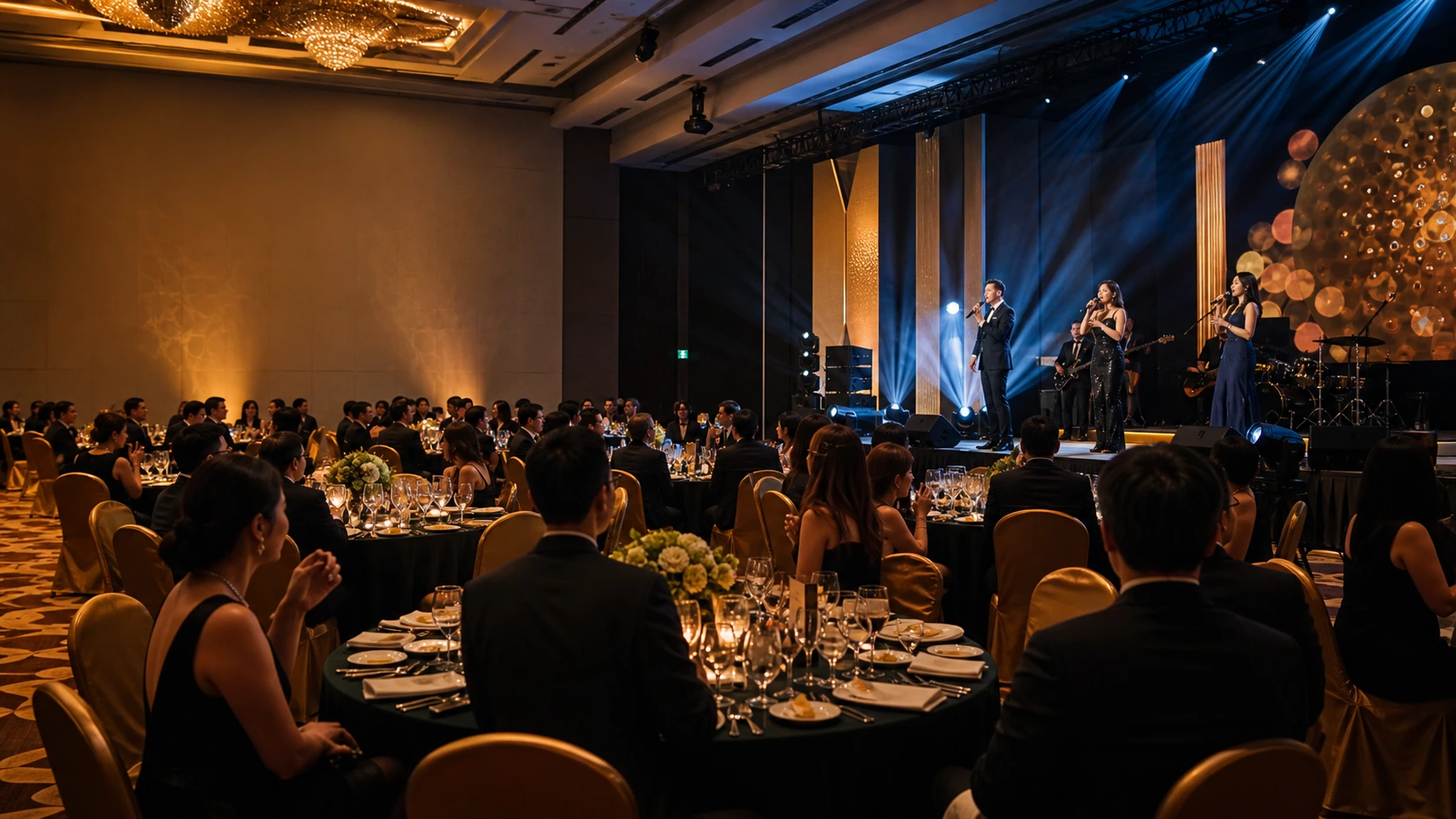
A strong corporate event does not begin with a theme or a venue. It begins with a clear budget that connects every spend decision to a business outcome. Whether your company is working with an event management company in Singapore or coordinating internally, a useful budget gives decision-makers a better view of priorities, trade-offs and approvals before suppliers are confirmed.
This guide looks at corporate event budgeting from a different angle: how to allocate resources, protect the guest experience and avoid the last-minute costs that make an event feel harder to control. It applies to corporate event management for an annual dinner and dance, corporate team building, corporate retreat events, a product launch event, a roadshow event or a live concert event.
Start With the Reason for Spending
Before setting a number, define what the event needs to achieve. A staff appreciation night may prioritise food, entertainment and recognition. A product launch event may need greater investment in staging, screens, content and guest flow. A roadshow event may require multiple modular setups, staffing and transport rather than a large venue budget.
This step prevents a common issue: spending heavily on the most visible part of an event while underfunding the moments that help it achieve its purpose. Ask three questions at the start: Who is the audience? What should they do, understand or feel? Which event elements make that outcome possible?
When the answer is clear, the budget becomes a decision tool rather than a long list of quotations.
Build the Budget in Workstreams
A practical corporate event budget is easier to manage when it is organised by workstream. Each workstream should have an owner, an allowance and a clear note on what is included. This makes changes easier to track when the guest count, venue or programme develops.
Most corporate events have the following budget areas:
– Venue and food and beverage
– Production, including stage, audio, lighting and screens
– Creative direction, event design and printed or digital materials
– Programme, emcee, entertainment and guest activities
– Event operations, registration, transport and staffing
– Photography, videography and post-event assets
– Contingency for changes, weather, timing or supplier needs
An experienced event organiser Singapore businesses appoint should be able to explain how these areas affect each other. For example, choosing a venue with built-in equipment may reduce external production costs. A shorter programme may reduce crew hours. A later guest confirmation date can create pressure on catering and seating decisions.
Set a Guest-Experience Priority List
Not every item has the same impact on guests. When there is a limited budget, list the moments that matter most and protect them first. These may include a smooth arrival, comfortable seating, clear sound, quality food service, a meaningful awards segment or a confident product reveal.
For an annual dinner and dance, guests often remember the pace of the night more than the cost of individual decorative pieces. It can be more valuable to invest in an effective show flow, a capable emcee and smooth technical cues than in a long list of small add-ons. For corporate team building, participants may value well-designed activities, clear facilitation and comfortable logistics more than elaborate props.
A priority list also helps the team say no to spending that does not support the event purpose. This is not about making an event feel minimal. It is about making every part of the experience intentional.
Plan Production Costs Early
Production is one of the most flexible, and sometimes most misunderstood, parts of a corporate event budget. Stage size, lighting, sound, LED screens, microphones and content playback should be considered together. Adding these elements late can increase cost because the supplier has less time to plan crew, equipment and setup access.
For a live concert event, production planning may also include artist requirements, sound checks, backline, monitor systems, rehearsal time and crowd-management needs. For a product launch event, screen content, reveal timing, camera angles and presentation support can be essential to the audience experience.
Ask for a production proposal that separates essential technical needs from optional enhancements. This helps decision-makers see where additional spend improves clarity or atmosphere, and where it only adds complexity.
Use a Realistic Contingency Allowance
A contingency is not an unused budget line. It is a controlled allowance for changes that cannot always be predicted at the quotation stage. Guest numbers can shift, a venue may have a new access requirement, a programme may need extra time, or weather may affect an outdoor activity.
The right contingency amount depends on the event format, venue and delivery timeline. A simple indoor dinner with a familiar venue may need less flexibility than corporate retreat events involving travel, multiple suppliers and changing activity plans. The important point is to agree on the allowance early and define who can approve its use.
Keep the contingency visible in each budget review. If it is spent, record why. If it is not needed, the company can reallocate it to a stronger guest-facing element or retain the saving.
Compare Quotes Beyond the Bottom Line
The lowest quote is not always the lower cost. When comparing suppliers, check what each proposal includes, excludes and assumes. Two venue proposals may use different guest numbers, service periods or equipment allowances. Two production quotes may have different crew hours, rehearsals, delivery timings or technical support.
Use a simple comparison sheet with these questions:
– What exact deliverables are included?
– What is excluded or charged separately?
– What assumptions are based on the current guest count or venue?
– What happens if the programme timing changes?
– Who is responsible for permits, loading, setup and pack-down?
– What support is available on the event day?
This approach is especially helpful for d&d event planning, where food service, stage production, entertainment and guest engagement must work within one timed programme.
Budget for Operations, Not Only the Stage
Many event budgets give attention to what guests can see but not enough to what keeps the day moving. Registration staff, event runners, supplier coordination, transport, signage, crew meals, storage, loading access and rehearsals all affect the event experience.
A reliable corporate event management plan treats operations as part of the guest journey. If registration is slow, a beautiful ballroom does not solve the first impression. If suppliers do not have clear loading instructions, setup delays can affect the programme. If the emcee, venue team and technical crew are working from different timelines, even a well-funded event can feel uncoordinated.
An event management company in Singapore can help centralise these operational details, but the client team should still know which costs are covered and which decisions need approval.
Match the Format to the Available Budget
The event format should respond to the budget rather than fight it. A creative event does not need an unlimited production list. Sometimes a more focused venue, a clearer programme and a smaller number of well-executed moments create a better outcome than a large concept with too many moving parts.
For corporate retreat events, a realistic budget may lead to a shorter travel distance, fewer activity locations or a more concentrated schedule. For a roadshow event, it may mean standardising key assets so they can be reused across locations. For corporate team building, it may mean choosing activities that reward participation and collaboration instead of relying on expensive equipment.
Good budget planning creates room for creative solutions because the team understands the real limits before committing to a direction.
Review the Budget at Key Milestones
A budget should be reviewed more than once. Useful review points include after the event concept is approved, after the venue is secured, after the programme is confirmed and shortly before the final supplier lock-in. At each stage, compare committed costs, estimated costs and remaining contingency.
Keep one current version of the budget and record changes in a simple notes column. This is particularly helpful when several internal stakeholders are involved. It shows what changed, when it changed and why it was approved.
A post-event review is also valuable. Compare the original estimate with final costs, note any operational surprises and identify spending that created clear value for guests. These notes make the next event faster to plan and easier to approve.
Work With Teamup Event
Teamup Event supports businesses with corporate event management for annual dinner and dance celebrations, corporate team building, corporate retreat events, product launch event support, roadshow event activations and live concert event production. The team can help clients turn a budget into a practical event plan that balances experience, production and event-day operations.
For companies that also want to improve online visibility, AdCendes provides website design, SEO and digital marketing solutions for business growth.
A Better Budget Creates a Better Event
A corporate event budget should make choices clearer. When the purpose is defined, guest-facing priorities are protected and operational details are visible, the team can control costs without reducing the quality of the experience. Start early, compare proposals carefully and use each review point to keep the event aligned with what matters most.