
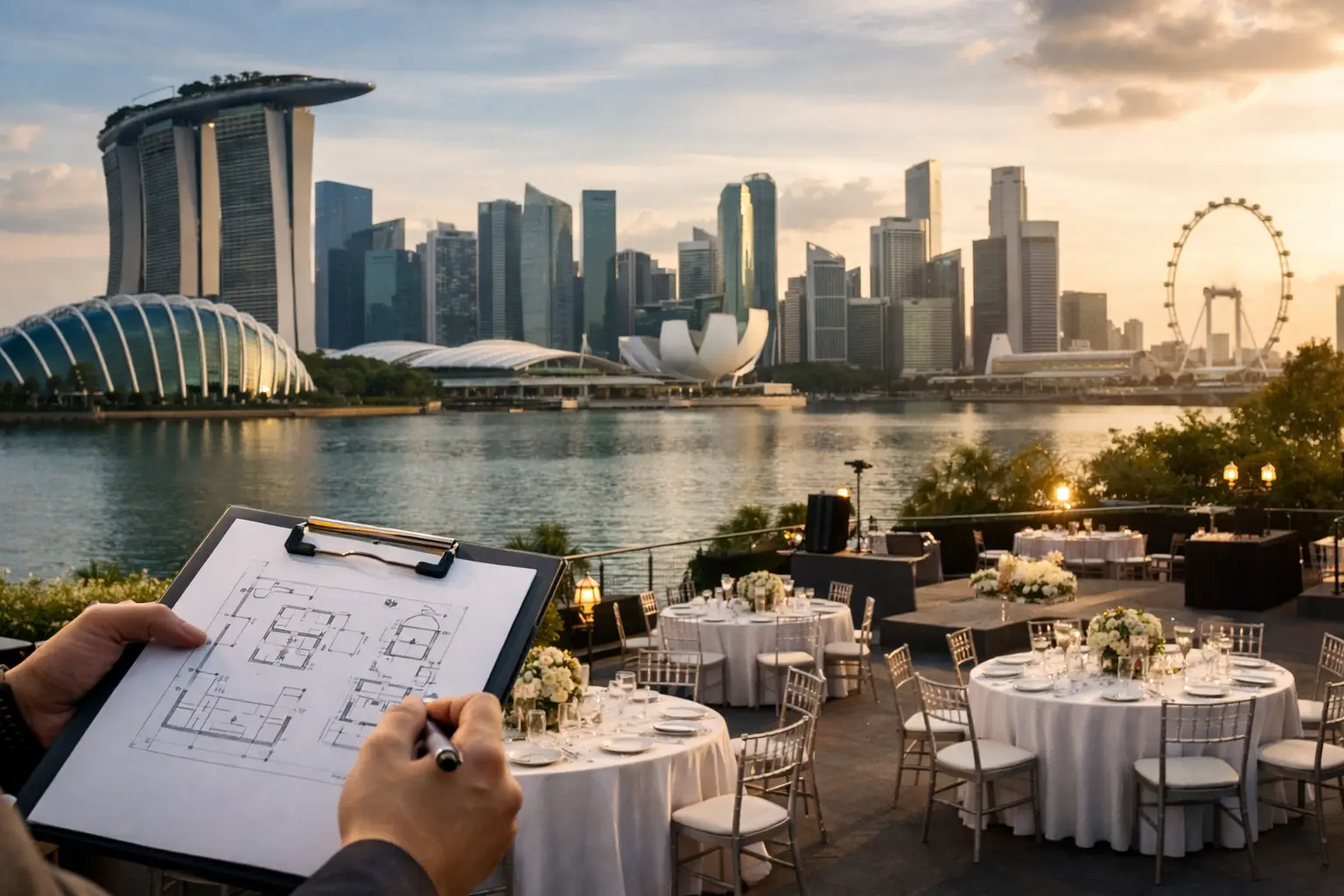
A ballroom can look perfect in photographs and still create a difficult show day. The stage may block key sightlines, the loading dock may have limited access, or the room may need a costly AV build before it can support your program. Effective event venue sourcing Singapore begins with the experience you need guests to have, then tests whether the venue can deliver it in practical terms.
For a corporate conference, Annual Dinner and Dance, product launch, or client gathering, the venue is not simply a backdrop. It shapes arrival, registration, networking, content delivery, food service, brand visibility, and the pace of the evening. Choosing well protects both the guest experience and the production budget.
Event Venue Sourcing Singapore Starts With Event Intent
The most useful venue brief is not a list of preferred hotels. It is a clear statement of what the event must achieve. A leadership town hall may require theater seating, crisp presentation support, camera positions, and quiet breakout areas. A D&D may need a large stage, a dance floor, strong lighting control, a pre-function space for cocktails, and efficient banquet service.
Start by defining the audience profile, guest count, event format, date flexibility, and budget range. Then clarify the moments that matter most. Is the priority a high-energy opening, private executive conversations, hands-on product demonstrations, or a social celebration that keeps people engaged through the final program item?
This distinction changes the shortlist. A venue that works beautifully for a 150-person networking reception may feel flat for a 150-person awards dinner. Likewise, an industrial space can bring character to a brand launch but may demand more investment in air-conditioning, power distribution, staging, and guest comfort than a hotel ballroom.
A capable sourcing process also separates non-negotiables from preferences. Waterfront views, a central location, or a distinctive interior may be valuable, but they should not override accessibility, technical feasibility, or a realistic production schedule.
Look Beyond Maximum Capacity
Published capacity is a starting point, not a planning answer. A room listed for 500 guests may only work at that number in a standing cocktail setup. Once you add a stage, screens, camera platforms, control positions, buffet lines, sponsor displays, or a dance floor, the usable floor area changes quickly.
For seated events, the question is not only whether every guest fits. It is whether they can see, hear, move, and participate comfortably. Consider the distance from the last table to the stage, the number of aisles, ceiling height, pillar placement, and the space required for service staff. For a conference, examine whether theater rows leave enough room for cameras and late arrivals without disrupting speakers.
Guest flow deserves the same attention. Registration should not spill into a narrow corridor. Guests should be able to reach restrooms, prayer rooms, dining areas, and breakout spaces without crossing backstage routes or technical cable runs. If VIPs, speakers, and performers need separate access, that should be planned from the first site review.
Assess AV and Production Conditions Early
A venue with in-house AV can be convenient, but it is not automatically the best production choice. Some packages cover basic microphones, screens, and lighting. Others can support a polished conference or gala with confidence. The difference lies in the actual equipment specification, labor rules, rigging options, power availability, and flexibility to integrate specialist production.
Ask for the venue’s technical details before committing. Ceiling height affects screen size, lighting angles, and scenic design. Rigging points determine whether an overhead lighting system, flown signage, or kinetic visual feature is possible. Available power affects everything from LED walls to catering equipment, while a restricted control position can make it harder to manage sound, lighting, video playback, and show cues.
Acoustics are equally important. A room with hard surfaces and low ceilings can make speeches difficult to understand without careful sound design. Outdoor venues introduce different variables: weather contingencies, ambient noise, curfews, backup power, and permissions for amplified music or drone operations.
The right answer depends on the format. A small leadership session may need discreet, reliable presentation support. A brand launch with live entertainment may require detailed technical planning, rehearsals, a full showflow, and dedicated crew positions. Matching the venue to that requirement avoids expensive compromises later.
Evaluate Location Through the Guest Journey
In Singapore, location affects more than travel time. It influences punctuality, parking, public transit access, ride-hailing pickup points, and the ease of moving equipment into the building. A convenient central venue can improve attendance for an after-work gathering, while a destination property may be better suited to a retreat or extended team-building program.
Walk the journey as a guest would. Where does the car stop? Is signage clear from the lobby? Can registration be seen immediately? How long does it take to reach the function room? These details are easy to overlook in a floor plan and immediately noticeable on event day.
Also consider the journey behind the scenes. Production teams need a clear load-in route, holding areas for equipment cases, freight elevator access, and sufficient setup time. Caterers, florists, performers, and brand activation vendors may all have separate delivery requirements. A venue can be guest-friendly yet operationally challenging, so both perspectives matter.
Compare Costs on a Like-for-Like Basis
The lowest venue rental is rarely the lowest total event cost. One space may include furniture, basic lighting, and a reliable in-house team, while another requires external rentals for nearly every production element. Food and beverage minimums, overtime charges, security, cleaning, corkage, internet, parking, and labor fees can substantially affect the final figure.
Before comparing proposals, build a common cost view. Include venue hire, catering, AV production, staging, furniture, décor, staffing, transport, permits, and contingency. This makes it easier to identify whether a premium venue is genuinely expensive or simply more inclusive.
Contract terms require the same discipline. Confirm cancellation conditions, payment milestones, access hours, overtime rates, exclusivity requirements, and responsibility for damages. If an event includes external vendors, determine whether the venue charges coordination or supervision fees, and whether suppliers must meet specific insurance or safety requirements.
Use Site Visits to Test the Real Experience
A site visit should answer questions that photographs and brochures cannot. Stand at the back of the room and check the stage view. Measure the registration area. Inspect the loading bay. Review the kitchen access and banquet routes. Ask where speakers wait, where performers change, and where guests can go during a program reset.
Bring the likely event layout to the visit. Even a preliminary floor plan helps reveal conflicts between seating, screens, buffet stations, photo walls, and emergency exits. If the event has a complex program, walk through the key transitions: guest arrival, opening sequence, meal service, awards presentation, entertainment, and departure.
This is also the right time to assess the venue team. Prompt, practical answers are a good sign. If basic questions about access, equipment, or restrictions are unclear, those gaps may become larger under show-day pressure.
Bring Venue, Creative, and Operations Together
Venue sourcing is strongest when it is connected to creative direction and production planning, rather than handled as an isolated booking task. The venue should support the story you want to tell, while giving the event team enough room to control timing, technical cues, guest flow, and vendor coordination.
At Teamup Event, we assess venues through both lenses: how the space can make an event feel distinctive and how it will perform when staging, sound, lighting, crew, and guests are all in place. That balance helps clients make decisions with confidence, from the first brief to the final send-off.
The best venue is not always the newest, largest, or most recognizable option. It is the one that makes your event easier to run and more meaningful to attend. Begin with a clear brief, insist on operational detail, and give your chosen space the planning attention it deserves before the first guest arrives.