
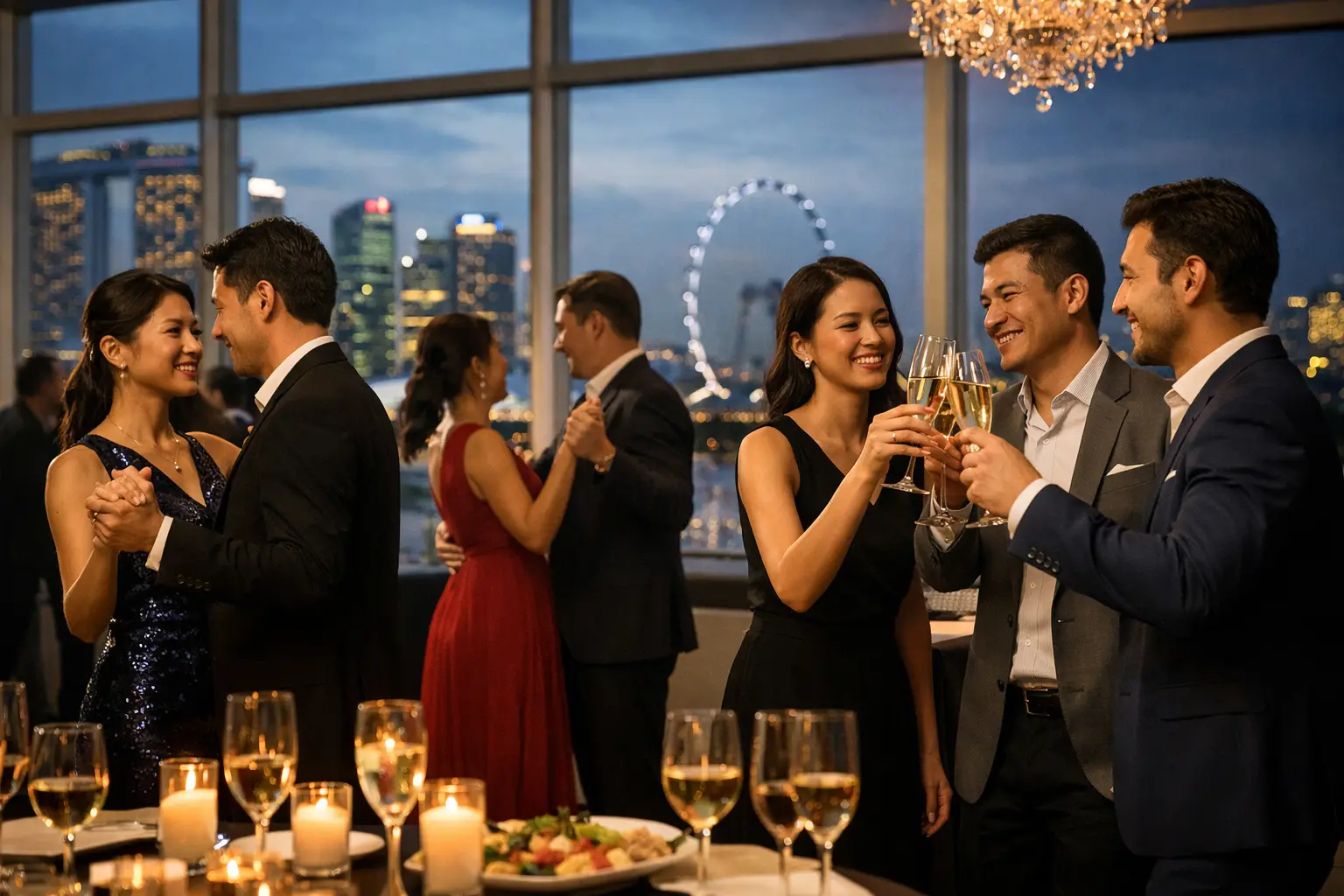
A ballroom can look impressive and still feel flat by 8:30 p.m. The difference is rarely the size of the room or the cost of the centerpiece. A successful annual dinner and dance Singapore celebration gives people a reason to participate, a clear rhythm from arrival to finale, and the confidence that every detail has been considered.
For HR leaders, internal communications teams, executive assistants, and business owners, the event carries more weight than one evening of entertainment. It is a visible thank-you to employees, a moment for leadership to recognize progress, and often one of the few occasions when teams across departments can celebrate together. That makes creative direction and production control equally important.
Start With the Feeling You Want Guests to Take Home
Before choosing a theme, clarify the purpose. Is the dinner and dance intended to reward a demanding year, reinforce a new company direction, celebrate a milestone, or bring together teams after a period of change? The answer shapes every decision that follows, from the venue and entertainment to the tone of the CEO’s speech.
A theme works best when it is more than a dress code. “A Night at the Awards” may suit an organization that wants employee recognition at the center of the program. A futuristic city concept can support a technology brand’s growth story. A refined garden soirée may be a better fit for a company that values intimate, relationship-led hospitality. The creative concept should appear in the arrival experience, stage visuals, music cues, host script, table styling, and photo moments, not only on the invitation.
There is a practical trade-off. Highly theatrical concepts create excitement, but they can add requirements for costumes, scenic builds, rehearsals, specialist performers, and technical cues. A strong event plan protects the idea while focusing investment on the moments guests will genuinely notice.
Planning an Annual Dinner and Dance Singapore Teams Will Enjoy
Singapore offers an exceptional range of hotels, ballrooms, event halls, restaurants, waterfront spaces, and unconventional venues. But venue selection is not simply a question of capacity and package price. It determines the guest flow, production possibilities, travel experience, and atmosphere of the entire evening.
A venue that comfortably seats 500 may not have sufficient stage depth for a live band, awards presentation, dance floor, and LED backdrop. Another may have an attractive room but restrictive loading access, limited rigging points, or a fixed AV provider. For a program with several performance changes, those production details affect how smoothly the night moves.
When assessing venue options, consider the guest journey from the moment they arrive. Is there enough space for registration, a photo wall, pre-dinner cocktails, and sponsor or brand displays without creating congestion? Can guests move naturally from reception to ballroom? Are parking, public transit, and coach drop-off arrangements realistic for your audience? For companies with regional guests, hotel access and room blocks may also matter.
The ideal venue depends on the event’s priorities. A large ballroom supports scale, formal awards, and higher-impact staging. A more distinctive space can create a stronger sense of occasion for a smaller guest list, though it may require more production infrastructure. The best choice is the one that supports both the creative ambition and the show-day realities.
Build a Showflow, Not Just a Running Order
A dinner and dance can lose energy quickly when the program becomes a series of disconnected speeches, meal courses, and prize draws. A detailed showflow turns those separate elements into a guest experience with pace.
The opening needs to establish the mood immediately. That could be a high-energy percussion welcome, a branded motion graphic with a dramatic lighting reveal, or a host-led entrance that gets the room involved before guests sit down. The first 15 minutes tell attendees whether they are at another company function or a celebration worth leaning into.
From there, the program should respect attention spans and service timing. Awards and leadership messages are most effective when they are concise, well-rehearsed, and framed with visual support. Entertainment should be placed where it lifts the room rather than interrupting a key moment. Lucky draws need clear mechanics, accurate prize tracking, and a pace that maintains anticipation without overtaking the evening.
A polished showflow also allows room for the unexpected. Senior leaders may arrive late from another commitment. A winning team may need extra time on stage. Dinner service can run behind schedule. The production team should know which cues can be shortened, moved, or extended without making the audience feel the adjustment.
Production Details Guests Feel, Even When They Do Not See Them
Good AV production is not about putting the largest screen behind the stage. It is about ensuring every guest can hear, see, and follow the program. That means appropriate screen positioning, clear camera coverage for larger rooms, well-balanced sound, readable presentation templates, and lighting that makes speakers and award recipients look their best.
Audio deserves special attention. A poorly positioned microphone, untested walk-on music, or feedback during a leadership address can undercut an otherwise well-planned event. The same applies to lighting. Functional room lighting may be sufficient for dinner, but deliberate stage, ambient, and dance-floor lighting changes the emotional energy of the evening.
Backstage discipline matters just as much. Artist call times, performer holding areas, prize handling, cue sheets, stage access, crew communications, and contingency equipment should all be settled before doors open. Guests should experience an evening that feels effortless. Achieving that feeling requires detailed preparation behind the scenes.
Make Recognition and Participation Feel Genuine
The strongest annual dinners and dances do not treat employees as spectators for the entire night. They create purposeful participation without forcing anyone into awkward activities.
Recognition is a natural starting point. Rather than reading long citations, use short video profiles, carefully selected walk-on music, or presenter pairings that give awards more personality. When leadership recognition is specific and sincere, it becomes one of the most meaningful parts of the program.
Participation can also happen through live polling, team-based table challenges, roving photo experiences, interactive screens, or a theme-related best-dressed format. These elements work when they are easy to understand and optional enough for different personalities. A room full of engineers, for example, may respond differently to a game format than a sales-led organization. The right activity reflects the culture rather than copying a trend.
Entertainment should serve the audience too. A live band can create warmth and spontaneity. A DJ may be better for a younger crowd that expects a strong dance set. Celebrity talent or a specialty act can provide a headline moment, but it needs to fit the schedule, budget, and audience expectations. One excellent act placed at the right point in the night is often more memorable than several rushed performances.
Budget for Impact, Then Protect the Essentials
A clear budget does more than prevent overspending. It helps the planning team make confident choices when creative ideas compete for resources. The most visible costs may be food, venue, entertainment, and décor, but production, crew, transport, permits, insurance, rehearsals, and contingency allowances also need to be accounted for.
If the budget is under pressure, protect the elements that influence comfort and confidence: appropriate venue capacity, quality sound, clear visuals, competent crew, reliable registration, and sufficient time for setup and rehearsal. Guests may not remember whether every table had an elaborate floral arrangement. They will remember a program they could not hear, a long registration queue, or an awards segment that felt disorganized.
This is where an experienced production partner adds value. Teamup Event brings creative development, venue sourcing, artist and vendor coordination, staging, AV production, showflow planning, guest experience design, and on-ground coordination into one managed process. Instead of asking an internal team to chase multiple suppliers, the focus stays on decisions that improve the event.
The Weeks Before Show Day Matter Most
A successful event is usually won before the first guest arrives. Finalize the guest list early enough to plan seating and dietary requirements accurately. Confirm presentation decks, awardee names, scripts, music tracks, and video assets against a single approved version. Conduct a venue walkthrough with the people responsible for production, catering, registration, and program ownership.
A technical rehearsal is particularly valuable when the program includes multiple speakers, performers, videos, or awards. It gives presenters confidence, verifies timing, and exposes small issues while there is still time to solve them. For high-stakes corporate events, a minute-by-minute show calling document and clear decision-makers on-site are not excessive precautions. They are how the event stays composed when plans change.
The most effective dinner and dance is not necessarily the one with the most extravagant concept. It is the one where employees feel valued, leadership comes across clearly, and every guest leaves with a shared story worth talking about the next morning. Start with that story, then build the production around it.