
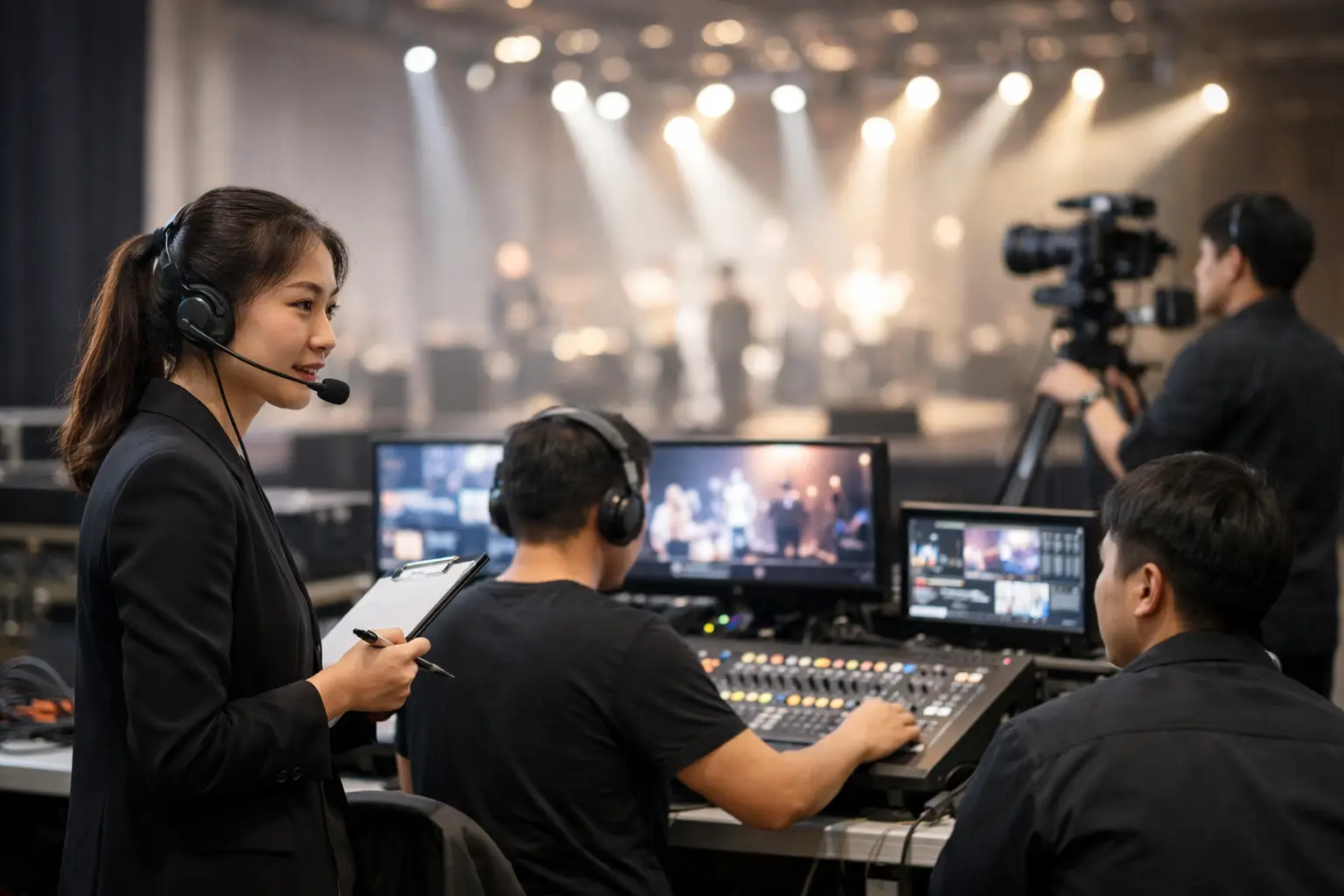
At 6:45 p.m., a ballroom can look completely ready while the most critical work is still happening out of sight. A producer is checking the CEO’s walk-on cue, the crew is testing microphones, registration staff are directing late arrivals, and the show caller is confirming that the opening video is loaded. When clients ask, what does event production include, the answer is far more than lights, sound, and a stage. It is the coordinated work that turns an event idea into an experience guests can trust, enjoy, and remember.
For a corporate conference, product launch, annual dinner, roadshow, or live entertainment event, production protects both the creative ambition and the practical details. It gives every supplier, speaker, performer, and crew member a shared plan – then keeps that plan moving when timing changes, equipment needs attention, or a guest-flow issue appears.
What Does Event Production Include From Start to Finish?
Event production covers the planning, technical setup, operational management, and on-site direction required to deliver a live event. It starts well before show day, often with a client brief that identifies the audience, business objective, budget range, venue requirements, and desired atmosphere.
A team may be asked to help employees feel recognized at an annual dinner, create credibility for a leadership conference, generate attention for a new product, or build stronger connections during a corporate retreat. Those goals shape every later decision. A gala built around recognition needs different pacing, entertainment, and staging from a product launch designed to give media, partners, and customers a strong first impression.
Production also provides a practical reality check. A bold creative concept is valuable only when it works within the venue, timeline, budget, safety requirements, and technical conditions. The right production partner does not reduce ambition. It finds the smartest way to deliver it with control.
Creative Direction and Event Planning
The first layer of production is usually concept development. This may include a central theme, visual direction, event narrative, stage design approach, content ideas, interactive moments, and recommendations for entertainment or talent. For brand-led experiences, creative choices should reflect the brand rather than simply follow a trend.
Planning then turns that direction into an executable program. The event schedule is mapped from load-in through guest arrival, presentations, meals, performances, and departure. A detailed showflow assigns timing, owners, cues, and transitions for each moment. This document matters because an event is not a collection of separate activities. It is a live sequence where one delayed speech or unprepared video can affect everything that follows.
Venue sourcing and site assessment are part of this work as well. The venue needs to support the expected headcount, room layout, ceiling height, loading access, power supply, internet needs, accessibility, and program format. A beautiful venue may be the wrong choice if it cannot accommodate the stage design, registration footprint, or backstage requirements.
Technical Production: Stage, AV, Lighting, and Sound
Technical production is often the most visible part of an event, but it is also where preparation has the greatest impact. It includes staging, audiovisual equipment, projection or LED displays, microphones, lighting, sound systems, playback, communications equipment, and technical crew.
The exact setup depends on the event. A board-level conference may require confidence monitors, presentation clickers, discreet lectern microphones, crisp projection, and dependable hybrid-event support. A dinner and dance may call for a larger stage, dynamic lighting, walk-in music, video content, live entertainment, and a high-energy finale. A product launch may need reveal mechanics, carefully controlled lighting, branded scenic elements, and camera-friendly angles.
Good AV production is not just about having more equipment. It is about matching technology to the room and the program. Oversized LED screens can overwhelm an intimate setting, while insufficient sound coverage can leave guests at the back disconnected from the event. Lighting must support both the live audience and any photography or video capture. Screen content needs to be tested in its final format, not assumed to work because it played correctly on a laptop.
Rehearsals and technical run-throughs are essential. Speakers learn where to stand, performers confirm entrances, and the production team checks presentation cues. This is also where timing gaps, unclear transitions, and potential equipment issues are found early, when they are still manageable.
Guest Experience and On-Ground Operations
Guests do not judge an event by the production schedule. They judge it by how it feels. Was it easy to arrive? Could they find registration? Did the program start with purpose? Could they hear the speakers, see the content, and move comfortably through the space?
That experience is shaped by guest-flow planning, signage, registration management, seating, ushering, transportation coordination, and food-and-beverage timing. At large conferences and roadshows, the production plan may account for check-in peaks, crowd movement between sessions, queue management, VIP arrival routes, and access control. At corporate celebrations, it may include table allocation, prize collection, photo opportunities, and the timing of entertainment around dining service.
Back-of-house logistics are equally important. Crew call times, loading schedules, storage areas, equipment movements, artist holding rooms, catering access, and security arrangements all need to work without interrupting guests. When these details are managed well, the event feels calm even when the operational activity is substantial.
Vendor, Artist, and Crew Coordination
A single event can involve a venue team, caterer, AV supplier, fabricator, florist, photographer, emcee, performers, transport provider, registration staff, security personnel, and client stakeholders. Without a clear production lead, the client can become the default point of contact for every question. That creates unnecessary pressure and slows decisions.
Event production coordinates these moving parts around one approved plan. It confirms deliverables, schedules, site rules, technical requirements, set-up windows, and points of contact. It also ensures that a performer’s technical rider, a venue’s load-in restrictions, and the program’s timing are considered together rather than in isolation.
On show day, the producer and show caller provide command and communication. They make cue decisions, coordinate backstage activity, monitor the running order, and respond to changes with the right people in the room. A speaker may arrive late, weather may affect an outdoor segment, or an award recipient may be unavailable when called. A prepared team has contingencies and the judgment to adjust without creating confusion for guests.
What Is Included Depends on the Event Scope
Not every event needs the same level of production. A small internal town hall may need venue support, presentation management, sound, and registration coordination. A regional conference with multiple breakouts requires a more detailed operational plan, stronger crew coverage, speaker management, and technical redundancy. A public launch, concert, or drone light show may also involve permits, safety planning, crowd control, rehearsals, and complex technical integration.
Budget affects scope, but it should not be treated as a simple choice between basic and elaborate. The more useful question is where production investment will have the greatest effect. For some events, that is a compelling stage and content package. For others, it is reliable audio, better guest flow, or a strong show caller who keeps a packed agenda on time.
Teamup Event approaches this through custom proposals that connect the brief to the required creative, technical, and operational resources. The goal is not to add production for its own sake. It is to give clients the right level of control for an event that carries real business and reputational stakes.
A Better Brief Creates a Better Production Plan
The strongest starting point is a clear conversation about what the event must achieve, who needs to be in the room, what guests should feel or do afterward, and which constraints are fixed. Share the target date, expected attendance, budget parameters, venue status, brand guidelines, stakeholder requirements, and any non-negotiable moments early.
From there, production becomes a disciplined process of shaping the experience and protecting its delivery. Bring the outcome you need, not just a list of items you think you need. The right event partner can turn that outcome into a well-run show where every cue, conversation, and guest touchpoint has a reason to be there.