
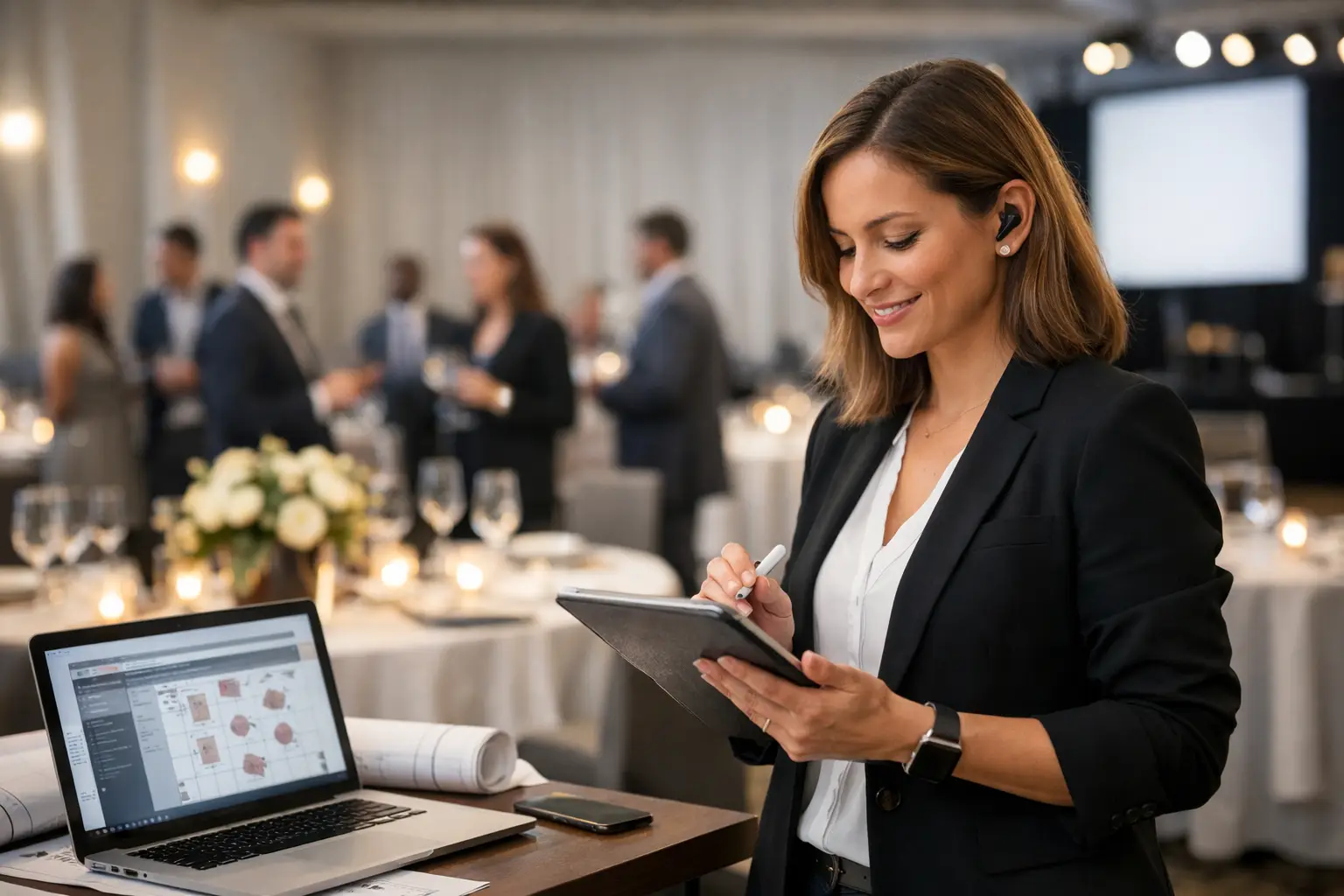
A packed ballroom, a senior leadership audience, a product reveal timed to the second, and a full schedule of speakers can look effortless from the guest’s seat. Behind that experience is a corporate event planner making hundreds of decisions that protect the message, the budget, the guest journey, and the company’s reputation.
For corporate teams, the value is not simply having someone book a venue or send invitations. It is having an experienced partner turn a business objective into a live experience that feels considered, on-brand, and beautifully run from the first brief to the final send-off.
A Corporate Event Planner Starts With the Business Goal
An event is rarely just an event. A conference may need to align regional teams around a new strategy. An annual dinner may be designed to recognize employees, strengthen culture, and give leadership a meaningful platform. A product launch may need to create market attention while giving sales teams the confidence to carry the story forward.
A strong planner begins by asking what success should look like after guests leave. Is the priority employee engagement, partner relationship-building, brand visibility, lead generation, or executive communication? The answer shapes every subsequent choice, from the venue and audience format to the stage design, content pacing, entertainment, and guest communications.
This early strategic work prevents a common problem: an event that looks impressive but does not clearly support the organization behind it. A dramatic entrance, for example, has little value if it distracts from the CEO’s message. Equally, a modest format can have significant impact when the storytelling, showflow, and environment are aligned.
Creative Direction That Gives the Event a Point of View
Corporate audiences have attended enough generic functions to recognize one immediately. A planner helps develop a creative concept that makes the occasion feel intentional rather than assembled from standard event components.
That does not always mean a large theatrical production. For some organizations, a refined leadership forum with sharp content design and confident staging is the right expression. For others, an annual dinner and dance may call for an immersive theme, live performers, interactive moments, or a synchronized drone light show that becomes the evening’s defining memory.
Creative direction should support the brand and audience, not compete with them. A financial services conference may require clarity, trust, and restraint. A consumer brand launch may benefit from color, movement, music, and a highly shareable reveal. The best concept is the one guests can feel throughout the event without needing it explained to them.
Planning the Production Behind the Experience
Once the direction is set, execution becomes the real test. A corporate event planner coordinates the working parts that guests may never notice but will certainly feel if they go wrong.
Venue sourcing involves more than capacity and location. The room must work for registration, networking, catering, stage sightlines, backstage access, loading schedules, and technical rigging. A venue that appears ideal in a brochure can create operational issues if its ceiling height limits lighting design, its loading bay cannot accommodate production equipment, or its foyer creates registration bottlenecks.
AV production is equally central. Clear sound, properly positioned screens, reliable presentation playback, appropriate lighting, and professional staging shape how audiences receive the content. A keynote can lose momentum when a microphone fails, slides are difficult to read, or a video cue starts late. These are not minor details at a high-stakes event. They affect confidence in the entire program.
The planner also manages vendors, artists, crew, caterers, decorators, transport providers, and other specialists. This coordination is particularly valuable when internal teams are already managing stakeholder approvals, guest lists, speaker content, and day-to-day responsibilities. Rather than asking the client to chase multiple suppliers, the event partner creates one coordinated production plan.
Showflow Is Where Good Ideas Become a Good Event
A run sheet tells people where to be and when. A showflow goes further. It maps the live experience moment by moment, including walk-in music, screen content, lighting states, speaker entrances, video playback, award presentations, meal service, entertainment transitions, and contingency cues.
This is where timing becomes a creative and operational discipline. If dinner service runs long, should the host shorten the next segment? If a VIP arrives late, can the program flex without leaving guests uncertain? If a panel discussion generates active questions, is there room to extend it without affecting the closing performance or transport schedule?
There is no single perfect showflow. A board-level event may need disciplined pacing and minimal movement. A company celebration may need more energy, surprise, and audience participation. What matters is that every transition is anticipated, rehearsed where necessary, and managed by an on-ground team that knows what comes next.
Guest Experience Needs More Than a Welcome Desk
Guest experience begins before the event date. Registration communications, directions, arrival instructions, dietary requirements, VIP protocols, and accessible entry points all influence how welcome and prepared attendees feel.
On site, guest flow requires close attention. Registration queues should move quickly. Wayfinding should be clear without overwhelming the venue. Seating needs to support both comfort and program visibility. For larger conferences, planners may also coordinate breakouts, crowd movement, exhibitor activity, and meal periods so that guests are not left searching for information or standing in unnecessary lines.
Small details carry weight. A well-briefed usher who can direct a senior guest with confidence, a holding room that is ready for speakers, and a properly timed coffee break can make the program feel calm and professional. The aim is not to make every interaction elaborate. It is to remove friction so guests can focus on the purpose of the event.
When to Bring in an Event Planner
Some internal teams can manage smaller functions independently, especially when the format is straightforward and the guest count is limited. But the case for professional support becomes stronger as the stakes, complexity, or visibility increase.
A corporate event planner is especially useful when an event involves multiple vendors, executive speakers, technical production, entertainment, public-facing audiences, tight turnaround times, or regional guests. The same applies when the event must reflect a major brand milestone or a message that leadership cannot afford to dilute.
Budget is often part of the decision. Hiring a planner is an additional investment, but it can prevent costly duplication, poor supplier coordination, last-minute technical changes, and avoidable schedule overruns. More importantly, it gives internal stakeholders time to focus on content, relationships, and decision-making rather than operational firefighting.
What to Look for in a Corporate Event Planning Partner
The right partner should be able to discuss creative ideas and practical delivery with equal confidence. Ask how they approach venue selection, production planning, risk management, vendor coordination, and show-day control. Look for a team that asks intelligent questions about the audience and business objective before recommending a format.
It also helps to understand who will manage the event on site. A polished proposal matters, but the event is ultimately delivered by people making real-time decisions under pressure. Experienced producers, technical teams, stage managers, and guest service crew create the calm control that clients and attendees remember.
For organizations planning events in Singapore or across Southeast Asia, local operating knowledge is another advantage. Familiarity with venues, suppliers, permits, travel patterns, and production realities can make planning more efficient and reduce unwelcome surprises closer to show day.
Teamup Event approaches corporate occasions as both a storytelling opportunity and a production responsibility. From conferences and retreats to launches, celebrations, and large-scale live experiences, the work is built around a clear brief, controlled logistics, and a guest experience that feels effortless.
The next time an important gathering is added to the calendar, start with the outcome you need people to remember. The right planning partner can build the experience around it, then manage every moving part with the care it deserves.