
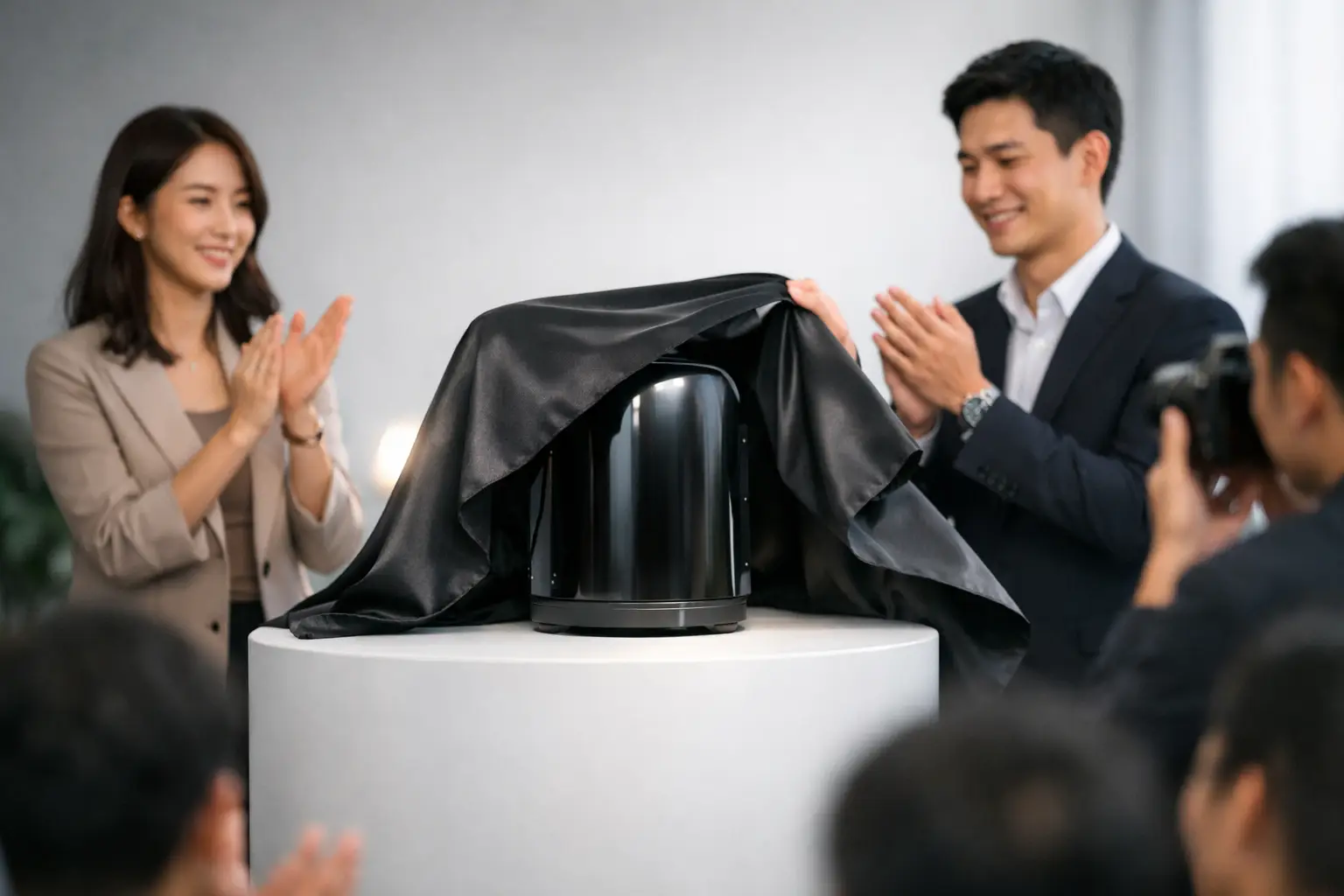
A product can be genuinely innovative and still receive a muted response if the reveal is rushed, poorly seen, or disconnected from the story that came before it. Knowing how to design product reveal moments is not simply about placing an item behind a curtain. It is about creating a controlled shift in attention, then giving the audience a clear reason to care.
For corporate brands, that moment carries real weight. It may shape media coverage, retailer confidence, internal pride, customer perception, or the momentum of a wider campaign. The strongest reveals feel exciting in the room because every creative choice and production cue has been planned well before show day.
Start With the Reaction You Want
A reveal should begin with an outcome, not an effect. Ask what guests should think, feel, or do in the seconds after the product appears. A premium automotive launch may need to communicate authority and engineering. A consumer technology launch may need to create curiosity, then quickly prove usefulness. An internal launch may be designed to give employees confidence in the company’s next direction.
That desired reaction informs the creative concept. It also determines practical decisions: whether the audience needs a close view of the product, whether executives should be on stage, whether guests need immediate hands-on access, and how much time the reveal can occupy within the wider showflow.
A useful creative brief should define the product’s single most important message. Trying to reveal every feature at once often weakens the moment. Let the reveal establish the headline, then use demonstrations, presenters, content, and product zones to deepen understanding afterward.
How to Design a Product Reveal Around a Story
The reveal is the payoff, not the entire presentation. Before the product appears, guests need enough context to understand why its arrival matters. This does not mean a long corporate video or a presenter listing every market challenge. It means building a clear narrative path from problem or possibility to product solution.
For example, an opening film may introduce a customer frustration, followed by a live presenter who explains the shift in consumer expectations. Lighting, sound, and screen content can then narrow the audience’s focus toward the stage. When the product is finally visible, it feels like the natural answer to the story rather than a disconnected visual trick.
Pacing matters. Build anticipation too slowly and the room loses energy. Move too quickly and the product has no emotional runway. For many launches, a focused sequence of three to seven minutes works well: establish the tension, introduce the promise, heighten expectation, and reveal. The right duration depends on the audience, product complexity, and event format.
The story should also be honest to the brand. A high-energy countdown, dramatic smoke, and loud music can work for a youth-focused consumer product or entertainment-led launch. The same treatment may feel out of place for a medical device, financial platform, or enterprise solution. Spectacle should amplify the product’s character, not distract from it.
Choose a Reveal Method That Works in the Venue
There is no single best reveal method. The right choice depends on sightlines, product size, venue ceiling height, stage depth, safety needs, brand tone, and budget. A creative idea that looks impressive in a pitch deck must still work from the last row of the room.
A physical curtain drop or scenic wall opening can give a large product a strong, tangible entrance. It is especially effective for vehicles, machinery, or hero installations, provided the mechanism is tested and the stage crew has clear access. LED screens or a moving LED wall can create visual scale and support a more precise sequence, though they require careful coordination with screen content and lighting.
For smaller products, the reveal may be better served by a raised plinth, a rotating platform, a transparent display case, or a presenter-led uncovering. These methods place emphasis on detail. Camera relay on side screens can help a large audience see the product clearly, but it should be rehearsed so camera angles do not accidentally expose the item too early.
Lighting is often the difference between a dramatic reveal and an underwhelming one. The product should be visible immediately, with its important finishes, colors, and contours accurately represented. A dark stage can create anticipation, but the reveal cue needs enough front and side light to make the product photograph well. Test this with the real product or a full-scale mock-up whenever possible.
Special effects deserve the same discipline. Haze can make beams of light more visible, but too much can obscure the product. Confetti may create celebration but can complicate photography and product handling. Pyrotechnics, CO2 effects, drones, and moving scenic pieces all involve venue approvals, safety procedures, and experienced operators. Use them because they serve the moment, not because they are available.
Design for Every Seat, Screen, and Camera
Guests should not have to stand, lean, or rely on someone else’s recording to understand what was revealed. Before finalizing staging, map the audience view from front, center, side, and rear seating positions. Consider whether tables, columns, ceiling fixtures, or scenic elements will block sightlines.
Screen content should support the physical product rather than compete with it. During the key reveal beat, a large animated graphic can pull attention away from the stage. Often, a clean background treatment, a simple brand visual, or content that frames the product is more effective. Once the product is visible, screens can shift to feature details, close-up camera angles, or supporting proof points.
Photography and video capture need to be built into the production plan. The first few seconds after a reveal are frequently the most valuable visual assets from the event. Brief photographers on the intended hero shot, confirm where camera operators can stand without obstructing guests, and make sure branding appears correctly in the frame.
If the launch will be livestreamed or shown to remote teams, create a separate viewing plan. What works for a live audience may not read well on a small screen. Remote viewers may need a tighter camera shot, clearer presenter audio, and graphics that explain the product without relying on the atmosphere in the room.
Build the Showflow Backward From the Cue
The product reveal itself may last seconds, but its success relies on detailed planning around it. Work backward from the exact reveal cue. Who gives the final go? What does the presenter say in the line before it? Which audio track starts first? When do lights move, screens change, cameras roll, and stagehands clear the area?
A clear showflow assigns responsibility to every cue. The show caller should be able to communicate with the AV team, lighting operator, audio engineer, screen operator, stage manager, and talent through a reliable communications system. Each person needs to know not only their action, but also the trigger that starts it.
Rehearsal is where creative ambition becomes dependable delivery. Run the sequence at full speed, then repeat it under realistic conditions with presenters, music, lighting, and the actual reveal mechanism. Check transitions carefully. A presenter who walks too slowly, a video with an unexpected pause, or a product wheeled into position too late can break the build-up.
Have a contingency plan for the parts most likely to fail. If a motorized scenic element stops, can the product still be revealed manually? If a screen signal drops, does the presenter have a line to continue? If weather affects an outdoor launch, what is the alternative staging approach? Good contingency planning is not pessimistic. It protects the guest experience when the unexpected happens.
Extend the Moment After the Applause
The reveal should lead somewhere. Once the first applause fades, give guests a reason to stay engaged. This could be a live demonstration, a product expert conversation, an executive Q&A, a guided walk-through, or a hands-on experience area. The format depends on the product and audience, but the transition must feel intentional.
Guest flow deserves close attention here. If everyone is invited to approach one product at the same time, congestion can quickly replace excitement. Use multiple stations, timed access, hosted groups, or clear directional signage where needed. For media and key stakeholders, plan dedicated interview, photography, or product demonstration windows so their needs do not disrupt the main guest experience.
A successful reveal is remembered not only for the instant the product appears, but for the confidence it creates afterward. When the brand story, staging, AV production, guest flow, and on-ground coordination are working together, the audience is free to focus on what matters: the product and what it makes possible.
For high-stakes launches, Teamup Event helps brands turn that pivotal cue into a polished live experience, from first concept and venue planning to show-day production control. The right reveal does not need to be louder than everything else. It needs to be clear, credible, and precisely timed.