
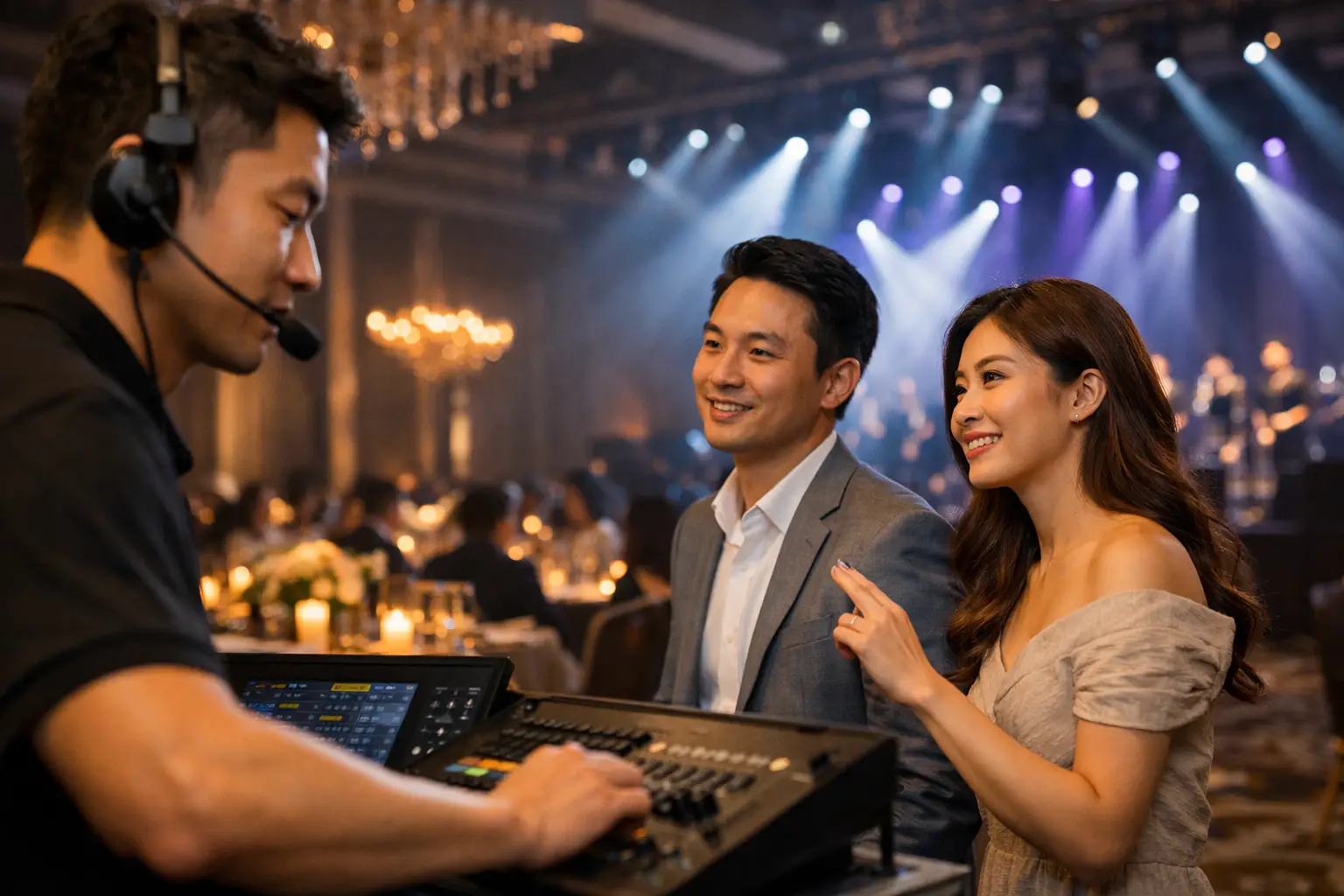
A ballroom can have an excellent menu, a strong speaker lineup, and a carefully planned program, yet still feel flat the moment guests walk in. Lighting is often the difference. The right event lighting companies do more than place fixtures around a room. They shape attention, reinforce brand presence, support the showflow, and give every key moment the visual weight it deserves.
For corporate events, launches, annual dinners, conferences, and live entertainment, lighting needs to work as part of a larger production plan. It must look considered on-site, translate well on camera, remain safe for guests and crew, and change at exactly the right cue. That requires creative direction backed by detailed technical planning.
What Event Lighting Companies Actually Deliver
Professional event lighting is not one service or one piece of equipment. It is a coordinated production discipline that begins with understanding the event objective. A leadership conference may need clean, flattering front light for speakers and video capture. A product launch may require tightly controlled reveals, dramatic transitions, and colors that reflect the campaign. An annual dinner and dance may shift from elegant arrivals to an energetic performance environment within the same evening.
A capable lighting partner starts by assessing the venue, stage layout, ceiling height, power availability, screen placement, sightlines, and guest seating. These details influence what is practical long before the first fixture is installed. A beautiful lighting concept that cannot be safely rigged, powered, or controlled within the venue’s restrictions is not a production solution.
The work usually includes lighting design, equipment selection, staging coordination, installation, programming, operation, and strike. For more complex productions, it also involves integration with video, sound, scenic elements, special effects, and artist requirements. The goal is not simply to make the room brighter. It is to make the entire experience feel intentional.
Lighting Should Follow the Event Story
The most effective lighting plans are built around the guest journey. From registration to the final send-off, each phase has a different functional and emotional requirement.
At arrival, lighting can establish the event’s tone before a guest reads a single sign. A brand activation may use bold color washes, custom gobos, or a feature-lit entrance to create an immediate visual identity. A premium corporate dinner may call for warmer tones, layered table lighting, and a refined stage look that feels polished rather than overpowering.
Once the program begins, lighting directs focus. It tells guests where to look when a host takes the stage, when a leadership team is recognized, or when a product is revealed. During entertainment, movement and color can increase energy without distracting from performers. For conferences, restraint often matters more. Speakers need to be visible, comfortable, and clearly captured for live screens or recordings.
This is why a generic lighting package rarely produces the strongest result. The same moving lights can feel exciting at a concert and excessive at a strategy summit. The design must fit the audience, message, venue, and pace of the show.
The balance between impact and comfort
More lighting is not always better lighting. Overly bright fixtures can make guests uncomfortable, wash out projection screens, or create glare for presenters. Aggressive movement may work during a dance segment but undermine a serious awards presentation. Heavy haze can add depth to a stage look, but it may not suit every venue, audience, or building policy.
Experienced producers manage these trade-offs early. They know where visual impact adds value and where subtle control protects the guest experience. This attention to detail is especially valuable when senior leadership, clients, media, or large employee groups are in the room.
How to Assess Event Lighting Companies
When reviewing potential partners, start with their ability to understand the full event, not just their equipment inventory. A lighting specialist with impressive fixtures may still need clear direction from the wider event team. For high-stakes corporate productions, the strongest partner is one that can collaborate across creative, technical, and operational workstreams.
Ask how the team approaches venue recce sessions, lighting plots, power planning, rigging, and cue programming. Their answers should be practical. They should be able to explain what is achievable in the space, where the risks are, and what alternatives can protect the intended look if restrictions arise.
It is also worth asking who will be on-site during setup and show day. The people who design the lighting should have a clear handover process with the crew operating it. During a live event, lighting cues need to follow the show caller, accommodate last-minute program changes, and remain aligned with audio, video, and artist movements.
For events with multiple vendors, coordination is a major consideration. Lighting positions affect camera angles. LED screens affect ambient brightness. Scenic pieces can block fixture placement. Ceiling rigging points may be shared with sound, drape, or branding elements. Without a coordinated production schedule, even strong individual vendors can create avoidable friction on-site.
The Technical Details That Protect the Experience
Behind every clean stage reveal or well-lit keynote is a substantial amount of preparation. Power distribution needs to be correctly calculated and safely installed. Fixtures must be tested, addressed, and programmed. Cables need to be routed neatly to protect guest flow and meet venue safety requirements. Rigging must be approved, and equipment placement must respect fire exits, ceiling loads, and access routes.
These are not details guests should notice. That is the point. A well-run production feels effortless because the technical planning has already accounted for what could go wrong.
Showflow integration is equally important. Lighting cues should be mapped to key moments: walk-ins, opening videos, speaker entrances, panel discussions, award announcements, entertainment sets, and closing remarks. A cue list provides control, but it should not become rigid. Live events change. A speaker may pause longer than expected, an award winner may take extra time reaching the stage, or a performance may need to start later due to guest movement.
A skilled operator reads the room while staying connected to the production team. They can hold a look, adjust a transition, or respond to a live instruction without disrupting the audience’s experience.
Why Full-Service Production Creates Better Results
Hiring lighting separately can be appropriate for a simple event with an established venue and a straightforward program. But when an event includes a custom stage, live screens, entertainment, branding, complex guest flow, or a tight installation window, isolated vendor management can place pressure on the internal organizer.
A full-service production partner brings lighting into the same planning conversation as concept development, venue sourcing, staging, AV production, sound, logistics, and on-ground coordination. This reduces the risk of competing requirements and unclear ownership. It also allows the creative concept to remain realistic from the beginning, rather than being redesigned late because of technical limitations.
For example, a product launch may begin with a creative idea for a cinematic reveal. The production team can assess whether the venue supports blackout conditions, where the audience should be seated, how video content will be timed, and how lighting can transition from anticipation to reveal. The result is a moment that feels dramatic because every element is working together.
Teamup Event plans lighting as part of a complete production ecosystem, giving clients one coordinated team from the first brief to the final cue. That means decisions about stage scale, screen brightness, speaker visibility, entertainment requirements, and guest comfort are made with the whole event in view.
Plan Lighting Early, Not at the Final Stage
Lighting is easiest to optimize when it is discussed during concept and venue planning. Early involvement gives the production team time to identify venue constraints, secure appropriate rigging approvals, plan power requirements, and build a lighting design that complements the event’s visual identity.
Late changes are still possible, but they can limit options and increase cost. If an event is confirmed shortly before show day, priorities may need to shift toward reliable, high-impact solutions that can be deployed efficiently. The right choice depends on the timeline, budget, venue, and level of customization required.
The best lighting does not ask guests to admire the equipment. It helps them feel the occasion: the confidence of a leadership message, the excitement of a launch, the pride of an award, or the shared energy of a celebration. When every cue is planned with purpose, the room remembers the moment long after the lights come down.