
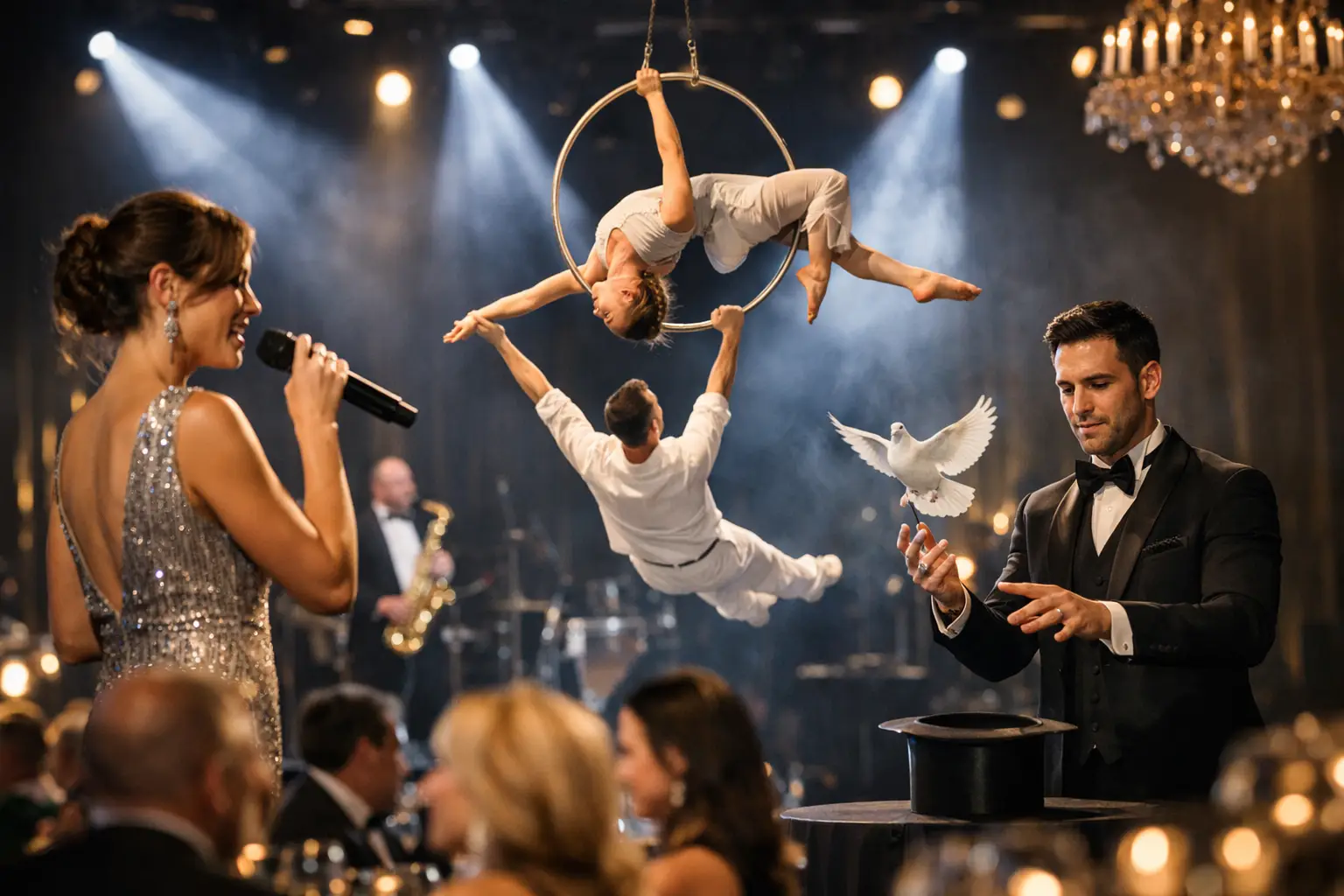
A gala can have an impressive venue, excellent food, and a beautifully dressed room, yet still lose energy if the entertainment is treated as a final booking rather than part of the guest journey. The best gala entertainment does more than fill a stage. It sets the atmosphere on arrival, supports the evening’s story, creates shared moments, and gives guests a reason to stay engaged through the final send-off.
For corporate leaders planning an annual dinner, awards night, fundraising gala, or client celebration, the right choice is rarely simply the most famous act or the biggest production. It is the entertainment that fits your audience, brand, room layout, run of show, and event objective – then arrives with the technical and operational planning required to make every moment land.
What Makes the Best Gala Entertainment?
The strongest gala entertainment is purposeful. A jazz trio can make a premium cocktail reception feel relaxed and sophisticated. A live band can turn an awards dinner into a genuine celebration. A custom opening performance can give a product-focused gala a clear sense of occasion. None is automatically better than the other. The right answer depends on what you need guests to feel and do.
Start with the outcome. If the goal is recognition, entertainment should build anticipation before awards and give winners a stage-worthy walk-up moment. If the event is designed to strengthen relationships with clients, choose acts that encourage conversation rather than overpower it. If employee engagement is the priority, interactive entertainment and a high-energy finale may be worth a larger share of the budget.
Quality also depends on pacing. A brilliant 30-minute act placed too late, after guests have begun leaving, will not produce the result it deserves. Entertainment needs to be considered alongside guest arrival, dinner service, speeches, awards, table resets, and departure patterns. This is where a detailed showflow matters as much as the talent itself.
Match Entertainment to the Gala Format
A formal black-tie gala calls for a different approach than a high-energy annual dinner and dance. The event theme is useful, but it should not dictate every creative decision. A 1920s-inspired evening, for example, can be conveyed through a refined welcome act, styling, music cues, and a short feature performance without forcing guests through hours of costume-themed content.
For awards and recognition nights
Awards programs benefit from entertainment that heightens prestige without interrupting momentum. Consider an elegant arrival performance, a powerful opening number, brief transition stings between award categories, and a featured act after the final award. This structure gives the program shape while keeping recognition at the center.
Live vocalists, string ensembles, percussion performances, and carefully choreographed dance pieces work well when they are tailored to the brand and paired with strong lighting, walk-up music, and polished screen content. The entertainment should make honorees feel celebrated, not compete with them.
For annual dinners and company celebrations
Company celebrations usually need a broader emotional range. Guests arrive ready to reconnect, enjoy a meal, acknowledge milestones, and eventually celebrate together. A welcome band or roaming performers can add energy at the start, while games, host-led interactions, and a live party band can carry the room after formalities end.
The trade-off is that too many activities can make the evening feel fragmented. Build around one or two headline moments rather than stacking performances between every course. A well-produced finale often has more impact than five disconnected acts.
For client and fundraising galas
For relationship-driven events, atmosphere should be the priority. Acoustic musicians, sophisticated jazz, premium cultural performances, or close-up entertainers can create interest while leaving room for meaningful conversation. These formats feel generous and considered without demanding attention from every guest at once.
If fundraising is involved, entertainment can also support the giving moment. A dramatic lighting transition, a personal performance tied to the cause, or a carefully timed live appeal can create emotional focus. The production must remain respectful and authentic to the organization’s mission.
Gala Entertainment Ideas That Create Real Impact
The most effective concepts connect entertainment to the full guest experience, not only the main stage. Consider these four areas when developing a program:
- Arrival entertainment creates the first impression. Live musicians, branded photo moments, LED performers, or elegant cultural acts establish the tone before guests enter the ballroom.
- Opening acts bring attention into the room. A cinematic dance performance, drumming sequence, or custom multimedia opening can introduce the theme and transition naturally into the welcome address.
- Dinner and transition entertainment maintains energy during service, award resets, or technical changes. Short, well-rehearsed performances are more effective than leaving guests waiting in silence.
- Finale entertainment gives the night its lasting image. A live band, DJ-led celebration, headline artist, or synchronized drone light show for suitable outdoor venues can provide a memorable final lift.
Interactive options deserve careful consideration. Magicians, digital caricature artists, roaming musicians, and immersive performers can work exceptionally well during cocktails and networking because guests can engage at their own pace. They are less suitable during a seated program where the audience needs to focus on speakers or presentations.
Production Is Part of the Performance
Entertainment is only as strong as the production around it. An artist may be exceptional, but the experience suffers if the stage is undersized, the sound is unclear at the back of the room, sightlines are blocked by columns, or the host has no clear cue to introduce the act.
Before confirming talent, assess the venue’s loading access, ceiling height, stage position, power availability, LED screen placement, backstage space, and noise restrictions. A band may require a full sound check before guests arrive. A performance involving aerial elements needs verified rigging points and venue approval. A drone display requires the right site conditions, airspace planning, safety procedures, and timing.
The guest experience also depends on what happens between segments. Lighting changes, audio cues, video playback, presenter walk-ons, and artist entrances should be managed through a precise showflow. A production team should run technical rehearsals, confirm every cue, and keep a contingency plan for delayed arrivals, altered speeches, or changes to the room schedule.
This preparation is not invisible busywork. It is what makes a gala feel polished rather than improvised.
Choose Talent With Your Audience in Mind
A senior leadership audience may appreciate sophisticated musical direction and a concise, high-production program. A multigenerational employee audience may respond better to familiar songs, participatory moments, and a dance floor that opens early enough to enjoy. A regional audience may value entertainment that reflects multiple cultures without reducing them to a decorative theme.
Ask practical questions before booking: Will guests understand the format without explanation? Is the performance appropriate for the company’s culture? Does the artist have corporate event experience? Can the set be customized? What is the backup plan if travel, weather, or technical conditions affect the performance?
Customization is particularly valuable when it supports a meaningful event message. A tailored opening video, company milestones integrated into a performance, or music aligned with the awards narrative can make entertainment feel commissioned for the occasion. But custom work requires earlier planning, clear approvals, and realistic rehearsal time.
Build the Budget Around the Moments That Matter
Gala entertainment budgets should include more than the artist fee. Depending on the act, you may need staging, sound, lighting, screens, playback, instruments, rehearsals, transport, accommodation, technical riders, licenses, crew, and contingency provisions. A lower-cost act with extensive production requirements may ultimately cost more than a premium artist whose show is designed for the venue.
Protect the moments guests will remember most: the opening, the final award, the headline performance, and the exit. It is often smarter to invest in one well-produced centerpiece than to spread the budget thinly across several average additions.
A full-service production partner can bring these decisions together, coordinating talent, venue requirements, AV production, guest flow, and show-day control under one plan. Teamup Event approaches gala programming as both a creative story and an operational commitment, so the room feels effortless for guests while every cue is managed with care.
The best choice is the entertainment that gives your guests a feeling they will associate with your organization long after the ballroom lights come up. Start with that feeling, then design every performance, transition, and technical detail to support it.