
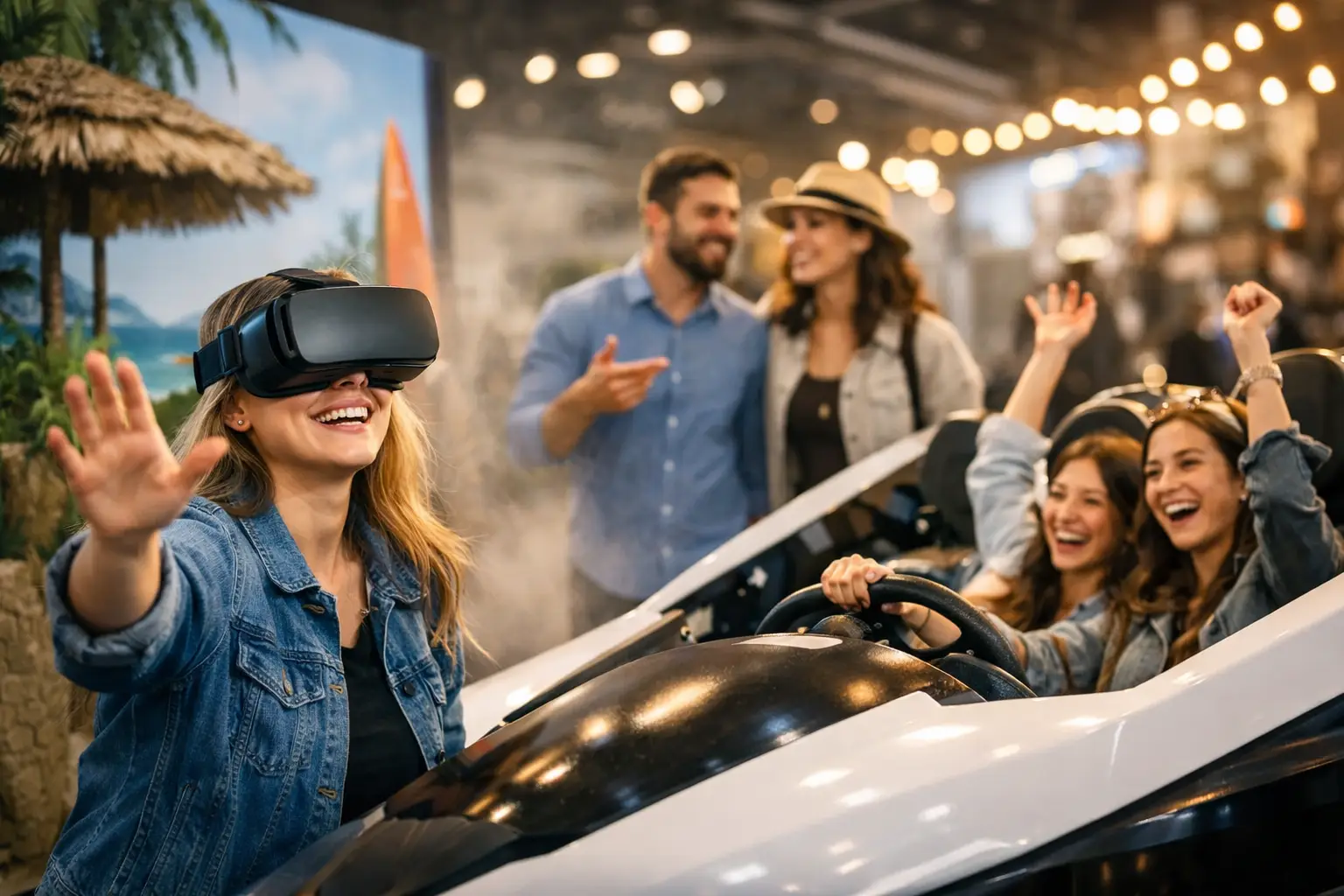
A product launch can have perfect branding, a polished keynote, and a full guest list, yet still be forgotten by the following week. Experiential marketing changes that equation by giving people a role in the story. Instead of simply watching a brand message, guests touch it, test it, respond to it, and take something meaningful away.
For corporate teams and brand managers, that distinction matters. Attention is costly, while a well-produced live experience can create stronger recall, more useful conversations, quality content, and a real emotional connection with employees, customers, partners, or the public. The result is not just an attractive event. It is a moment that moves a business objective forward.
What Experiential Marketing Is Designed to Do
Experiential marketing is the practice of bringing a brand, message, or campaign to life through an interactive experience. It may take the form of a product launch, mall roadshow, pop-up activation, conference installation, customer appreciation event, employee celebration, or public spectacle such as a drone light show.
The format is less important than the exchange. Guests should receive more than information. They should be invited to participate, whether that means trying a product, creating a personalized item, completing a challenge, contributing to a shared installation, or taking part in a guided demonstration.
A strong activation balances three things: a clear business goal, a compelling guest moment, and a practical production plan. Remove any one of these and the event can lose direction. A visually impressive idea with no purpose may attract photos but not meaningful outcomes. A goal-focused booth with no sense of discovery can feel like a sales counter. An ambitious concept without operational planning can create queues, technical issues, and a poor guest experience.
Start With the Outcome, Not the Feature
The first planning question should not be, “What can guests do?” It should be, “What do we need this experience to achieve?” The answer shapes every decision that follows.
For a new product, the objective may be hands-on trial and lead capture. For an employer brand campaign, it may be pride, connection, and stronger internal participation. For a conference, it could be making a strategic message easier to understand and discuss. A consumer-facing roadshow may focus on footfall, sampling, social sharing, or conversion at the point of engagement.
Success measures should be agreed before creative development begins. Depending on the event, these might include registrations, dwell time, participation rate, qualified leads, product trials, post-event sentiment, media content generated, or sales follow-up appointments. Not every valuable outcome is immediately financial, but every experience should have a reason to exist beyond filling a venue.
This early clarity also protects the budget. When the goal is defined, it becomes easier to decide whether investment belongs in a larger footprint, stronger AV production, better facilitators, premium guest gifts, interactive technology, or a more targeted guest list.
Build an Experience Around One Clear Idea
The most memorable activations are usually easy to describe in a sentence. That does not mean they are simple to produce. It means the central idea is focused enough that guests understand what they are entering and why it matters.
A technology brand might turn a complex product benefit into a live challenge where guests can see speed, accuracy, or connectivity in action. A company celebrating a milestone might create an immersive timeline that lets employees contribute stories and recognize the people behind its progress. A sustainability campaign might use a visible, collective action that makes individual choices feel tangible.
The creative concept should fit the audience and setting. A high-energy public launch may benefit from bold staging, performance, and dramatic reveal moments. A senior leadership conference may call for a more considered environment, with interactive displays that support conversation rather than compete for attention. For employee events, participation often matters more than spectacle alone because people want to see themselves reflected in the experience.
Novelty can help, but it is not the same as relevance. Virtual reality, projection mapping, digital games, and AI-powered interactions can be useful tools. They should serve the story, not become the story. A simple activity that feels personal and runs smoothly will often outperform a complicated installation that guests do not understand or have to wait too long to use.
Design the Guest Journey, Not Just the Main Attraction
An activation begins before the first interaction and continues after the guest leaves. The guest journey includes the invitation, arrival, registration, first visual impression, orientation, participation, staff conversation, departure, and follow-up.
At each stage, ask what the guest needs to know, feel, or do next. Is the entrance visible from a distance? Does signage explain the experience in seconds? Is there a clear welcome point? Can a first-time visitor participate without feeling awkward? Are there enough staff members to guide the activity and answer questions without blocking the flow?
Guest flow is often where good ideas succeed or fail. If a five-minute activity is designed for 300 guests per hour but has only two stations, queues will dominate the experience. If a registration process requires too many fields, people may walk away before they reach the main attraction. If the exit has no natural next step, an opportunity for lead capture, sampling, or conversation can disappear.
Mapping capacity is not glamorous, but it is essential. Production teams should calculate expected attendance, peak arrival windows, average dwell time, throughput per station, staffing requirements, and accessible routes. This is particularly important in high-footfall venues, where the audience may arrive in bursts rather than at a steady pace.
Production Details Create Confidence
Guests may not notice a well-managed power plan, cable route, sound check, or backup screen. They will notice when one fails. Experiential marketing depends on the same disciplined planning as any high-stakes live event, with added complexity because guests are moving through the environment rather than sitting in one place.
Venue selection affects more than aesthetics. Ceiling height, loading access, electrical capacity, Wi-Fi reliability, crowd restrictions, noise limits, weather contingencies, permitted operating hours, and nearby tenant activity can all influence what is possible. A concept designed for an open plaza may need substantial adaptation for an indoor atrium. An outdoor experience may need rain cover, ballast calculations, flooring, cooling, and a clear plan for wind or lightning.
AV production should be planned around the environment. Screens need to be readable in ambient light. Sound should be directional enough to create energy without overwhelming adjacent areas. Lighting should support the brand mood while allowing guests to navigate safely and capture usable photos. For live demonstrations and show moments, a detailed showflow ensures that presenters, performers, technicians, and guest-facing staff know exactly what happens next.
Behind the scenes, vendor coordination is equally important. Fabricators, designers, AV crews, emcees, brand ambassadors, caterers, security teams, venue operations, and logistics partners all need aligned timelines and clear responsibilities. A single point of production control helps prevent the client from becoming the default coordinator on show day.
Make Participation Feel Worthwhile
People do not interact just because an activation exists. They participate because the experience promises a reward: enjoyment, recognition, useful information, a sense of belonging, a chance to win, or a story worth sharing.
The best incentives are closely connected to the brand. If an activity involves personal creation, the take-home item should feel considered rather than generic. If guests share content, the visual payoff needs to be immediate and flattering. If staff collect data, the value exchange should be clear and proportionate. Asking for too much information too early can make a welcoming experience feel transactional.
Human facilitation matters as much as technology. Friendly, properly briefed brand ambassadors can explain an activity, reduce hesitation, manage queues, and turn casual interest into a meaningful conversation. They should know the brand message, escalation process, accessibility considerations, and how to reset the experience quickly between guests.
For corporate audiences, the same principle applies. A team-building activation should not feel forced or childish simply because it is interactive. The right design respects the group, makes participation easy, and gives people a genuine reason to collaborate.
Measure What Happened and What It Meant
Counting attendees is useful, but it rarely tells the full story. A crowded experience with low participation may not have delivered the intended impact. Look at both volume and quality: how many guests entered, completed the activity, stayed for a demonstration, spoke to a representative, opted in for follow-up, or posted content.
Qualitative feedback adds the context that dashboards cannot provide. What questions did guests ask? Where did they hesitate? Which element drew the strongest reaction? Did the experience communicate the intended message without lengthy explanation? A post-event debrief with event staff, sales teams, and stakeholders can reveal practical improvements for the next activation.
Documenting the event also extends its value. Photography, video, guest testimonials, and campaign assets should be planned in advance, with shot lists and approval processes built into the showflow. Capturing a strong moment after it has happened is much harder than designing for it from the beginning.
Turn a Strong Idea Into a Beautifully Run Event
Experiential marketing works when creative ambition is matched by operational discipline. Guests remember the reveal, the activity, the conversation, and how the event made them feel. They also remember confusion, delays, and technical friction.
That is why experienced production support matters. From concept development and venue sourcing to staging, AV, staffing, logistics, and on-ground coordination, Teamup Event helps turn a brand idea into an experience that feels effortless for every guest. Start with the response you want people to have, then build every creative and production detail around making that response possible.