
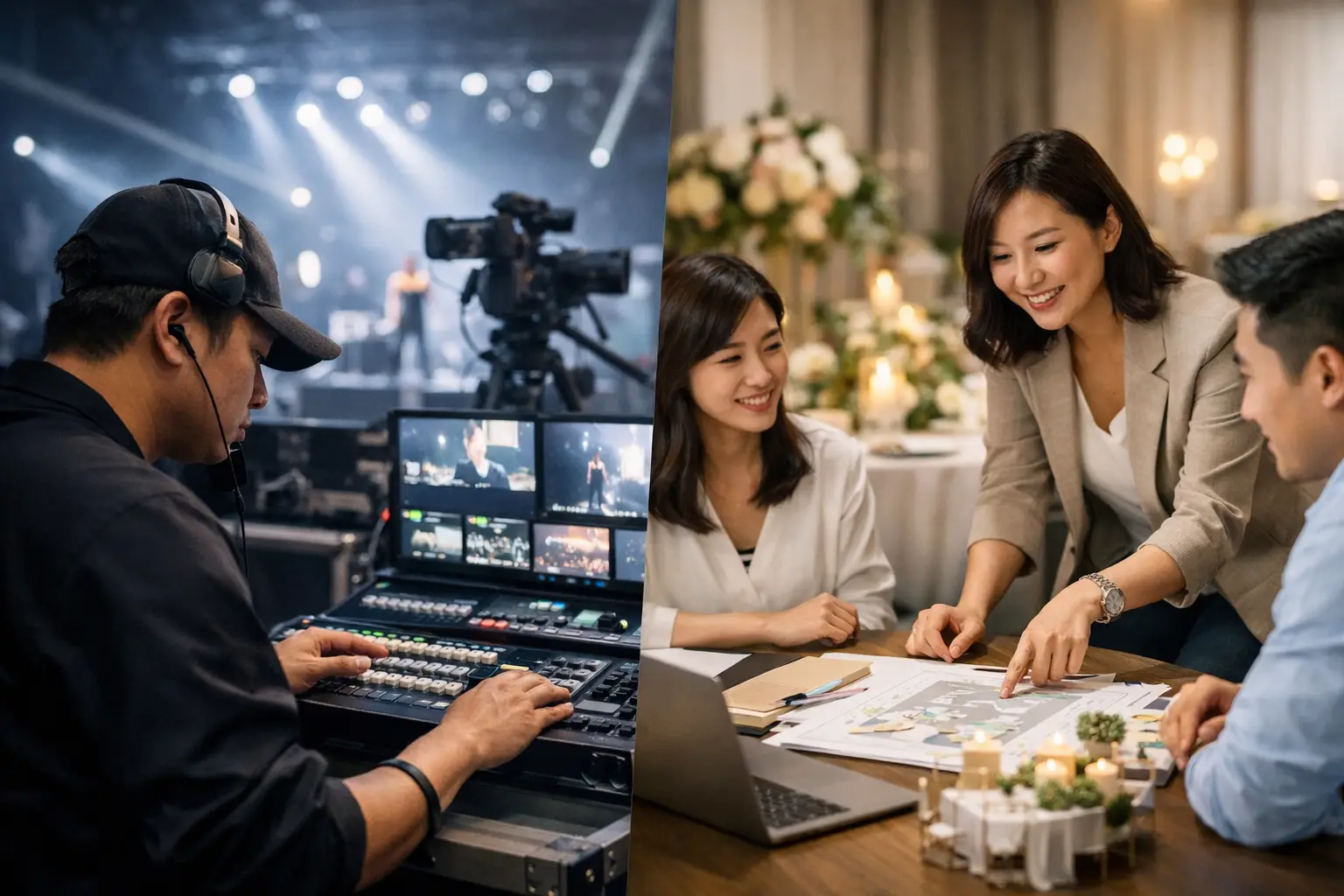
A ballroom can be booked, invitations can be sent, and a run sheet can look complete weeks before an event. Yet the real test begins when 600 guests arrive, a CEO steps on stage, a video must play on cue, dinner service needs to turn the room, and one late speaker changes the schedule. That is where the distinction between event production vs event planning becomes clear.
Both disciplines are essential to a successful corporate event, but they solve different problems. Planning establishes what the event needs to achieve and how it will come together. Production turns that plan into a controlled, audience-ready experience through technical design, staging, showflow, crew, and on-ground execution.
For marketing, HR, executive support, and procurement teams, knowing the difference helps define the right scope, select the right partner, and avoid gaps that often surface only on show day.
Event Production vs Event Planning: The Core Difference
Event planning is the strategic and organizational work that shapes the event from the first brief onward. An event planner may help clarify objectives, recommend venues, build a budget, coordinate suppliers, manage registrations, organize catering, and create a guest communications plan. Their work answers practical questions: Who is attending? What is the purpose? When and where will it happen? What needs to be booked, approved, and communicated?
Event production focuses on how the event is built, experienced, and operated in real time. It covers the technical and physical environment that guests see and feel: stage design, audiovisual systems, lighting, sound, LED screens, scenic elements, cueing, backstage management, crew deployment, and show-day control.
Put simply, planning gets the event organized. Production gets the event on its feet and keeps it moving.
The line is not always fixed. A small internal town hall may need thoughtful planning and modest AV support. A product launch, awards night, conference, concert, or drone light show usually requires much deeper production involvement because timing, technical reliability, brand presentation, and audience flow all carry higher stakes.
What Event Planning Typically Covers
An event planner creates the framework that allows decisions to happen in the right order. This work often starts with a discovery session to understand business goals, audience expectations, budget parameters, leadership requirements, and event format.
From there, planning commonly includes venue sourcing and site visits, date and supplier coordination, guest registration, accommodation or transport arrangements, food and beverage planning, permits, event collateral, and stakeholder approvals. For a company retreat, planning may also cover rooming lists, activity schedules, travel details, and attendee communications. For an annual dinner, it may include table plans, RSVP management, prize logistics, and the guest journey from arrival to departure.
Planning is also where budget discipline begins. A capable planner can identify the cost implications of venue restrictions, guest count changes, menu selections, or program additions before those decisions create pressure elsewhere. They keep the project moving, document responsibilities, and make sure no important workstream is left without an owner.
That said, a detailed event plan is not the same as a production plan. A venue floor plan does not confirm whether sightlines are clear. A speaker agenda does not tell a show caller when to cue walk-on music. A list of AV requirements does not determine the lighting positions, power distribution, backup playback, or microphone changes needed during the program.
What Event Production Typically Covers
Production begins with the question, “What must happen in the room for this experience to feel polished, clear, and reliable?” The answer is rarely limited to equipment rental.
A production team translates creative intent into technical and operational decisions. If the concept calls for an immersive brand launch, the producer considers the stage layout, screen content, sound coverage, lighting mood, reveal mechanics, camera angles, guest circulation, and transition timing. If a conference includes senior executives and remote presenters, the team plans presentation management, confidence monitors, microphones, live switching, recording, and contingencies for technical failure.
Technical Design and Staging
Production determines the setup that supports both the program and the audience. This includes stage dimensions, set construction, LED walls or projection, sound system design, lighting, rigging, power, furniture placement, branding, and backstage areas.
These choices affect more than appearance. A stage that photographs well may still fail if speakers cannot see their notes, guests at the back cannot hear clearly, or a wide screen forces presenters to turn away from the audience. Experienced production teams balance visual impact with sightlines, accessibility, safety, and the realities of the venue.
Showflow and Cue Management
A showflow is the operational version of an agenda. It captures not only what happens, but how it happens: walk-in music, screen content, lighting states, microphone handovers, video playback, speaker entrances, award presentations, meal transitions, and contingency cues.
During a live program, small timing issues can quickly become visible to guests. Production teams manage those moments through rehearsals, communications systems, a show caller, stage managers, and technicians who understand the next cue before it is called.
On-Ground Control
Production is most visible when guests never notice it. A well-run room changes from networking reception to keynote session without confusion. Speakers are briefed and miked before they need to be. Crew reset the stage during a video, not during an awkward silence. A delayed VIP arrival triggers a controlled adjustment rather than a public scramble.
This requires coordinated vendor and artist management, loading schedules, crew calls, safety checks, technical rehearsals, and clear decision-making authority on site. Production is where preparation becomes performance.
Where Planning and Production Must Work Together
The strongest events do not treat planning and production as separate silos. They operate as connected workstreams with clear handoffs and shared visibility.
Venue selection is a good example. A planner may find a venue that suits the guest count, date, location, and budget. A production team then assesses ceiling height, loading access, rigging permissions, power capacity, noise limits, internet reliability, screen visibility, and load-in timing. If production enters too late, a venue that looked ideal on paper can become expensive or restrictive to deliver.
The same applies to program design. A planner may build a strong agenda, while production checks whether it can be executed at the intended pace. A 10-minute awards segment with 20 recipients, multiple walk-ons, trophies, photos, and a change of presenters may need more time than the agenda suggests. Early collaboration protects both the guest experience and the schedule.
Creative concepts benefit from the same discipline. A bold entrance, custom stage, live entertainment, or synchronized drone display can create a memorable moment, but only if the venue, permits, weather considerations, safety plan, technical infrastructure, and rehearsal time support it. Creativity works best when operational realities are considered from the beginning.
Do You Need an Event Planner, a Production Team, or Both?
It depends on the scale, complexity, and reputational stakes of the event.
For a straightforward meeting with limited attendees, a strong internal coordinator may handle the planning while a venue AV team provides basic technical support. For a high-profile conference, regional sales kickoff, annual dinner and dance, public roadshow, product launch, or live entertainment event, relying on separate suppliers without a central production lead can create unnecessary risk.
You may need dedicated production support when the event includes custom staging, multiple speakers, live performances, branded content, complex lighting and sound, large guest volumes, tight turnarounds, outdoor elements, or senior stakeholders who expect every transition to feel effortless. In these situations, a planner manages the broader event framework while the production team owns the live environment and show-day execution.
A full-service event partner combines both perspectives. Instead of asking a client to coordinate the venue, creative agency, AV supplier, entertainers, fabricators, registration team, and logistics vendors separately, one integrated team can manage the lifecycle from concept development through final strike. This reduces handoff risk and gives stakeholders a single source of accountability.
Questions to Ask Before You Appoint a Partner
Before engaging an event company, ask whether its scope includes both planning and production, or whether it mainly coordinates suppliers. Request clarity on who owns the showflow, technical design, vendor briefings, rehearsal schedule, crew management, and live decision-making on event day.
It is also worth asking how the team handles changes. Corporate events rarely remain static. A keynote may be added, an executive may request a revised opening, attendance may rise, or a venue may impose a late restriction. The right partner will explain the impact clearly, offer practical alternatives, and protect the event’s critical path.
For major events, look beyond a proposal’s creative visuals. Ask how the concept will be built, how guest flow will be managed, what contingency plans are in place, and who will be physically present to lead the room. Beautiful ideas earn attention. Controlled delivery earns trust.
When an event matters to your people, customers, or brand, the best approach is to involve planning and production expertise early. That gives the creative idea enough room to be ambitious and gives the operational team enough time to make every important moment feel natural, memorable, and beautifully run.