
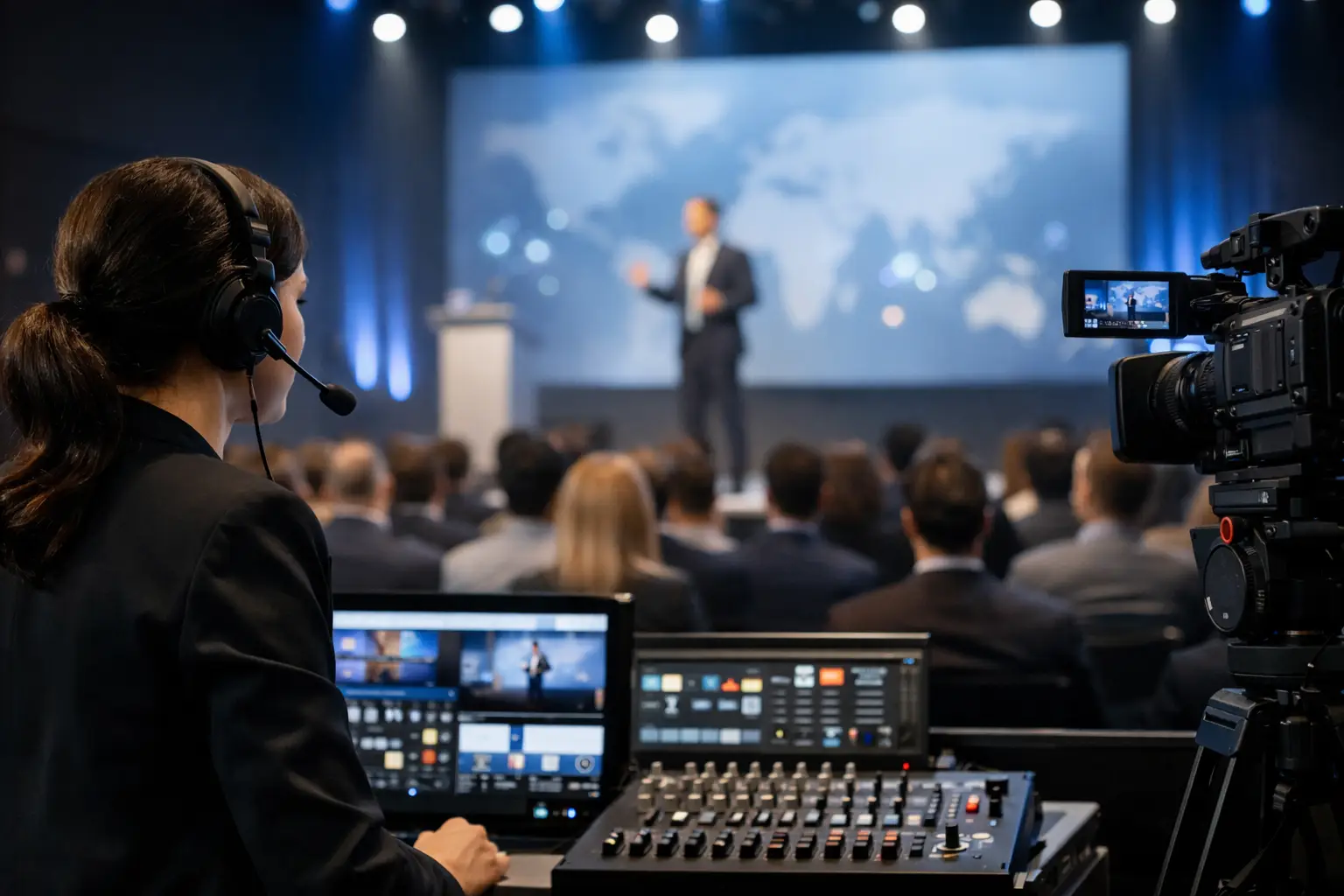
The room goes quiet as the CEO walks onstage. The opening video lands, the screen transitions cleanly to the keynote deck, and hundreds of guests know exactly where to look. That moment may last seconds, but effective corporate conference production is what makes it possible. It is the disciplined work of turning a business objective, a room full of people, and many moving parts into an experience that feels purposeful and well controlled.
For marketing leaders, HR teams, executive assistants, and internal communications teams, a conference is rarely just a date on the calendar. It may be the setting for a major strategic announcement, a sales kickoff, a leadership meeting, a partner forum, or an opportunity to reinforce culture. The production must support the message while protecting the organization’s reputation.
What Corporate Conference Production Actually Covers
Conference production is often mistaken for AV rental or event-day coordination. Both matter, but neither is the whole job. Production connects the creative concept, venue realities, technical systems, people, timing, and guest experience into one operating plan.
It begins with the brief. What should attendees understand, feel, or do differently after the conference? A leadership offsite may need privacy, focus, and productive discussion. A regional sales conference may require momentum, visual impact, and a showflow that keeps energy high across a full day. A client forum may prioritize hospitality, brand confidence, and clear content delivery.
Those goals shape practical decisions from the start: venue layout, stage size, screen configuration, speaker format, lighting treatment, registration process, meal timing, and the number of crew needed on site. When these choices are made separately, the result can feel disjointed. When they are planned together, the event has a clear rhythm from guest arrival through the final send-off.
Start With the Audience and the Business Outcome
A strong conference does not begin with a stage render. It begins with the people in the room and the action the organization wants to inspire.
Consider the difference between an internal town hall and a channel partner conference. An internal audience may respond well to candid leadership conversations, employee stories, and interactive Q&A. Partners may need market insights, product demonstrations, networking time, and evidence that the brand is ready to support growth. Both may use a plenary stage and presentation screens, but their content pacing, room setup, and guest journey should differ.
This is where a production partner adds strategic value. The team should challenge vague objectives, identify the moments that carry the most weight, and recommend a format that serves the message. That can mean a compact half-day program with a focused reveal, or a larger multi-session conference with breakout rooms, moderated panels, and an evening networking program.
More program is not always better. Packed agendas create pressure on presenters, reduce opportunities for meaningful conversations, and leave little recovery time if a session runs long. A practical showflow builds in transition time, speaker preparation, meal buffers, and clear decision points for the on-ground team.
Design the Room for Attention, Not Just Capacity
A venue may fit 500 people on paper while still being wrong for the conference. Ceiling height, pillar locations, loading access, backstage space, sound restrictions, room proportions, and the distance from the last row to the stage all affect how attendees experience the program.
Venue sourcing should therefore go beyond availability and price. A ballroom can create a polished setting for a leadership conference, while a theater-style venue may offer stronger sightlines for content-heavy keynotes. For events with concurrent workshops, the practical question is whether delegates can move between rooms without bottlenecks or losing too much program time.
Stage and screen design should match the content. A wide LED wall may be valuable for brand-led visual storytelling, but it needs presentation templates designed for the aspect ratio. If speakers rely on detailed charts or product interfaces, screen readability from the back of the room becomes more important than visual scale. The best setup depends on the room, audience size, budget, and the content itself.
Guest flow deserves the same attention. Registration counters, badge collection, coffee stations, sponsor areas, restrooms, and session entrances should be positioned to avoid congestion. Guests tend to remember friction more clearly than planners expect, especially at the first point of arrival.
Build Technical Production Around the Showflow
AV production should make every speaker easy to hear, every visual easy to follow, and every transition feel intentional. That requires more than placing microphones and screens in a room. It requires a technical plan tied directly to the showflow.
Each session needs clear cueing: who walks on when, which microphone they use, what appears on screen, where they stand, how the moderator joins them, and what happens if the previous segment overruns. A detailed running order gives the show caller, stage manager, audiovisual crew, speakers, and client team one shared source of truth.
Rehearsal is where this plan becomes dependable. Presenters should test clickers, confidence monitors, microphones, videos, and walk-on routes. The production team should check presentation formatting, embedded media, audio levels, lighting looks, and backup files. Senior executives may have limited rehearsal time, so the process must be efficient and respectful of their schedules.
Redundancy is sensible for high-stakes moments, but it should be proportional. A major product announcement may justify backup playback systems, duplicate presentation files, spare microphones, and contingency internet arrangements. For a smaller internal meeting, the better investment may be in a strong stage manager and disciplined speaker preparation. The right production approach is not about adding equipment. It is about reducing the risks that would most affect the audience and the business.
Keep Speakers Supported and Content Controlled
Even experienced speakers can lose confidence when a presentation has not been checked in the event environment. Fonts change, embedded videos fail, slides appear in the wrong format, and a deck that looked clear on a laptop can become difficult to read on a large display.
A structured speaker management process prevents these issues from becoming show-day problems. Set content deadlines, collect decks through one channel, confirm final versions, and establish a clear process for late changes. Speakers should know where to report, who will brief them, when they go onstage, and how they will receive timing cues.
For panel discussions, production planning includes more than chairs and handheld microphones. Agree on discussion themes, moderator prompts, session duration, audience Q&A format, and how panelists will enter and exit. A well-produced panel feels conversational because its structure has been carefully prepared.
Why On-Ground Coordination Protects the Experience
The event-day control room is where planning meets reality. A late VIP arrival, a missing delegate badge, a last-minute slide change, a delayed food service, or a speaker who needs to join remotely can affect the program quickly. Good on-ground coordination keeps these issues from becoming visible to the audience.
That means assigning ownership before doors open. The registration lead handles arrivals. The stage manager manages speakers and stage cues. The show caller runs the program. Technical crew manage sound, lighting, video, and playback. Floor managers guide guests and monitor movement. Vendor coordination remains active throughout the day, not just during setup.
Communication needs to be simple and decisive. A production team should know which changes require client approval, what can be resolved immediately, and who has authority to adjust the schedule. This is particularly valuable for regional conferences, where speakers, guests, vendors, and leadership teams may arrive with different expectations and working styles.
At Teamup Event, this balance of creative direction and operational precision is central to the way conferences are planned. The objective is not to burden clients with more production detail. It is to give them clear visibility, practical recommendations, and confidence that every critical area is being managed.
Choose a Partner Who Plans for the Pressure Points
When evaluating a corporate conference production partner, look beyond a proposal’s visuals and equipment list. Ask how they develop the showflow, manage speaker content, coordinate venue rules, handle crew roles, rehearse high-risk moments, and respond when the schedule changes. These answers reveal whether the team can protect the experience when pressure rises.
The best working relationship is collaborative. Your internal team knows the organization, its stakeholders, and the message that must land. Your production partner brings the planning discipline, technical expertise, venue knowledge, and event-day leadership to bring that message to life.
A conference should leave guests discussing the ideas they heard, the people they met, and the confidence they felt in the organization. When the planning is thorough and the execution is calm, the production stays largely invisible – exactly where it should be.