
A product reveal can generate hundreds of social posts and still leave guests unclear about why the brand matters. That is the central challenge behind the most meaningful brand activation trends: attention is no longer the finish line. Marketing teams need live experiences that make a clear promise, invite genuine participation, and remain operationally sound when the doors open.
For corporate brands in Singapore and across Southeast Asia, activations are also being asked to do more. They may need to support a launch, generate leads, reward customers, engage employees, create media-ready moments, or strengthen a brand’s position in a crowded category. The right format depends on the objective, audience, venue, and budget. What does not change is the need for a well-produced experience that feels intentional from the first invitation to the final guest exit.
Brand Activation Trends Moving Beyond Spectacle
Large visual moments still matter. A striking set, a dramatic reveal, an artist appearance, or a synchronized drone light show can create the sense of occasion that a screen cannot replicate. But spectacle works best when it supports a stronger idea. Guests remember the feeling of being included in a story, not only the size of the LED wall.
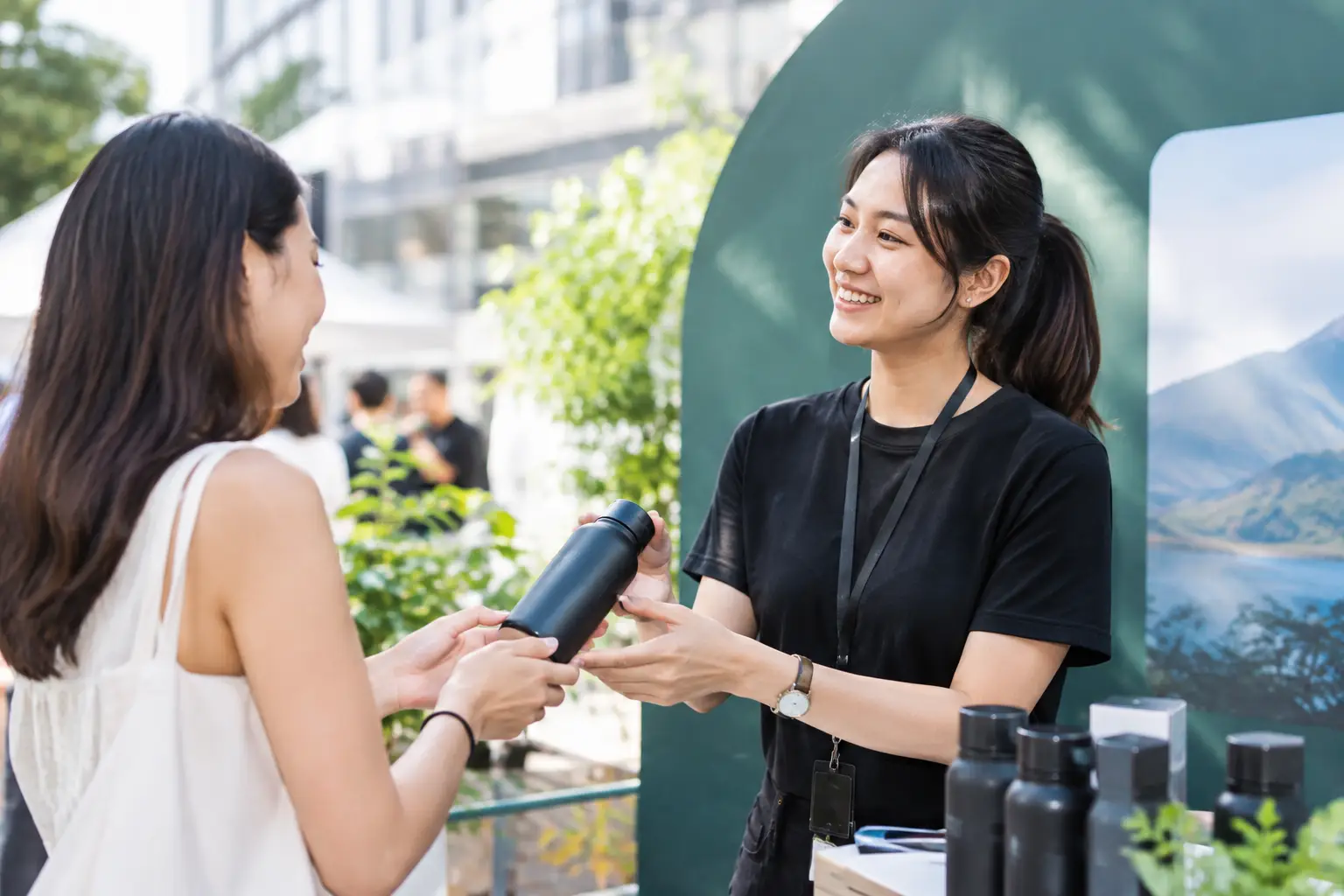
The leading trend is a shift from passive viewing to active brand participation. Instead of asking guests to watch a presentation, brands are designing moments where people test, make, vote, personalize, compete, or contribute. A technology launch might let guests build their own use case at interactive stations. A consumer brand could turn product sampling into a guided challenge with immediate rewards. A corporate campaign may invite employees to add their perspectives to a live installation that evolves across the event.
This does not mean every activation needs a complex game mechanic. In fact, too many steps can slow guest flow and dilute the message. The strongest participation is intuitive: guests should understand what to do within seconds, while the activity makes the brand benefit more tangible.
The experience is becoming more audience-specific
One-size-fits-all roadshows are giving way to more deliberate audience design. A distributor event, an investor reception, a public mall activation, and an employee town hall may share a campaign platform, but they should not feel identical. Their guests arrive with different levels of knowledge, different motivations, and different expectations of hospitality.
This is where segmentation becomes practical rather than theoretical. Registration data, invitation tiers, time-slot selection, and on-site preferences can help organizers tailor touchpoints without making the experience feel fragmented. VIP guests may need a hosted arrival and private demonstration. General attendees may prefer fast entry, a clear queue system, and an activity they can enjoy independently. Media and content creators need suitable backdrops, access windows, and enough time to capture the story properly.
Personalization should be used where it adds value. A customized takeaway can be effective, but only if the collection process does not create an unnecessary bottleneck. The production plan must protect the guest experience as carefully as the creative concept.
Immersive Design Needs a Clear Business Role
Immersive environments remain one of the most visible brand activation trends, particularly for launches, exhibitions, and premium customer events. Projection mapping, responsive lighting, spatial audio, AR layers, and large-format visual content can turn a venue into a brand world. Yet technology should never be treated as a substitute for a strong event narrative.
Before selecting any interactive tool, ask what the guest should understand, feel, or do differently after the experience. If the goal is product education, the technology should make a feature easier to see or test. If the goal is brand affinity, it should create an emotional connection that feels credible to the brand. If lead generation is required, it should provide a worthwhile exchange for guest details rather than interrupting the experience with forms.
There are trade-offs. High-tech installations can command attention, but they require dependable power, network planning, equipment testing, content approvals, technical rehearsals, and contingency measures. A simpler physical installation with excellent hosts and a compelling interaction may sometimes deliver stronger results than an elaborate digital concept with too many points of failure.
Content capture is now part of the showflow
Guests are still likely to record impressive moments, but brands are becoming more deliberate about what they want shared and why. Rather than placing a logo on every surface, successful activations create distinct visual scenes that communicate a campaign idea in a single frame.
Content capture also requires planning beyond the set design. Lighting must work for both the live audience and cameras. Signage must be readable without overwhelming the environment. Timing matters: a product reveal, performance, or special effect needs a controlled window for photographers, media, and invited creators to get the shot.
For public-facing activations, this can mean creating different content moments across the day so guests do not all gather at one location. For private events, it may involve a short, well-paced show segment that gives attendees something genuinely worth sharing. The production team should build these moments into the run sheet, not treat them as an afterthought.
Responsible Activations Are Becoming More Visible
Sustainability is moving from a secondary consideration to a practical production decision. Clients and guests are increasingly aware of temporary builds, single-use giveaways, food waste, transport, and energy consumption. The expectation is not that every event will have zero impact. It is that choices will be considered, credible, and appropriate to the scale of the activation.
Useful measures include modular structures that can be reused, digital registration and collateral, locally sourced materials where suitable, reusable serviceware, careful catering forecasts, and a clear plan for post-event disposal or donation. The key is to avoid performative claims. If sustainability is central to a campaign, the guest experience should demonstrate that commitment through real production choices.
Accessibility deserves the same attention. Good activation design considers step-free access, queue comfort, readable signage, sound levels, captioned content where appropriate, and spaces that work for a wider range of guests. These decisions are not merely compliance details. They affect whether people can participate fully in the brand experience.
Data Collection Must Feel Like a Fair Exchange
Brands want measurable outcomes, and events can provide valuable signals: registrations, attendance, dwell time, activity completion, product preferences, meetings booked, social engagement, and post-event feedback. But guests are more selective about sharing information. They expect a clear reason and a respectful approach.
The best practice is to make the value exchange obvious. A guest may provide details to receive a personalized consultation, enter a relevant workshop, access event content, claim a meaningful reward, or receive follow-up information they have requested. Collect only what is needed, explain how it will be used, and ensure the event team can handle questions on-site.
Measurement should be designed before creative development begins. If lead quality matters more than raw volume, the activation needs qualified conversations and a thoughtful handover process for sales teams. If brand recall is the objective, post-event surveys and content engagement may matter more than scans at the entrance. The metrics should reflect the real business goal, not simply the easiest figures to report.
Operational Precision Is Part of the Brand Experience
The most creative activation can lose impact when guests cannot find the entrance, queues become unclear, AV cues miss their mark, or staff do not know how to guide the audience. These details shape perception. Guests may not see the showflow, site plan, crew call sheet, or technical rider, but they feel the difference when every movement is calm and controlled.
That is why production planning must begin early. Venue selection affects not only atmosphere but loading access, rigging possibilities, power supply, crowd capacity, acoustics, weather protection, and permit requirements. The set design affects sightlines and guest circulation. The program affects catering timing, staffing levels, artist coordination, and technical rehearsal needs.
A capable event partner brings creative and operational teams together from the outset. At Teamup Event, that means translating the campaign ambition into a practical production plan: venue sourcing, staging, AV production, lighting, sound, vendor management, guest-flow design, showflow development, and on-ground coordination all working toward the same guest experience.
The activation trends worth following are not simply the most photogenic or technology-heavy. They are the ones that give people a reason to step in, stay engaged, and leave with a clearer connection to the brand. When the idea is strong and the execution is disciplined, the experience can feel effortless to every guest while doing serious work for the business behind it.