
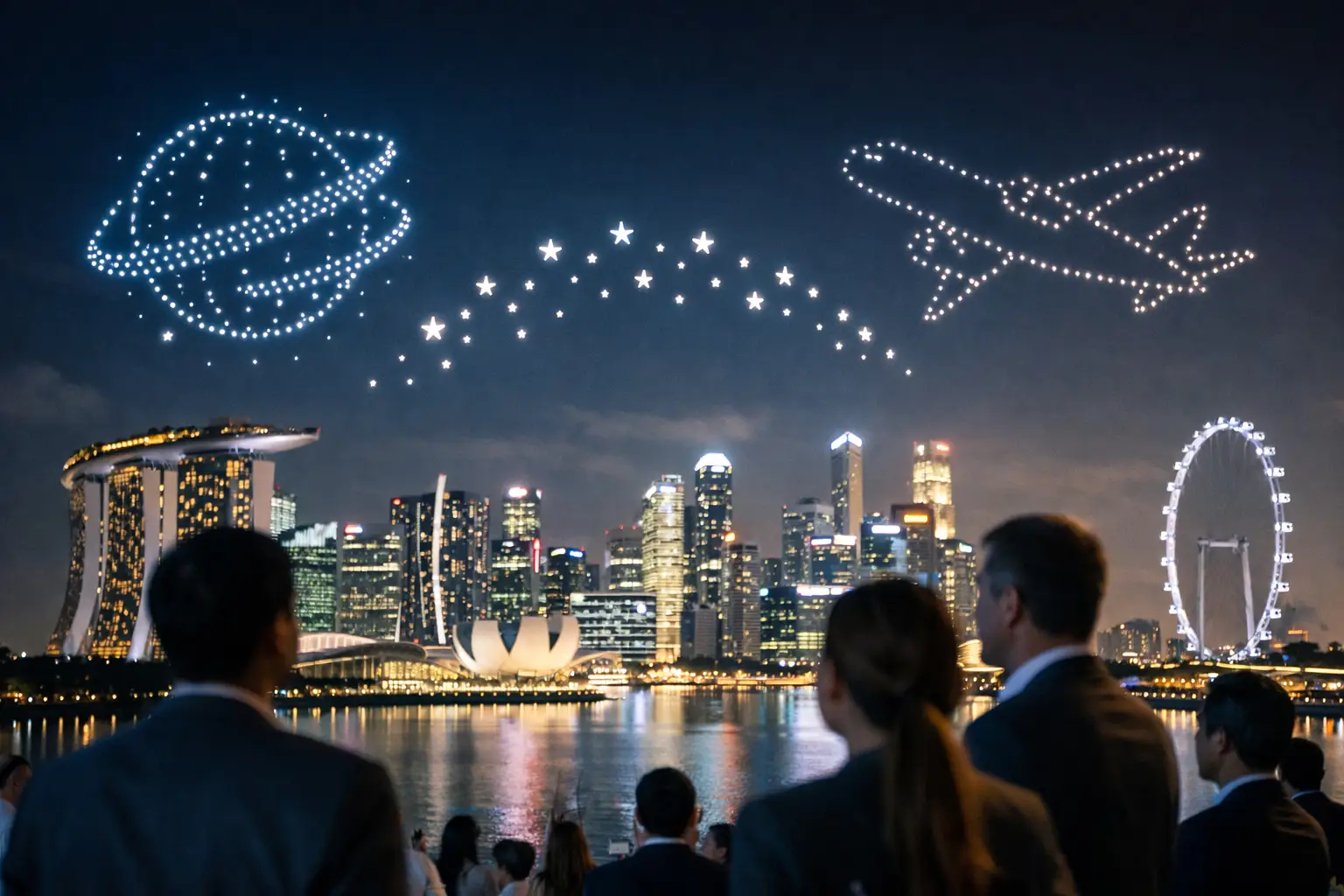
A skyline reveal can become the moment everyone records, shares, and remembers long after the final guest has left. A drone light show Singapore production brings that kind of impact to a corporate celebration, product launch, public festival, or brand activation – but its success depends on far more than putting illuminated drones into the night sky.
For business leaders and event planners, the real opportunity is to turn a short aerial performance into a meaningful brand moment. That requires a clear creative idea, the right venue conditions, proper approvals, technical integration, and disciplined on-ground coordination. When those elements are planned as one production, the result can feel effortless for guests while remaining tightly controlled behind the scenes.
Why a Drone Light Show Singapore Event Stands Out
Singapore audiences are accustomed to high production standards. Large LED screens, concert lighting, and projection mapping can create scale, but drones introduce an extra dimension: movement above the venue. Hundreds of synchronized lights can form logos, products, messages, mascots, and animated sequences that are visible across an outdoor event footprint.
That visual scale makes drone shows especially effective for milestone occasions. An anniversary dinner can move from the company’s founding year to its future ambitions. A product launch can reveal a new silhouette before the product appears on stage. A regional conference can welcome delegates with the flags or landmarks of participating markets. The format has strong photo and video value, but it works best when the imagery has a purpose beyond being visually impressive.
The trade-off is that a drone show is not a last-minute entertainment add-on. It is a live aviation, creative, and technical production that needs early planning. The earlier the event team understands the venue, event timing, guest count, and brand objective, the more confidently the show can be designed and delivered.
Start With the Story, Not the Drone Count
A common first question is how many drones are needed. The more useful question is: what should guests feel, understand, or do after the show?
For an employee appreciation event, the narrative may celebrate collective effort and recognize different teams. For a consumer launch, it may build suspense, reveal a key benefit, and finish with a memorable call to action. For a destination or public event, it may use recognizable icons to create civic pride and shareable content.
The strongest aerial sequences are usually simple enough to be understood from a distance. Clean logos, bold shapes, readable words, and controlled animation often have more impact than trying to fit too many messages into one performance. A creative team should map each formation to the music, voiceover, screen content, stage action, or fireworks alternative, if one is part of the larger program.
This is where showflow matters. The drone reveal should have a defined place in the evening rather than interrupting dinner service, speeches, award presentations, or guest movement. Sometimes it is the grand finale. In other cases, it is the opening spectacle that sets the tone before guests enter the main venue. The best placement depends on the event’s audience, operating hours, and desired emotional peak.
Venue Selection Shapes What Is Possible
Not every outdoor location is suitable for a drone performance. The site needs more than an attractive view. It must support a safe launch and landing zone, appropriate audience viewing angles, controlled access, sufficient setup space, and a workable production schedule.
Airspace considerations are central in Singapore. Location, nearby infrastructure, building height, surrounding activity, and scheduled flight paths can affect feasibility. Required permissions and operational conditions may differ by site, which is why venue sourcing should be assessed alongside aviation planning instead of after a venue contract has been signed.
A waterfront setting may offer an expansive backdrop, while a private outdoor venue can provide stronger access control. Rooftops can look compelling in concept, but they can introduce practical limitations around wind exposure, load-in access, guest sightlines, and the available operating area. Open fields can be more operationally flexible, yet may require more work to create a premium guest experience.
Weather is another genuine variable. A professional plan includes monitoring, pre-show decision points, guest communication, and a contingency program that still feels intentional. Depending on the event, that may include a synchronized screen sequence, lighting finale, live performance, or another programmed moment that protects the guest experience if conditions do not allow the flight to proceed.
Approvals, Safety, and Guest Flow Need One Owner
A drone light show involves multiple parties: the drone operator, venue team, production crew, security personnel, event organizer, and sometimes local authorities or site management. If each stakeholder is managed separately, gaps can appear quickly. A guest may enter a restricted area, a vendor vehicle may block a launch zone, or an event schedule may drift into the planned flight window.
A full production approach connects these moving parts through a single operating plan. It should define the site layout, safety perimeter, launch and recovery procedures, communication channels, access control, emergency response process, and timing for rehearsals and final checks. The audience should not feel the complexity, but the crew must understand exactly where they need to be and when.
Guest flow deserves particular attention. People naturally move toward a spectacle, especially when they see activity near an outdoor viewing area. Barriers, signage, ushers, and clear viewing zones help preserve safety without making the event feel overly restricted. For large audiences, the viewing area should also account for sightlines from different sections, VIP seating, wheelchair access, and the movement of guests arriving late.
Integrate the Show With the Full Event Production
A drone performance is most powerful when it belongs to the wider event environment. Music can build anticipation before the first formation appears. Stage lighting can dim at the right moment. A screen can introduce a story that continues in the sky. An emcee can prepare the audience without overexplaining the surprise.
This coordination requires a detailed technical showflow. Audio cues, lighting states, video playback, stage management, security holds, and drone timing must be aligned to the same master schedule. If there is a live band, executive speaker, or award recipient involved, the team should plan for realistic timing flexibility rather than assuming every cue will land to the second.
Photography and videography should also be planned in advance. The best camera position is not always the best guest-viewing position. A dedicated content plan can capture the full sky formation, audience reactions, branded stage environment, and close-up social content without blocking sightlines or interfering with operations.
What to Confirm Before Requesting a Proposal
A custom proposal becomes more useful when the brief contains a few essential details. Share the event date, venue or preferred venue type, estimated guest count, audience profile, desired show duration, event objective, and whether the performance is intended as a finale, reveal, or standalone attraction. It also helps to clarify whether the brand has existing campaign assets, a launch message, or creative references.
Budget matters, but it should be discussed in context. The cost of a drone show can vary with drone quantity, animation complexity, location, approvals, operating conditions, travel requirements, rehearsal needs, and the degree of integration with staging and AV production. A smaller fleet may be suitable for simple logos and messages, while a larger performance supports more detailed animation and broader visibility. Neither is automatically better – the right scale is the one that serves the event story and site conditions.
Timelines matter just as much. A corporate event with a confirmed venue and clear campaign message can move efficiently into creative development. A more complex public-facing production may need earlier feasibility work, stakeholder coordination, and site planning. Building adequate lead time into the project protects both creative quality and operational control.
Make the Final Moment Feel Effortless
A drone show should never feel like a technical demonstration inserted into an event. It should feel like the natural high point of the experience: a visual statement that makes guests look up together, understand the message instantly, and leave with something worth talking about.
Teamup Event plans drone productions as part of the complete event journey, from the first creative brief through venue assessment, showflow, AV integration, guest-flow planning, vendor coordination, and on-ground execution. The goal is not simply to put a logo in the sky. It is to create a polished moment that supports the brand, respects the operational realities of Singapore, and gives every guest a clear reason to remember the night.
If a drone show is on the agenda, begin with the story you want people to carry home. The right production plan can turn that story into a sky-wide moment that feels ambitious, safe, and beautifully run.