
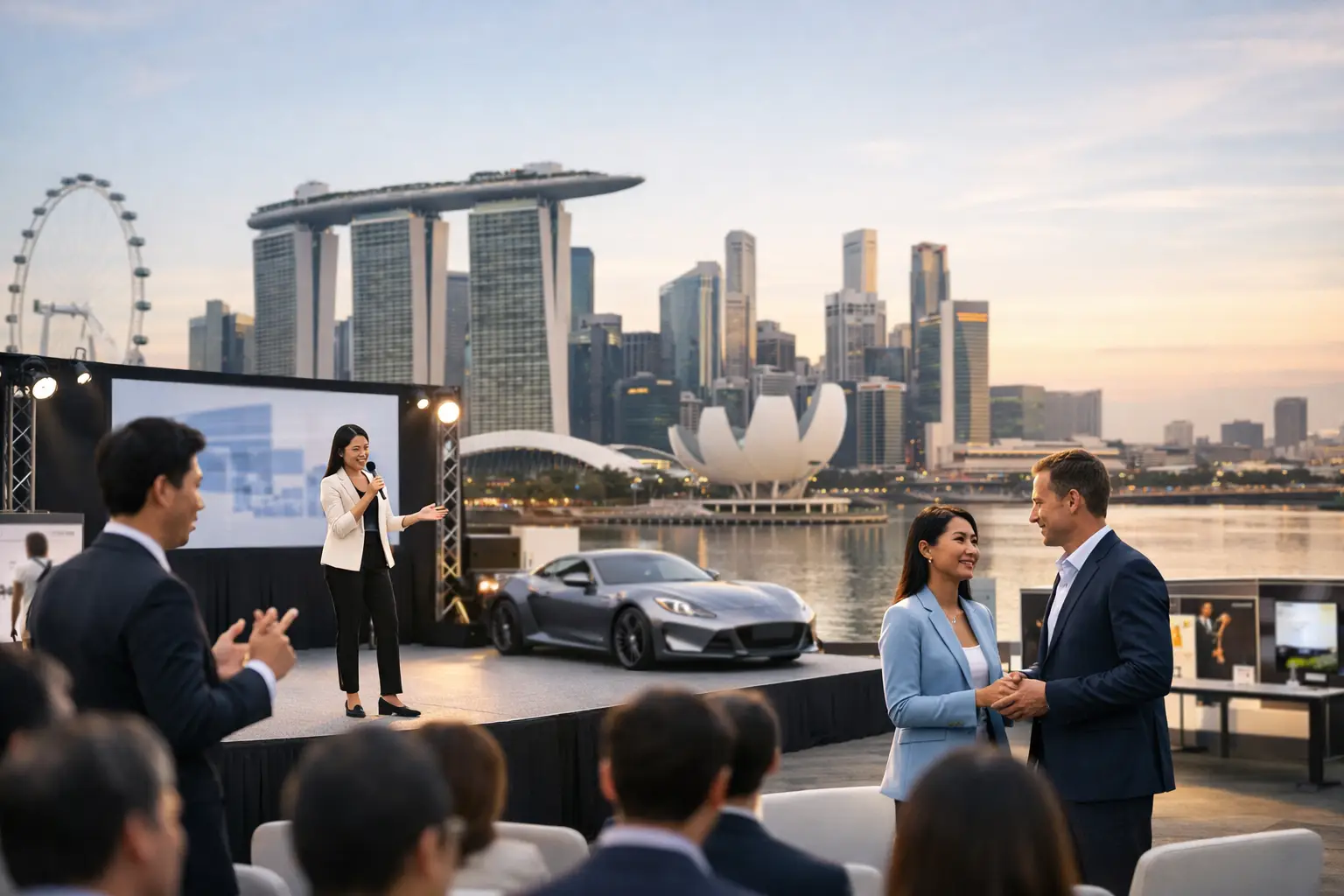
A roadshow can win attention in a crowded mall atrium, office lobby, campus, or public venue – then lose momentum in minutes if the queue stalls, the sound drops, or the next activity is not ready. That is why roadshow event management Singapore requires more than a striking booth or a good-looking backdrop. It requires a practical plan for moving people, telling a brand story clearly, and delivering the same standard at every stop.
For marketing teams, brand managers, and corporate decision-makers, a roadshow is often one of the most visible parts of a campaign. It puts your product, message, and people directly in front of the public. The experience needs to feel inviting for guests and controlled behind the scenes, from the first load-in to the final pack-down.
What Makes a Roadshow Work?
A successful roadshow does not begin with a booth design. It begins with a clear decision about what the event needs to achieve. Is the priority product trial, lead generation, retail traffic, recruitment, employee engagement, or brand awareness? The answer shapes the venue, layout, staffing, program, technology, and measurement plan.
A new consumer product may need a hands-on demonstration area and quick sign-up process. A corporate campaign may need an engaging installation that invites employees to participate between meetings. A multi-city activation may depend on a modular setup that can be transported, rebuilt, and branded consistently without exhausting the budget.
Creative ideas matter, but they must work in real conditions. Singapore venues have different loading rules, operating hours, ceiling heights, power access, crowd limits, and approval requirements. A concept that looks impressive in a presentation must still allow for guest flow, safe cable runs, storage, staff movement, and a realistic setup schedule.
The best roadshows make these operational details invisible to the audience. Guests should simply understand where to go, what to do, and why the experience is worth their time.
Roadshow Event Management Singapore: Planning the Full Journey
Roadshows have more moving parts than a single event because the experience must perform repeatedly. A reliable production partner plans the full journey, not just the launch day.
Start with the audience and the desired action
Before creative development begins, define who you need to reach and what you want them to do. A roadshow aimed at working professionals during lunchtime needs a different format from a weekend family activation. Timing, venue selection, activity duration, staffing style, and promotional messaging should all follow that decision.
It also helps to establish realistic success measures early. Footfall is useful, but it is not always the right measure. Depending on the campaign, stronger indicators may include qualified leads, product demonstrations completed, samples distributed, app registrations, social content created, or conversion at a nearby retail location.
When the goal is clear, every part of the roadshow can serve it. There is less risk of building an elaborate activity that attracts a crowd but produces little meaningful engagement.
Design for attention, participation, and flow
A roadshow space has only a few seconds to communicate its purpose. The visual hierarchy should make the brand, activity, and entry point immediately clear. Guests should not need to ask where the line begins or whether they are allowed to join.
That does not mean every activation needs to be oversized. A compact setup with a strong focal point, well-lit product display, and capable event ambassadors can outperform a large installation that feels confusing or inaccessible. The right scale depends on the venue, expected traffic, campaign duration, and the depth of interaction required.
Guest flow deserves particular attention. High-interest activities can create queues that block neighboring tenants or discourage new visitors. A practical layout separates waiting, participation, consultation, redemption, and exit points where possible. Signage, floor decals, and staff positioning can guide guests without making the experience feel overly managed.
Build a showflow that holds up on site
Roadshows often combine demonstrations, games, scheduled appearances, prize moments, stage segments, or live entertainment. These elements need a showflow, not a loose running order. The team should know what happens at each moment, who is responsible, what equipment is required, and what changes if a segment runs late.
For a launch or promotional reveal, this may include music cues, lighting changes, screen content, presenter scripts, product handoffs, photography positions, and crowd control. For an ongoing activation, it may cover shift handovers, stock checks, cleaning intervals, lead collection procedures, and timed engagement prompts to keep energy up during slower periods.
A detailed showflow gives the on-ground team a shared operating plan. It also gives the client confidence that the event will not depend on last-minute instructions passed across a busy venue.
Production Details Guests Never See
A polished roadshow is supported by work that rarely appears in campaign photos. Venue coordination, permits, insurance requirements, power planning, freight timing, fabrication, AV testing, and vendor scheduling all need to be addressed well before opening.
Technical production should be proportionate to the environment. A small booth may only require clean display lighting and a tablet-based registration system. A public-facing launch may need staging, LED screens, professional sound, lighting, playback control, and a technician on site. More equipment can create impact, but it also adds cost, setup time, and potential points of failure. The right choice is the one that improves the guest experience and supports the campaign objective.
Brand consistency also needs active control. When a roadshow travels across multiple venues, small differences can add up: a missing panel, uneven lighting, outdated screen content, inconsistent staff scripts, or a counter placed differently from one stop to the next. A proper event kit, production checklist, and site-by-site briefing protect the experience from drifting over time.
Inventory management is equally important for sampling, merchandise, printed collateral, and redemption gifts. Running out of popular items early can disappoint guests, while over-ordering creates unnecessary waste and storage costs. Stock planning should reflect expected footfall, conversion rates, replenishment capacity, and the duration of each stop.
The Value of an On-Ground Command Team
No matter how carefully a roadshow is planned, live environments change. A delivery may arrive late. Rain can affect an outdoor activation. A venue may request a layout adjustment. Visitor traffic can surge without warning. The question is not whether changes will happen, but whether the team on site can make good decisions quickly.
This is where experienced on-ground coordination matters. A roadshow manager should have visibility across production, venue operations, staffing, guest flow, and client priorities. Crew members need clear call times and responsibilities. Event ambassadors need product training, escalation procedures, and a consistent approach to guests.
Strong coordination is calm rather than theatrical. It means the sound check is completed before doors open, replacement supplies are available before stock runs low, and the client is updated with solutions rather than surprised by problems. For high-visibility campaigns, that level of control protects both the budget and the brand.
Choosing the Right Roadshow Partner
When evaluating an event management partner, look beyond design concepts and equipment lists. Ask how the team approaches venue feasibility, contingency planning, guest flow, staff briefings, and reporting. Review whether they can manage the complete production scope or whether your team will still need to coordinate separate fabricators, AV vendors, promoters, logistics providers, and venue contacts.
An end-to-end partner is particularly valuable when timelines are tight or the roadshow has several locations. One accountable team can connect creative development with venue sourcing, fabrication, staging, sound, lighting, crew management, artist coordination, logistics, and show-day control. That reduces fragmented communication and gives the campaign a clearer point of ownership.
Teamup Event develops roadshows around both the story guests should remember and the operational plan required to deliver it. The goal is a campaign that feels effortless, memorable, and beautifully run, while the production work remains carefully controlled in the background.
Make Every Stop Worth the Journey
A roadshow earns its value when each location feels purposeful rather than repetitive. Capture learnings from the first stop, adjust staffing or signage where needed, and use daily reporting to understand what guests respond to. A small improvement in queue management, product demonstration timing, or lead qualification can have a meaningful effect across a longer campaign.
The strongest roadshows leave guests with more than a free sample, a photo, or a brochure. They give people a clear reason to remember the brand and a simple next step to take. With thoughtful creative direction and disciplined on-ground execution, every stop can turn a brief interaction into lasting momentum.