
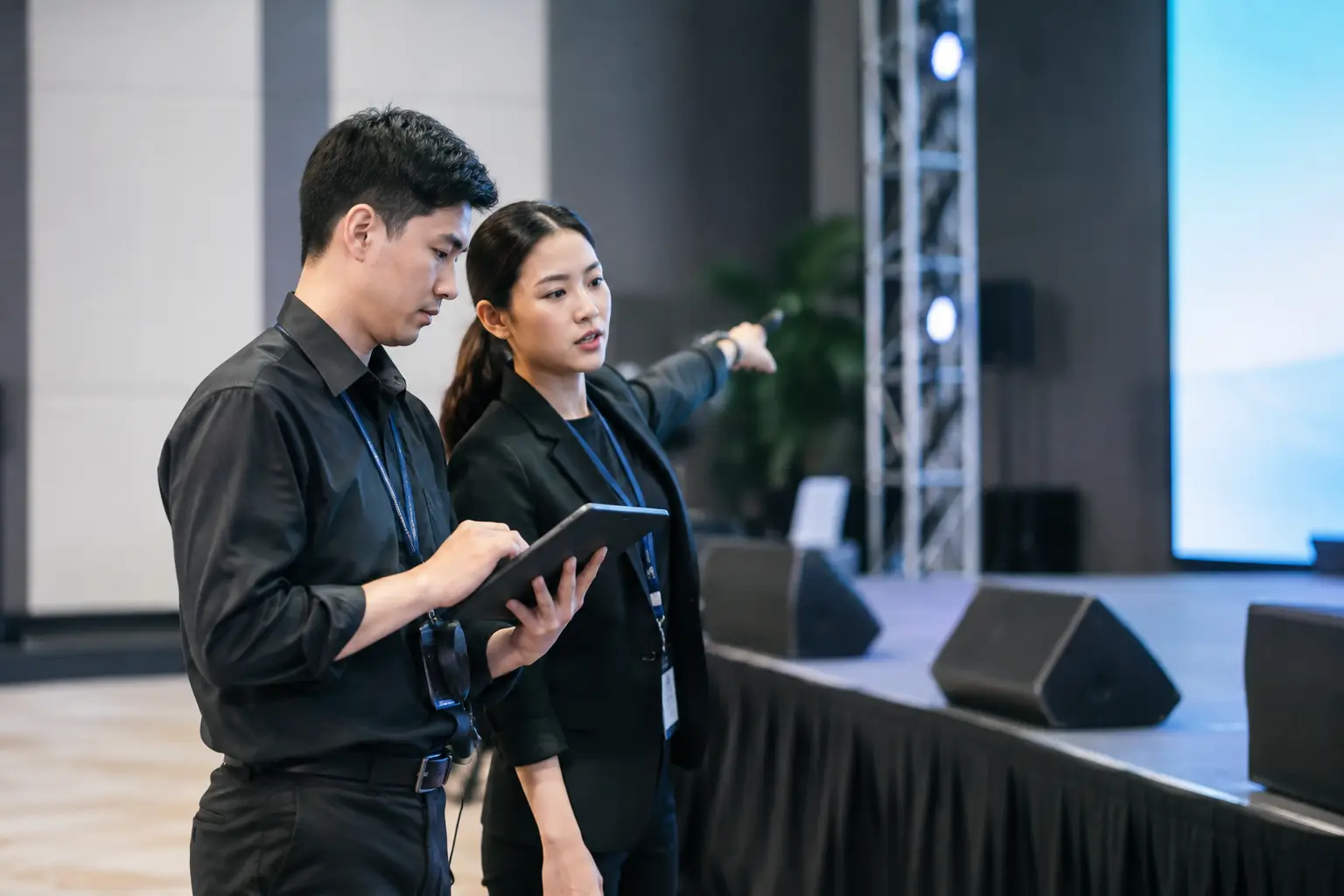
When a CEO walks onstage to a silent microphone, a launch video plays late, or a ballroom blackout lasts one beat too long, guests may not know what failed. They only feel that the moment lost its impact. The technical rehearsal purpose is to prevent those visible cracks before the audience arrives – by testing how every production element performs together, under real show conditions.
For corporate conferences, annual dinners, product launches, and live entertainment events, a technical rehearsal is not an optional extra for a larger budget. It is the controlled working session that turns an approved event plan into a show the production team can confidently run. It gives speakers, crew, producers, and clients the chance to identify gaps while there is still time to fix them.
The Technical Rehearsal Purpose: Control Before Show Time
A technical rehearsal checks the mechanics behind the guest experience. It brings together staging, lighting, sound, video, presentation content, walk-on music, show calling, and people movement in the actual venue or production environment.
The goal is not simply to confirm that each item works on its own. A microphone can sound clear during a standalone test, and a video can play correctly on a laptop, yet the overall experience can still fail when a host walks on before the lights change or a presentation file is called from the wrong source. Rehearsal reveals the handoffs between departments, which is where many event-day problems begin.
For a client team, this session creates clarity. You can see how the opening sequence will feel, where speakers wait before taking the stage, how award recipients move through the room, and whether the showflow is realistic. For the production crew, it establishes a shared rhythm: who gives the standby call, who confirms a cue, and who makes the decision if a scheduled element changes.
What a Technical Rehearsal Should Test
The exact scope depends on the event format, venue access hours, and production complexity. A half-day leadership conference with a single screen needs a different rehearsal from a gala dinner featuring performers, awards, LED content, and live music. Still, the most useful rehearsals test four connected areas.
AV, staging, and content readiness
The team checks audio levels for every microphone type, including lectern, handheld, lapel, and headset microphones. They test playback audio, walk-on tracks, video sound, confidence monitors, presentation clickers, and backup devices. Lighting is reviewed for speaker visibility, camera needs, stage entrances, and key show moments.
Video testing goes beyond opening a file. The crew confirms the correct aspect ratio, resolution, playback order, screen routing, and transition timing. If presenters are using slides, they should practice advancing content and understand whether a technician or the speaker controls the deck. For hybrid or streamed components, internet stability, camera framing, remote speaker audio, and backup connectivity deserve the same attention.
Cue timing and showflow
A showflow may look precise on paper, but it only becomes reliable when timed in the room. The production manager and show caller run key sequences in order: doors open, guest seating, welcome remarks, opening video, executive walk-on, panel transitions, award presentations, entertainment, and closing announcements.
This process reveals timing that documents cannot predict. A speaker may need longer to reach the stage from the holding area. Award winners may require a clear route back to their tables. A video transition may need an extra five seconds for the screen to reset. These adjustments protect pace without making the program feel rushed.
People movement and guest flow
Technical production and guest flow are closely linked. Rehearsal should account for where emcees, speakers, performers, award recipients, and VIPs wait, enter, exit, and receive direction. At a product launch, that might mean planning the exact reveal position and sightlines. At a dinner and dance, it may mean testing the route between tables and stage so winners can be recognized without delays or confusion.
Front-of-house and backstage teams should also align on late arrivals, reserved seating, accessibility needs, and how to hold guests outside the room if an opening sequence needs protection. These details may seem small, but they shape whether the event feels calm and well managed.
Contingencies and recovery plans
No event team can promise that nothing will change. A speaker can arrive late, a laptop can stop responding, or a performance can need to be shortened. The rehearsal is the best time to agree on practical recovery options.
The production team should know which content is essential, which segment can move, who has approval to revise the running order, and what backup is available. This could include spare microphones, duplicate presentation files, alternate playback devices, printed speaker notes, or a holding announcement for the emcee. A contingency plan is not a sign that the production lacks confidence. It is a sign that the team has protected the experience from predictable pressure points.
Who Needs to Be in the Room?
A rehearsal does not need every stakeholder, but it needs the people responsible for decisions and execution. This usually includes the event producer or project lead, AV and lighting crew, stage manager, show caller, content operator, client representative, emcee, and key speakers or performers. For larger programs, artist managers, security, venue operations, registration leads, and streaming technicians may also need to participate.
The client representative should have enough authority to confirm final names, content order, award sequences, and program changes. Rehearsal is not the moment for an extended creative review, but it is the right moment to resolve decisions that affect the live show.
Speakers do not always need to rehearse every word. Busy executives may only have time for a focused stage walk-through. Even then, they should test their microphone preference, review the confidence monitor, understand where to stand, and practice their entrance and exit. Five minutes of stage familiarity can noticeably improve delivery.
Technical Rehearsal vs. Full Dress Rehearsal
These terms are often used interchangeably, but they serve different purposes. A technical rehearsal prioritizes equipment, cueing, timing, and operational coordination. It may stop and restart sequences so the crew can correct a lighting cue, revise a video call, or adjust microphone levels.
A full dress rehearsal runs the program as close to the live event as possible, usually without interruptions. It is more valuable when the event includes performers, choreography, complex reveals, live broadcast elements, or high-profile speakers. It can also be useful for a major awards presentation where pacing and transitions are central to the guest experience.
Not every event needs a full dress rehearsal. If venue access is limited or the program is straightforward, a targeted technical run-through may be the better use of time. The key is matching the rehearsal plan to the risk level of the event, rather than treating all events the same.
How to Make Rehearsal Time Count
The strongest rehearsals begin before anyone reaches the venue. Final presentation files, music tracks, videos, speaker lists, and cue sheets should be submitted by an agreed deadline. Last-minute edits are sometimes unavoidable, but a clear content cutoff gives the production team time to format, test, and back up materials properly.
At the venue, start with a production briefing. Confirm the latest showflow, responsibilities, timing, and any changes since the last planning meeting. Then run the highest-risk moments first: opening sequences, executive addresses, major reveals, remote connections, live performances, and award segments with multiple people onstage.
Keep a live issues log during the session. Each item should have an owner and a resolution, whether that means relabeling a presentation file, moving a stage mark, revising an emcee line, or adding another crew member at an entrance point. Before the team leaves, circulate the updated showflow and cue plan so everyone is working from the same version.
The Value Is Confidence, Not Just Testing
A well-run technical rehearsal gives everyone a clearer role on show day. Your leadership team can focus on guests and messages rather than wondering whether the screen is ready. Speakers arrive knowing where to go. Vendors work from one coordinated plan. Most importantly, guests experience the event as intentional, polished, and effortless.
For high-stakes corporate events, that confidence is worth protecting. Teamup Event plans rehearsals around the moments that matter most, from the first standby call to the final send-off. Give the production team time to test the details, and your people can give their full attention to the room, the message, and the moment you want guests to remember.