
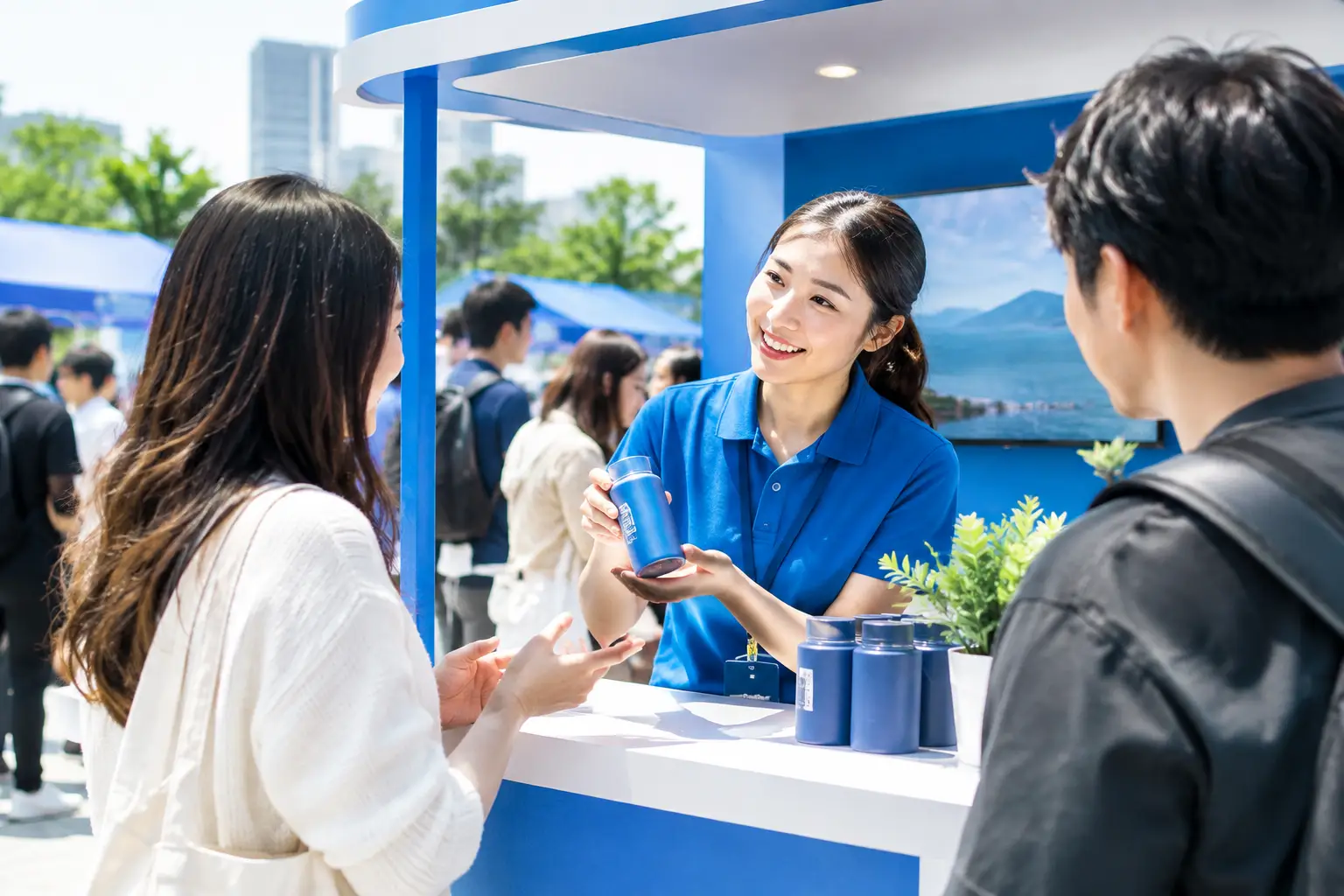
A branded backdrop and a giveaway table rarely give people a reason to stop, participate, or remember. The best brand activation concepts create a clear exchange: guests give their attention, time, or creativity, and receive a moment that feels genuinely worth sharing. For marketing teams, that means designing beyond the visual idea and planning every detail that makes participation easy on the ground.
A strong activation has to work at several levels at once. It must reflect the brand, fit the audience and venue, create a natural guest flow, and remain practical to build, staff, and operate. At a launch, roadshow, mall showcase, conference, or public-facing event, the most creative idea is only as effective as its execution.
What makes a brand activation worth attending?
The right concept depends on the campaign objective. A new product may need hands-on trial. An established brand may want renewed relevance with a younger audience. An employer brand may need employees to feel recognized and connected. These are different jobs, so they should not be forced into the same photo opportunity.
The most effective activations usually answer three questions quickly: What do we want guests to do? What do we want them to feel? What should they remember or do afterward? Once those answers are clear, the creative direction, staging, AV production, staffing, and measurement plan can support one purpose instead of competing for attention.
10 best brand activation concepts for real engagement
1. Interactive product trial stations
For products with a sensory, functional, or performance advantage, let people experience the proof. A beauty brand can offer guided shade matching, a beverage brand can build a flavor discovery bar, and a technology company can create short task-based demos that show the product in action.
The key is to remove friction. Trial stations need enough trained promoters, visible queue management, replenishment plans, clear hygiene procedures where relevant, and a layout that lets passersby understand what is happening before they join. A long line with no explanation can discourage participation; a visible, well-paced experience can become part of the attraction.
2. Personalized content studios
A personalized photo, video, or AI-assisted creative keepsake gives guests a reason to participate and share. The format can range from a premium portrait studio to a short motion video where branded elements respond to each guest’s movement, style, or selected theme.
This concept works especially well when personalization supports the brand story rather than simply placing a logo on an image. Consider how the output is delivered, whether consent is captured, how long each session takes, and where waiting guests will stand. Fast print or digital delivery is part of the experience, not an afterthought.
3. Immersive story rooms
An immersive room turns a campaign message into a physical journey. Guests may move through several compact scenes, with lighting, sound, scent, projection, and set design revealing an idea step by step. A sustainability campaign might visualize the journey of a material; a travel brand might transport visitors through different destinations.
This approach is high impact, but it requires disciplined planning. Throughput must match expected footfall, emergency access cannot be compromised, and technical cues must run reliably throughout the day. It is usually more suitable for a launch, flagship event, or controlled venue than a high-volume transit activation.
4. Live challenge arenas
Competition creates energy when it is simple enough to understand from a distance. A sports-inspired skill challenge, timed puzzle, reaction game, or collaborative mission can turn spectators into participants within minutes. Digital leaderboards can build repeat participation and create a reason for colleagues or friends to challenge one another.
The best version of this concept connects the challenge to something the brand stands for. A financial services brand might use fast decision-making; a mobility brand might use precision and movement. Keep the rules visible, prizes fair, and reset times short. If the game takes too long to explain or operate, crowd momentum drops quickly.
5. Co-creation walls and live art
People are more invested when they leave a visible mark. Invite guests to contribute a message, vote on a collective outcome, add a piece to a growing artwork, or help shape a live mural. For employee events, this can become a powerful way to visualize shared values or future goals.
Physical co-creation works because it makes participation public. However, it needs active facilitation. Guests often need a prompt, a first step, or an example before they contribute. Materials, cleaning schedules, accessibility, and the final display plan should all be considered during pre-production.
6. Unexpected live performances
A performance can stop foot traffic and give an activation its emotional high point. It might be a surprise vocal moment, a percussion ensemble, a dance reveal, or a branded theatrical sequence that introduces a product or campaign. The performance should have a purpose beyond spectacle: gathering a crowd, revealing a message, or creating a scheduled moment people want to catch.
Operationally, performance activations require careful showflow control. Audio coverage, artist call times, holding areas, crowd barriers, stage sightlines, and local venue restrictions all shape what is possible. A short, well-rehearsed performance repeated at the right intervals can often outperform one large production that only reaches a single audience.
7. Community-powered pop-ups
Partnering with a relevant community gives an activation immediate credibility. This could mean inviting local creators, fitness instructors, chefs, gamers, musicians, or specialist hobby groups to lead programming around the brand. Instead of asking people to visit a display, the brand becomes the host of something they already care about.
The partnership has to feel credible. Choose talent and programming that align with the audience, not just reach. Build proper briefing documents, usage approvals, run sheets, technical riders, and contingency plans so the collaboration looks intentional from the first announcement to the final guest interaction.
8. Purpose-led participation experiences
Cause-related activations work when the contribution is tangible and the brand’s role is honest. Guests might help assemble care packs, contribute to a community installation, take part in a repair or recycling activity, or trigger a transparent donation through their participation.
Avoid vague claims and overcomplicated mechanics. Explain exactly what happens after the activation, how the partner organization benefits, and what the brand is committing. A purpose-led experience should leave guests feeling that their action mattered, not that they were used as a backdrop for a campaign.
9. Smart sampling journeys
Sampling becomes more memorable when it is treated as a curated journey instead of a handout. A sequence of tasting, discovery, customization, and feedback can help guests understand a product’s range and identify their preferred option. It also creates useful moments for staff to start real conversations.
For food, beverage, wellness, and consumer goods campaigns, details matter. Plan cold storage, food handling, waste management, stock replenishment, allergen information, cleaning, and queue flow early. These are not secondary logistics. They protect the guest experience and the brand’s reputation.
10. Nighttime spectacle and drone storytelling
For large launches, celebrations, and destination events, a synchronized drone light show can turn a campaign message into a moment people see from across the venue. Logos, product silhouettes, and visual stories can be choreographed above an outdoor audience, creating a strong finale and a natural shareable asset.
This concept has clear trade-offs. It requires suitable airspace, permit planning, weather contingencies, safe viewing zones, and a production schedule that accounts for darkness. It is not the answer for every event, but when the setting and campaign scale are right, it can deliver extraordinary visibility.
Turning a concept into a production plan
A concept earns its place only when it can be delivered consistently. Before approving a direction, assess the venue footprint, expected attendance, dwell time, staffing ratio, technical demands, setup window, permit requirements, accessibility, and contingency options. This is where an activation moves from a promising presentation slide to an experience guests can actually enjoy.
Measurement should be designed at the same stage. Depending on the objective, useful indicators may include participation count, average dwell time, product trials, qualified leads, content shares, redemption rate, sentiment, or post-event conversion. High footfall alone can look impressive while delivering little meaningful engagement.
At Teamup Event, creative development is planned alongside venue sourcing, fabrication, AV, artist coordination, guest flow, logistics, and show-day control. That joined-up approach helps clients protect the original idea while making sure every touchpoint feels polished and well managed.
The activation people talk about afterward is rarely the one with the most features. It is the one that gives the right audience a clear reason to step in, take part, and carry the brand story with them.