
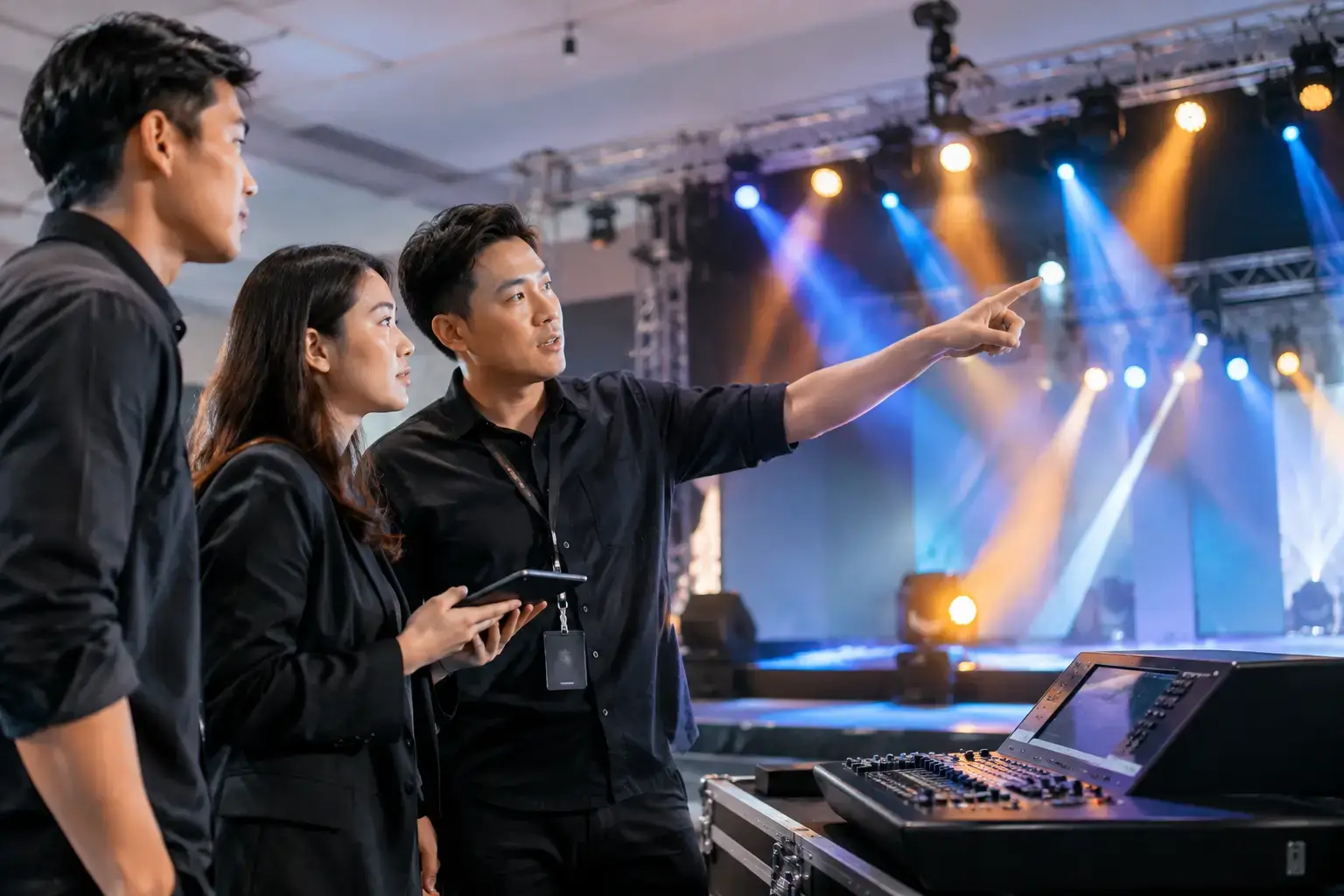
A ballroom can look premium at 6:30 p.m. and feel flat, shadowy, or strangely impersonal once the program begins. That shift is why knowing how to choose event lighting matters well before show day. Lighting does more than make a room visible. It directs attention, supports your brand, shapes photographs, and tells guests when the experience has moved from arrival to celebration, presentation, or performance.
For corporate events, the right decision is rarely about choosing the most fixtures or the brightest colors. It is about creating the right visual environment for the agenda, audience, venue, and production priorities. A leadership conference needs clear facial lighting and readable content. An annual dinner and dance may need a refined welcome look that transforms into an energetic party atmosphere. A product launch needs focus, timing, and a reveal that feels earned.
Start with the event’s purpose and guest journey
Before discussing moving lights, uplights, or stage washes, define what guests should feel at each moment. The lighting plan should follow the event journey rather than operate as a decorative layer added at the end.
For a conference, guests need to orient themselves easily from registration through plenary sessions and networking breaks. For a brand launch, the room may begin with controlled anticipation before opening into a high-impact reveal. For an employee celebration, warm dining light can shift into bolder looks when the host takes the stage, awards begin, or the dance floor opens.
Ask practical questions early: Where should guests look? Which moments need to be photographed or filmed? Will people be taking notes, dining, networking, or watching a performance? Is the goal polished and understated, immersive and theatrical, or lively and social?
A well-built lighting design gives each part of the showflow its own purpose. It can make arrivals feel welcoming, bring speakers into focus, frame an award winner, and signal a change in energy without a host needing to explain it.
How to choose event lighting for the venue
The venue sets the boundaries and the opportunities. Ceiling height, wall color, natural light, power access, rigging points, room width, screen placement, and sightlines all affect what lighting can achieve.
A high-ceiling ballroom can support overhead effects, textured projections, and stronger stage separation. A lower-ceiling function room may call for a more carefully placed ground package that creates depth without glare. In venues with dark walls, colored uplighting can produce rich contrast. In spaces with mirrored walls or glossy surfaces, fixture angles need added care to avoid distracting reflections in guest sightlines and camera frames.
Natural daylight also changes the conversation. A morning conference in a glass-walled venue may require stronger front light for speakers and displays, while an evening gala in the same space may allow for more dramatic ambient color. If the event runs from afternoon into night, plan the lighting transition deliberately. A room that looks balanced at setup can look completely different after sunset.
Venue restrictions are equally important. Some properties limit haze use, rigging, cable routes, fixture placement, or operating hours. Others have house lighting systems that can be integrated into the design, though their color and dimming capabilities vary. Confirm these details during the site visit, not during the final technical rehearsal.
Prioritize visibility before visual effects
Creative effects are valuable when they serve the event. They are less valuable when a CEO is speaking in shadow, an award recipient cannot see the stairs, or guests struggle to read a menu.
For most corporate programs, front lighting for speakers is the foundation. It should be flattering, even, and positioned so presenters can move naturally across the stage. Stage backlighting and side lighting then add shape and separation, helping people stand out from LED screens, drapes, or scenic elements.
Screen content needs special attention. A bright LED wall can overpower presenters if the stage lighting is not balanced properly. Conversely, projected content can appear washed out when front light is too strong or poorly aimed. Lighting, screen brightness, camera exposure, and stage finishes should be planned as one AV production system.
For seated dinners, maintain enough ambient light for guests to eat, find their tables, and speak comfortably. Darkening the room too early can make a premium dinner feel inconvenient. The better approach is to create a warm base look, then use controlled lighting changes for entrance cues, live entertainment, award segments, and post-dinner celebrations.
Match color to your brand and event mood
Color is one of the fastest ways to make an event feel intentional. However, it should not be selected from a palette in isolation. Consider the brand identity, venue materials, floral design, stage backdrop, dress code, screen graphics, and the emotional tone of the program.
A corporate leadership forum may benefit from clean white light with restrained brand-color accents. A luxury client dinner may use warm amber, soft gold, or architectural texture to make the room feel elevated. A technology launch can carry deeper saturated tones, crisp beams, and programmed transitions that reflect innovation and momentum.
Brand colors should be used strategically. Strong logo colors can look excellent on entrance features, scenic details, and selected walls, but covering every surface in one bright hue can become tiring and make people look unnatural in photographs. A lighting designer can build a palette with a dominant color, supporting tones, and neutral light for faces and food.
The same principle applies to movement. Moving lights and beam effects create excitement, especially for walk-ons, entertainment, and finale moments. During speeches or sensitive recognition segments, slow movement or static looks are usually more appropriate. The question is not whether an effect is available. It is whether it strengthens the room at that exact moment.
Plan for cameras, content, and social sharing
Events are increasingly experienced beyond the room itself. Internal recap videos, livestreams, media coverage, and guest-generated content all place additional demands on lighting.
If your event will be recorded, tell the production team early. Camera-friendly lighting requires control over color temperature, brightness, angles, and screen refresh settings. What looks striking to the eye may create flicker, harsh shadows, or inconsistent skin tones on camera. This is especially relevant for keynote presentations, executive messaging, product demonstrations, and award moments intended for post-event use.
Photo moments deserve their own lighting plan too. Step-and-repeat backdrops, branded photo walls, product displays, and entrance installations need even illumination that protects the visual identity and gives guests a reason to share. A poorly lit photo area can undermine an otherwise polished production because it is where many event images are created.
Build the budget around impact, not fixture count
Lighting budgets vary widely because every room, showflow, and technical requirement is different. Rather than asking for a fixed number of lights, identify the outcomes that matter most: speaker visibility, a strong stage look, branded ambience, a reveal moment, performance energy, or broadcast-quality coverage.
A focused lighting package can have greater impact than a larger package placed without a clear design. For example, investing in proper key lighting for a main stage, controlled room uplighting, and programmed show cues may deliver more value than adding decorative fixtures that guests barely notice.
Budget also needs to account for labor and control. Fixtures must be delivered, installed, addressed, programmed, tested, operated, and removed safely. For a simple networking event, a static look may be sufficient. For a dinner program with walk-ons, videos, live acts, and awards, a lighting operator and rehearsed cues are essential to keeping transitions precise.
Be transparent about priorities from the beginning. A production partner can then recommend where to invest, where to simplify, and which choices will protect the experience if timelines or venue conditions change.
Treat safety and operations as part of the design
The most effective event lighting feels effortless to guests because the operational work has been handled well. Every fixture, cable run, stand, truss point, and control position needs to support safe movement for guests, performers, and crew.
This includes keeping emergency exits visible, protecting cable paths, maintaining clear access to the stage, and ensuring lighting positions do not obstruct sightlines or interfere with service. It also means testing power loads, confirming rigging approvals, and coordinating lighting cues with audio, video, stage management, and talent schedules.
Technical rehearsals are where the lighting plan becomes a live show. The team should test walk-on music, videos, microphone positions, award presentations, performer entrances, and any reveal sequence in the actual running order. A cue that looks right on paper may need adjustment once presenters, cameras, and venue lighting are in place.
For high-stakes corporate events, this coordination is what turns attractive lighting into dependable production. Teamup Event approaches lighting as part of the wider event system, connecting creative intent with staging, AV, showflow, and on-ground execution from the first brief to the final send-off.
The best lighting choice is the one guests may not consciously analyze, yet remember in how the event made them feel: confident on arrival, focused during key messages, connected to the brand, and ready for the next moment. Start with that feeling, then let the technical plan support it with care.