
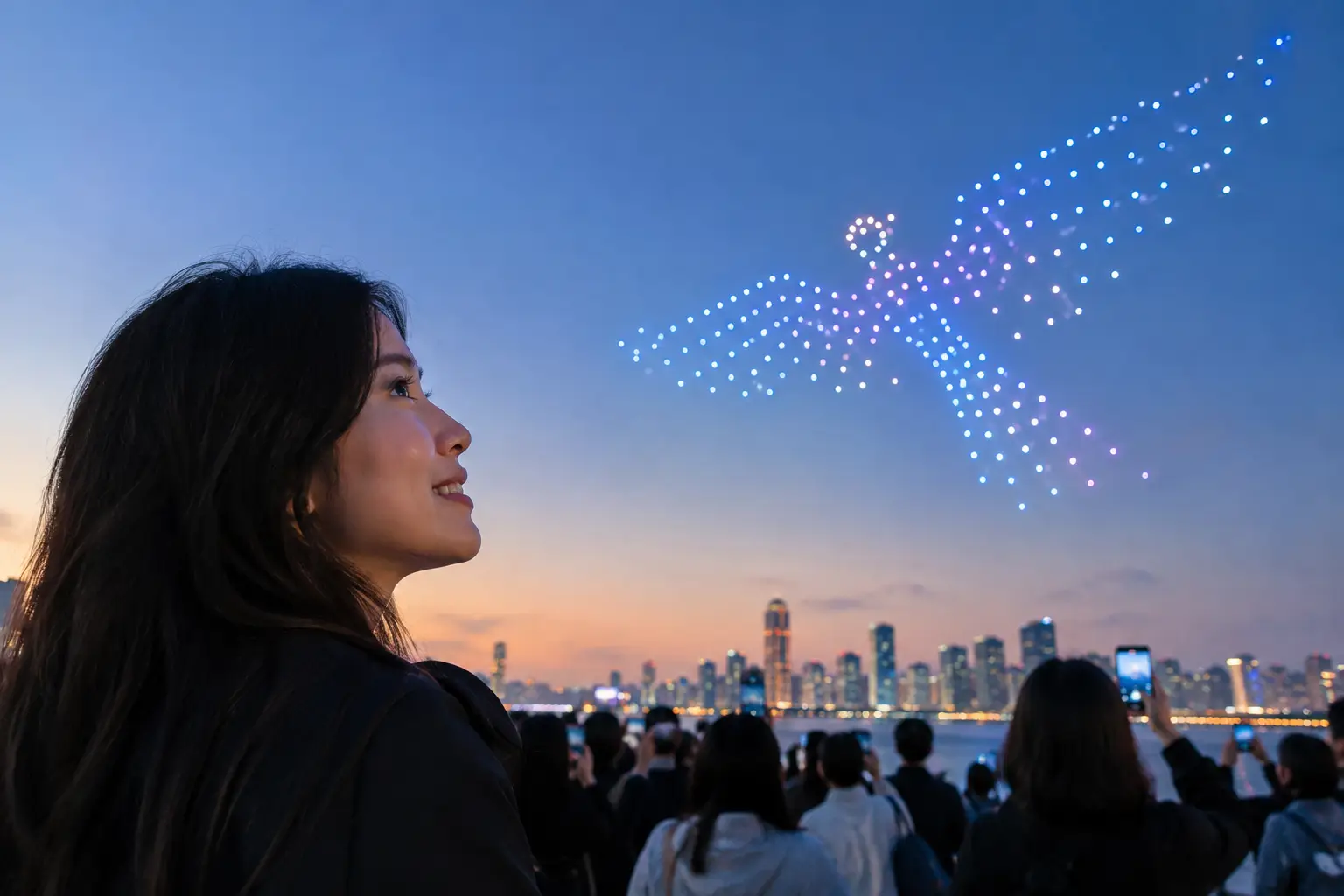
A drone show no longer has to be the final five minutes of an event. The most meaningful drone entertainment trends 2026 point to a larger shift: corporate audiences expect aerial displays to carry the story of the brand, the occasion, and the people in the room. For an annual dinner, product launch, public celebration, or concert, the best shows are becoming part of the event narrative rather than a spectacular add-on.
That change raises the production standard. A drone performance may look effortless from the audience area, but it depends on early creative decisions, airspace assessment, technical rehearsals, precise guest positioning, and close show-day coordination. For planners in Singapore and Southeast Asia, the opportunity is exciting – provided the concept is designed around the real operating conditions of the venue.
Drone Entertainment Trends 2026: Story First, Scale Second
The biggest fleets still create a powerful visual impact, particularly in large outdoor spaces. Yet fleet size alone is no longer the strongest measure of a successful show. A well-designed 300-drone performance with a clear sequence, recognizable brand elements, and an emotionally timed soundtrack can land more effectively than a larger display filled with unrelated formations.
In 2026, audiences will see more shows structured like short films. A launch may begin with a product problem, move through an idea or innovation, then reveal the product silhouette and campaign message in the sky. A company anniversary can turn its heritage, employee milestones, and future ambitions into a series of images that feel personal to the people watching.
This requires the drone creative team to work closely with the broader event production team. The script, emcee cues, screen content, music, lighting, and drone formations need one integrated showflow. If the audience is looking at the stage when the key aerial reveal begins, or if the audio cue arrives late, even impressive choreography can lose its intended effect.
Brand marks are becoming more cinematic
A logo in the sky remains a popular request, but clients are moving beyond a static logo reveal. The more effective approach is to build toward it. A brand icon can emerge from particles, transform from a relevant object, or become the final frame after a short visual journey.
There is a practical reason for this as well. Fine details, small text, and complex marks do not always read clearly from every viewing distance. Strong drone design simplifies the visual language, uses high-contrast shapes, and allows enough time for each key image to register. The result protects brand presentation while giving guests a moment worth filming and sharing.
The Show Is Expanding Beyond the Sky
Drone entertainment is increasingly being planned as one layer of a complete sensory experience. The aerial formation may be the headline, but its impact is amplified by a coordinated soundscape, stage lighting, LED content, pyrotechnic alternatives where appropriate, and a carefully chosen viewing area.
For corporate celebrations, this can mean a dinner program that transitions from awards recognition to a live countdown, then into a drone reveal synchronized to music. For a product launch, the drone segment may follow a high-energy stage reveal and lead guests naturally into a reception, demo area, or after-party. The handoff matters. Guests should know where to look, when to move, and what happens next.
This integrated approach also makes better use of the event budget. Instead of treating drones, AV production, staging, and entertainment as separate purchases, planners can invest in one cohesive moment with a stronger emotional return. It does not mean every event needs every technical element. A waterfront venue with a clear skyline may need very little beyond great audio and thoughtful guest placement. A city venue with competing ambient light may benefit from more deliberate stage and lighting support.
Daytime and twilight programming need different expectations
Drone lights perform best after dark, but not every event schedule allows for a late-night reveal. One developing approach is to use drones in early evening as a transitional experience, while the sky still holds some color, then build toward peak visibility after sunset. This can work beautifully for sunset receptions, festivals, and outdoor brand activations.
However, it is not simply a creative choice. The start time, guest arrival pattern, surrounding light levels, and program duration all affect whether the show will read clearly. An experienced production team will test the timing against the venue orientation and season rather than promising the same visual result for every site.
Operational Precision Is Becoming the Differentiator
As drone shows become more familiar, decision-makers are asking sharper questions: Is the venue suitable? What approvals are required? Where will guests stand? What happens if weather conditions change? How does the crew protect the show schedule without disrupting the rest of the event?
These questions should shape the concept from the first brief. A visually ambitious show that is difficult to fly safely at the selected location is not a strong event solution. The right production process begins with feasibility, including available launch and landing areas, airspace considerations, line of sight, nearby buildings, audience setback zones, and contingency planning.
Weather remains one of the most important variables. Wind, rain, lightning risk, and poor visibility can affect flight operations and the audience experience. A responsible plan does not treat this as a footnote. It establishes clear decision points, alternate programming, and communication responsibilities before show day. In some cases, a reschedule window is sensible. In others, an indoor reveal, screen-based content sequence, or alternative finale may be the better business decision.
Guest flow deserves equal attention. A drone show can create a bottleneck if hundreds of attendees are directed outside at once without sufficient access routes, holding areas, or visibility planning. Guests with limited mobility, VIP groups, and late arrivals all need consideration. The show should feel exciting, not like a complicated relocation exercise.
What Corporate Planners Should Ask Before Committing
The most useful drone brief goes beyond, “We want something wow.” Start with the event objective. Is the purpose to reward employees, introduce a new product, create media-friendly content, mark a milestone, or bring a public crowd together? The answer determines the right creative tone, duration, and audience setup.
Next, consider the venue honestly. Open outdoor sites with an unobstructed viewing direction offer more options than dense urban locations. That does not rule out city events, but it may affect formation complexity, flight paths, guest positioning, and the need for additional production support. A site visit or technical assessment early in planning can prevent expensive redesigns later.
It is also worth defining what success looks like. For some brands, the priority is a memorable in-person moment for employees. For others, it is a campaign asset that will travel across social channels, press coverage, and internal communications. These goals overlap, but they influence camera planning, audience sightlines, content pacing, and whether the show needs a clear hero image designed for video.
Finally, allow enough lead time. Drone entertainment involves creative development, regulatory coordination, venue discussions, flight planning, soundtrack production, and rehearsal preparation. A faster turnaround may be possible in the right circumstances, but a well-run show benefits from early alignment between the event owner, venue, creative team, and on-ground operations crew.
The Most Valuable Trend Is Better Integration
The future of drone entertainment is not about placing more lights in the air for its own sake. It is about making the aerial moment feel inevitable within the event – the point where the story, music, brand, and audience attention come together.
For Teamup Event, that means planning the drone show with the same discipline applied to staging, AV production, guest experience, and show-day control. The most memorable results come from creative ambition matched with practical preparation.
When considering a drone show for 2026, start with the moment you want guests to remember on the journey home. Then build the venue plan, visual story, technical production, and contingency decisions around making that one moment feel effortless, memorable, and beautifully run.