
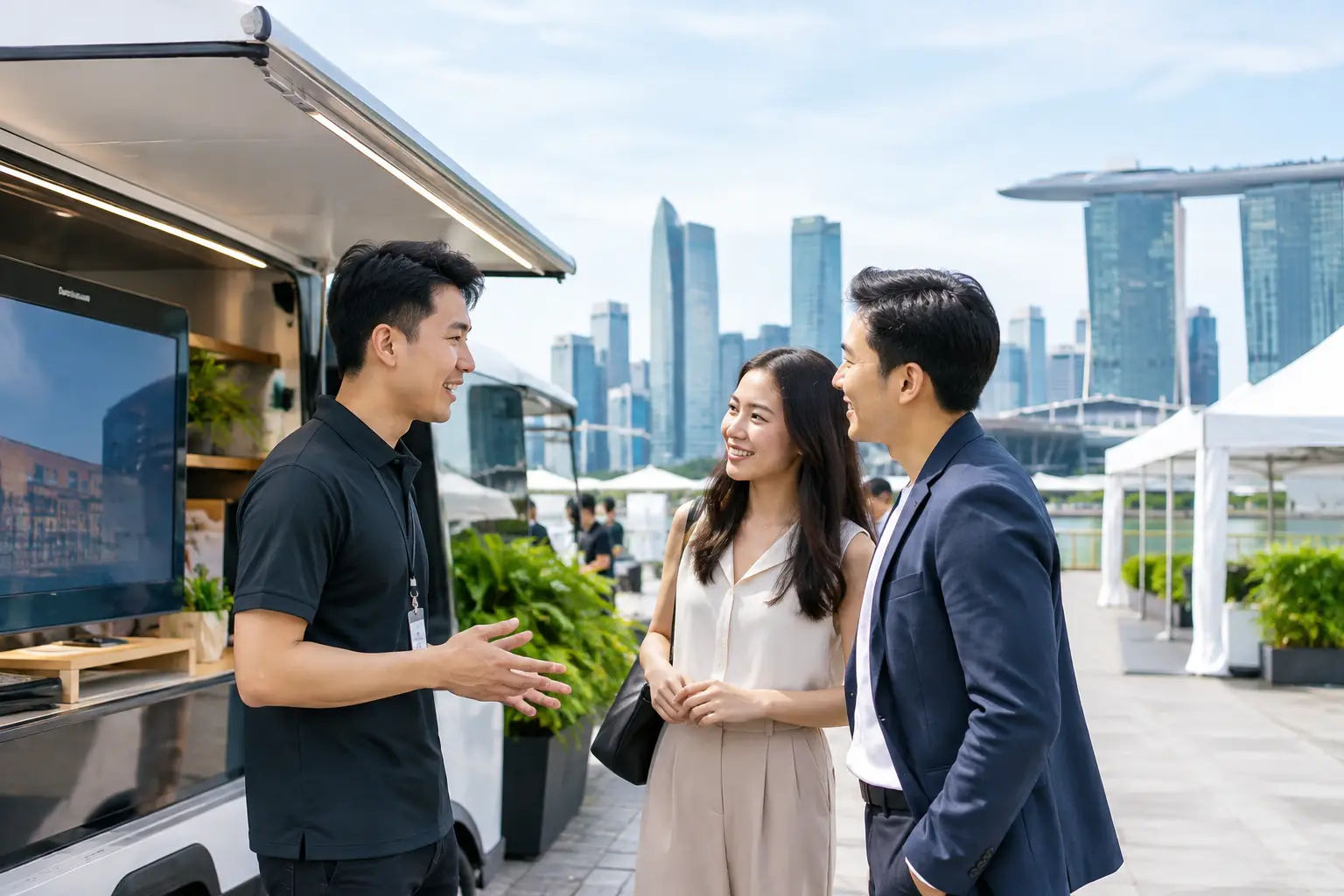
A roadshow can look deceptively simple: a branded booth, a product demonstration, a few promoters, and a busy weekend crowd. Yet the moment an activation moves into a mall atrium, public space, transport-adjacent location, or outdoor precinct, roadshow permits become a central production concern. A missed approval, restricted operating condition, or overlooked venue rule can disrupt setup, reduce visibility, or force last-minute changes to an otherwise strong campaign.
For marketing teams, the goal is not just to secure permission to occupy a space. It is to create a public-facing experience that protects the brand, keeps guests moving comfortably, and gives the on-ground team a clear operating plan. That requires early coordination between venue stakeholders, authorities where applicable, fabricators, AV partners, staffing teams, and event producers.
Why roadshow permits affect more than compliance
Permits and approvals influence the practical shape of the roadshow. They can determine where the activation sits, how large the footprint can be, when crew can load in, what equipment may be used, and whether amplified sound, sampling, filming, or promotional activities are allowed.
This is why permit planning should begin alongside creative development, not after the booth design is finalized. A dramatic overhead feature, a large LED wall, a live emcee segment, or a queue-based game mechanic may be perfectly aligned with the campaign idea but unsuitable for the selected venue or public setting. Early checks allow the concept to remain ambitious while being adjusted for real operational conditions.
For corporate and brand teams working to a launch date, this also protects the production schedule. If approvals require supporting documents, technical drawings, insurance details, risk assessments, or vendor information, those materials take time to prepare and review. The closer the roadshow is to show day, the fewer practical alternatives remain.
Start with the location and activity scope
There is no single permit pathway for every roadshow. Requirements depend heavily on where the activation will take place and what the public will experience there.
A roadshow within a shopping mall may be governed primarily by the venue’s leasing, operations, and safety processes. The mall management team may require a detailed layout, installation method statement, electrical load information, public liability coverage, visual mockups, and a schedule for delivery, setup, and teardown. Some venues have strict rules around noise levels, height limits, hanging structures, floor loading, and the use of adhesives or temporary flooring.
An activation in an outdoor public area usually requires more advance planning. Crowd size, access routes, temporary structures, sound, power supply, weather protection, vehicle access, and public safety all become more significant. Depending on the site and program, organizers may need to coordinate with relevant venue operators, landowners, local authorities, or public agencies.
The activity itself matters just as much as the venue. Product sampling, food and beverage distribution, lucky draws, celebrity appearances, performances, drones, pyrotechnics, and large-scale signage can each introduce separate operational or regulatory considerations. A reliable event partner will identify these dependencies before the campaign is sold internally as a fixed execution.
Build the approval timeline into the campaign plan
Roadshow permits should never be treated as a final checkbox. Approval timelines can vary based on venue, event scale, documentation quality, seasonality, and whether the proposed activity is standard or unusual. A simple mall pop-up may move quickly once the complete submission is ready. A multi-location activation with outdoor elements and custom structures needs a longer runway.
The practical approach is to work backward from the first public operating day. Allow time for site selection, concept adaptation, technical drawings, vendor confirmation, submission, questions from stakeholders, revisions, fabrication, and on-site coordination. If a campaign has multiple stops, avoid assuming that one approval package will apply everywhere. Each venue can have different loading procedures, branding restrictions, safety standards, and operating-hour requirements.
There is a trade-off here. Locking the creative too early may limit flexibility if the site imposes conditions. Waiting too long to commit to a design can affect fabrication cost and production quality. The strongest roadshow plans create a clear hero concept, then develop practical variants that can be adapted to different footprints without losing the campaign’s visual impact.
Documents that commonly need to be ready
While exact documentation differs by location and activity, the organizing team should be prepared to provide a professional event pack. This often includes a scaled floor plan, elevation drawings for structures, a production schedule, electrical requirements, risk assessment, insurance information, vendor contacts, and details of crowd management and emergency access.
For branded activations, visual materials matter too. Venue teams may need to review logos, promotional messaging, screen content, contest mechanics, and the look of structures before approving them. A clear submission reduces back-and-forth and shows that the organizer has considered both brand presentation and public safety.
If the roadshow includes a stage program, the showflow should be part of the planning discussion. A short live segment can affect sound permissions, guest flow, staffing, and security coverage. What feels like a small addition in a creative presentation can significantly change the on-ground operating plan.
Design for guest flow, not just foot traffic
A busy location is only valuable when people can enter, understand, participate, and exit without confusion. Permit conditions and venue rules often reflect this reality. They may restrict queue placement, block the use of certain accessways, require clear sightlines, or set limits on how much of a common area can be occupied.
Instead of treating these conditions as creative constraints, use them to improve the experience. Position the brand message where it can be understood at a glance. Keep registration or redemption points away from the main entry. Create a natural route through product interaction, content capture, and conversion moments. Ensure that queues do not collide with guests who simply need to pass through the space.
This is especially relevant for roadshows that collect leads, distribute samples, or offer instant rewards. A successful activation can quickly become difficult to manage if its popularity exceeds the capacity of the footprint. Staffing, stanchions, signage, stock replenishment, and clear escalation procedures help the team remain in control during peak periods.
Coordinate vendors around one operating plan
Roadshow approvals often expose a common production problem: every vendor is ready to deliver their own component, but no one owns the overall site plan. The fabricator may need final dimensions. The AV team needs power access and cable routes. Promoters need a briefing area and storage. The client wants a content moment that draws attention. Security needs to understand the anticipated crowd pattern.
These details must come together before show day. A consolidated production plan should cover load-in timing, delivery access, equipment placement, electrical distribution, storage, cleaning, staff call times, guest flow, showflow, and teardown. It should also specify who can make decisions on site when a venue representative requests a change.
For campaigns across Singapore or Southeast Asia, local knowledge becomes particularly valuable. Standard practices, approval lead times, available site infrastructure, and vendor capabilities can differ from one market to the next. The campaign idea can remain consistent, but its execution should respect each location’s realities.
Plan for changes without compromising the experience
Even well-prepared roadshows can face site constraints, delayed deliveries, weather concerns, or venue requests that emerge during setup. The answer is not to overbuild every contingency. It is to identify the decisions that need a backup plan: an alternative power solution, a reduced-footprint layout, a wet-weather operating approach, replacement signage, and a clear process for communicating changes to staff.
This is where end-to-end event management adds value. Teamup Event coordinates creative, technical production, vendor management, logistics, and on-ground control so that approvals translate into a workable live experience, not just a folder of documents. The result is a roadshow that feels polished for guests while the production team manages the moving parts behind the scenes.
A roadshow earns attention when the public experience feels natural, confident, and easy to join. Start permit planning early enough that compliance supports the idea rather than reshaping it at the last minute, and every element – from the first branded sightline to the final teardown – has a better chance of running exactly as intended.