
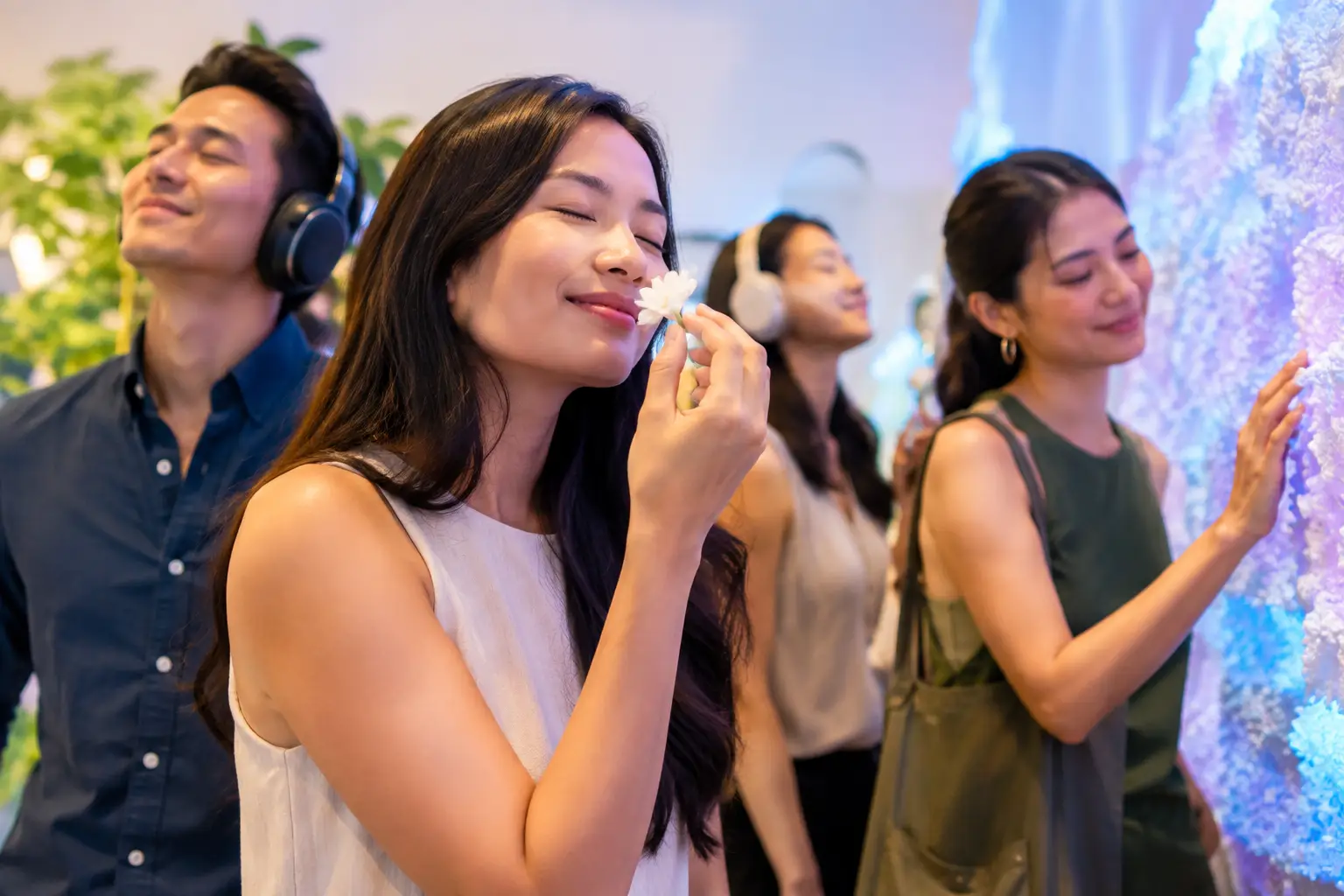
A keynote can be perfectly delivered and still fade from memory by the next morning. What guests remember is the feeling of entering the room, the anticipation before a reveal, the music that carries a transition, and the details that make a brand feel real. Multisensory events are designed around that full experience, using sight, sound, touch, taste, and sometimes scent to give an audience something more lasting than a presentation.
For corporate teams, this is not about adding effects for their own sake. It is about making a message easier to feel, recall, and share. The strongest multisensory approach combines creative storytelling with disciplined production planning, so every moment has a purpose and every operational detail supports the guest experience.
What Makes Multisensory Events Effective?
A multisensory event considers how guests encounter a brand through more than one channel at a time. A product launch may pair a bold visual identity with an original audio cue, a tactile product demonstration, and a menu that reflects the campaign theme. An annual dinner may use lighting, stage design, music, and table styling to turn a familiar ballroom into an immersive celebration.
The value comes from alignment. When sensory elements reinforce the same idea, guests understand the story more quickly. They also tend to remember it with greater clarity because the experience has given them multiple associations to hold onto.
This matters especially when a company has a significant message to deliver: a new strategic direction, a milestone anniversary, an employer brand promise, or the arrival of a new product. A well-produced environment helps the audience move from hearing the message to experiencing what it means.
There is a practical upside, too. Thoughtful sensory design can guide behavior. Lighting and sound can signal that it is time to move from networking to the main program. A clearly designed arrival sequence can reduce uncertainty at registration. Interactive displays can keep guests engaged during queues or program breaks. Done well, these decisions improve guest flow while elevating the atmosphere.
Start With the Feeling, Not the Effects
The first planning question should not be, “Should we use scent?” or “Can we add a projection wall?” It should be, “What should people feel at each stage of this event?” The answer may be confidence, curiosity, recognition, pride, momentum, or celebration.
From there, the event team can build an experience map. Consider the guest journey from the invitation and arrival through registration, pre-function, the main program, meal service, networking, and departure. Each stage should have a clear emotional and practical role.
For example, an executive conference may begin with calm, efficient registration and a focused pre-function environment. As the audience enters the plenary room, the lighting, walk-in music, screen content, and staging can build energy without becoming distracting. A strategic announcement may then be supported by a precise audiovisual sequence that gives the message weight and clarity.
A dinner and dance calls for a different rhythm. Guests may first encounter an elegant welcome, then move into a more theatrical room reveal, followed by a program that rises and falls between recognition, entertainment, and shared celebration. The sensory choices should support that progression rather than compete with it.
Designing Each Sense With Purpose
Visual design usually carries the largest share of the storytelling. This includes staging, LED screens, lighting, florals, table styling, wayfinding, dress code cues, and branded content. Strong visual design does more than look polished in photos. It makes the room understandable. Guests should know where to go, where to look, and when an important moment is about to happen.
Sound is equally influential, though it is often treated as a technical afterthought. Walk-in music, transition cues, voice clarity, live performance, and room acoustics all shape how guests read the energy of the event. A premium brand launch can lose impact if a presenter is difficult to hear or if background music continues at the wrong level. Audio planning needs to account for speaker coverage, microphone requirements, playback redundancies, and the realities of the venue.
Touch creates participation. It may be as simple as premium event materials, a textured invitation, a hands-on product station, or a personalized badge that feels worth keeping. At a team-building program, touch may be central to the experience through physical challenges and collaborative activities. The point is not novelty. It is to give guests a role beyond watching.
Taste can reinforce an event theme with more subtlety than many planners expect. A signature mocktail named for a campaign, locally inspired canapes, or a dessert reveal timed with an award segment can become an easy conversation starter. Food and beverage choices must still work for dietary needs, service timing, and venue capabilities. A clever menu is not successful if it delays the showflow or leaves guests waiting.
Scent requires the greatest care. It can be powerful in a controlled setting such as a retail activation or intimate brand experience, but it is rarely appropriate as a dominant feature at a large corporate gathering. Allergies, sensitivity, ventilation, food service, and venue policies all matter. In many cases, the scent of fresh florals, coffee, or an open kitchen is enough. The rule is simple: if guests notice the scent before they understand the event, it may be too much.
Production Precision Is Part of the Experience
Multisensory design only feels effortless when production is tightly controlled. A lighting cue that fires early, a video with mismatched audio, or an activation that creates a bottleneck can interrupt the story immediately. The more layers an event has, the more important it becomes to manage the technical and operational details as one connected system.
This begins with venue sourcing. Ceiling height, rigging points, power availability, load-in access, sound restrictions, room turnover windows, and kitchen access may determine which ideas are realistic. A concept can be ambitious while still being designed around the physical conditions of the space.
It also requires an integrated showflow. Creative, AV production, staging, performers, caterers, registration staff, and guest experience teams need to work from the same timing plan. During rehearsals, every cue should be checked not only for technical accuracy but also for the guest perspective. Can people see the screen from the back? Is the room dark enough for the reveal but bright enough for safe movement? Does the transition give guests enough time to find their seats?
For larger audiences, crowd management is not separate from creativity. Clear wayfinding, appropriately placed ushers, staggered entry, and accessible routes protect the mood of the event. Guests should feel welcomed and guided, not processed.
Where Multisensory Events Can Go Wrong
More sensory input does not automatically create more impact. Overloaded screens, loud music, flashing lights, competing scents, and too many interactive stations can leave guests tired rather than inspired. The best events use contrast: quieter moments before a major reveal, clean stage visuals after a busy pre-function area, and space for conversation between high-energy segments.
Accessibility also needs to be built into the concept from the start. Provide clear captions where appropriate, avoid relying only on sound for key messages, consider guests with sensory sensitivities, and ensure activations can be used by people with different mobility needs. These choices improve the experience for everyone, not only for a small group of attendees.
Budget is another real consideration. A focused sensory idea, executed exceptionally well, will often outperform a room full of disconnected production features. If investment must be prioritized, protect the moments that carry the core message: arrival, the main reveal or keynote, and the final takeaway guests carry home or share afterward.
Build an Experience Guests Can Feel
The right multisensory event does not distract from the business objective. It gives that objective a setting, a rhythm, and a memorable human dimension. Whether the brief is a leadership conference, a product launch, a company celebration, or a public-facing roadshow, every production choice should answer one question: does this make the message clearer and the guest experience better?
At Teamup Event, that question guides the work from the first creative brief through staging, AV, vendor coordination, rehearsal, and on-ground execution. The goal is not simply an impressive room. It is an event that feels considered at every touchpoint, runs with control, and gives guests a reason to keep talking after the final send-off.