
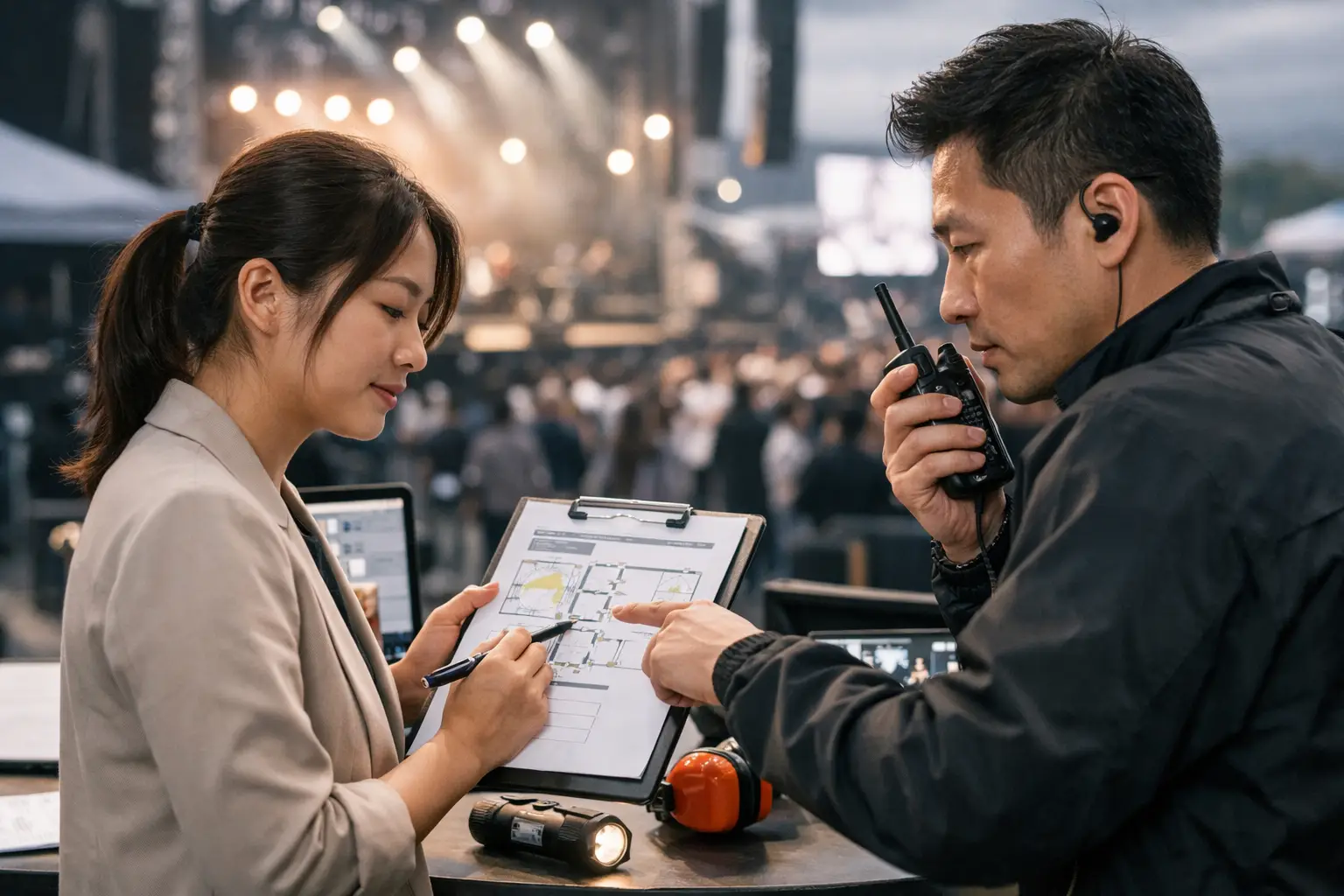
A ballroom can look show-ready at 5:45 p.m. and face a major disruption by 6:15: a delayed keynote speaker, a failed presentation feed, heavy rain at the arrival point, or 200 guests arriving at once. An event contingency planning guide gives organizers a practical way to protect the guest experience when plans change. It is not about expecting failure. It is about making decisions early enough that guests continue to experience a confident, well-run event.
For corporate conferences, product launches, Annual Dinner and Dance events, roadshows, and public-facing brand experiences, contingency planning should sit beside creative development, not after it. The best concepts still need a workable backup for every moment that matters: arrivals, registration, stage reveals, meals, speeches, entertainment, and departure.
Start With the Moments That Cannot Fail
Not every risk deserves the same level of planning. A late floral delivery may be inconvenient, while a failed LED screen during a product reveal can affect brand perception, media coverage, and executive confidence. Start by identifying the event’s non-negotiable moments and the dependencies behind them.
For a leadership conference, that may be the CEO keynote, livestream, presentation playback, and attendee check-in. For a gala dinner, it may be the opening sequence, awards presentation, entertainment cueing, meal service, and safe transport home. A launch may depend on an exact reveal time, product display readiness, press access, and crowd management.
Ask three direct questions for each critical moment: What could prevent this from happening? How likely is it? What is the fastest acceptable alternative? This shifts the discussion from vague concern to an actionable response plan.
Build a risk register that people can use
A risk register does not need to become a lengthy document that no one checks on show day. It should be a concise working tool shared with the event lead, venue, production crew, and key vendors. For each risk, record the trigger, the person responsible for calling the response, the backup action, and the communication needed.
For example, “heavy rain begins during outdoor registration” is a risk. The trigger could be a weather alert or rain starting within 60 minutes of doors opening. The response might be to activate covered walkways, move registration indoors, deploy extra ushers, and send an arrival update to registered guests. Assigning those actions in advance avoids a cluster of last-minute questions at the entrance.
Your Event Contingency Planning Guide: Plan by Category
Most live-event disruptions fall into a small number of categories. Planning around them gives your team enough structure without trying to predict every possible scenario.
Weather and venue access
Outdoor components require clear thresholds, not hopeful judgment calls. Establish the point at which a rooftop reception moves indoors, a drone light show is postponed, or an outdoor queue is rerouted. The decision should account for wind, lightning, rain intensity, ground conditions, guest comfort, and the time needed to reset the next space.
Indoor events are not exempt. A vehicle breakdown at the loading bay, a blocked entrance, elevator restrictions, or an unexpected building alarm can all affect arrival and setup. Confirm alternate entry points, loading windows, passenger drop-off procedures, and indoor holding areas with the venue well before event day.
AV, power, and showflow failures
Technical production is often where contingency planning earns its value. A presentation may be ready, but it still depends on a working laptop, correct aspect ratio, reliable clicker, playback operator, screen feed, audio system, and power supply. The more high-profile the stage moment, the more its backup should be tested.
A sensible plan may include a duplicate show laptop, backup presentation files, locally stored videos, spare microphones, a fallback confidence monitor, and alternate playback routes. For larger productions, identify which equipment is on isolated power and what can continue if a circuit trips. The goal is not to duplicate every item. It is to protect the equipment and cues that would stop the show.
Showflow also needs breathing room. If a speaker runs late, can the host extend audience interaction, can a video play earlier, or can a networking break absorb the delay? A showcaller should have approved filler options and know who has authority to reorder the program.
Vendors, talent, and logistics
A missing vendor rarely stays contained. If entertainment arrives late, the dinner program may need to change. If a food station is delayed, guest flow can back up at the entrance. If a courier is stuck in traffic with award trophies, the awards segment becomes vulnerable.
Confirm vendor contacts, vehicle details, load-in times, delivery cutoffs, and backup contacts. For critical suppliers, build in buffers and identify substitutes where practical. This is especially relevant for specialty performers, custom-built props, VIP transportation, live acts, and event furniture.
There is a trade-off here. Paying for a duplicate supplier for every element is rarely proportionate. Instead, reserve backup investment for items that have a high impact and a limited recovery window. A spare handheld microphone is low-cost insurance. A duplicate custom stage build may not be realistic, so the better response is stronger fabrication checks, earlier installation, and a repair kit on-site.
Guests, health, safety, and crowd flow
A beautiful venue can still feel disorganized if guests do not know where to enter, register, queue, or find help. Model guest movement from curbside arrival to final departure, especially when VIPs, media, employees, partners, or public ticket holders have different access needs.
Plan for four recurring issues: registration surges, lost or unwell guests, capacity pressure, and changes to access routes. Your on-ground team should know where to direct people, where to hold a queue, who handles escalations, and how to communicate without causing unnecessary concern.
For medical or safety incidents, align with the venue’s emergency procedures and identify the event-side point person. Keep incident reporting clear and discreet. Depending on the event size, audience profile, and venue requirements, you may also need security personnel, first aid coverage, bag checks, or a formal evacuation briefing for crew.
Make Decisions Before the Event, Not During It
A contingency plan works only when the team knows who can activate it. Decision-making often becomes the real problem at high-stakes events: the production team sees a risk, the client wants approval, the venue has a policy, and valuable minutes pass.
Create a simple authority map. Define who can approve a program change, who can halt an outdoor activity, who can speak to the client, and who can issue a guest-facing message. For major decisions, nominate one final approver and one backup. Everyone else should be responsible for providing facts, not reopening the decision.
Communication channels should be equally deliberate. A production communications group may be appropriate for urgent operational updates, while the client should receive concise status reports from one designated lead. Too many parallel messages can make a manageable issue feel larger than it is.
Prepare guest-facing language in advance
Guests do not need every technical detail. They need calm, timely direction. Prepare short holding messages for common situations, such as a delayed start, weather reroute, room change, or temporary pause in programming.
A host might say, “We will begin shortly. Please enjoy refreshments in the foyer while we prepare the room.” That preserves energy without announcing an equipment fault. If a change affects the schedule, provide the next instruction rather than an apology alone. Clear signage, trained ushers, and well-timed announcements are often more effective than a long explanation.
Test the Plan Through Tabletop Scenarios
Reading a contingency plan is useful. Running it is better. Before show day, gather the client lead, venue operations contact, producer, technical director, registration lead, and key vendors for a short tabletop exercise. Walk through realistic scenarios and ask each person what they would do first.
Test situations that fit the event, including:
- Rain starts as guests arrive for an outdoor reception.
- The main presenter is delayed by 30 minutes.
- The primary projection feed fails during a keynote.
- Registration lines exceed the available queue space.
- A performer misses their call time.
- An emergency requires part of the venue to be cleared.
The value is not in finding a perfect answer to every scenario. It is in exposing gaps: an unclear radio channel, a missing backup file, an unapproved alternate room, or a vendor who has not received the latest showflow. Update the plan after the exercise, then brief the crew again during load-in or the pre-event production meeting.
Treat Contingency Planning as Part of the Guest Experience
Guests remember the confidence of an event more than the operational work behind it. When a rain plan is activated quickly, an AV issue is covered with a well-timed host segment, or a late arrival is guided with care, the event still feels intentional. That is the standard a production partner should protect from the first brief to the final send-off.
At Teamup Event, contingency planning is built into event flow, technical rehearsals, vendor coordination, and on-ground control because creative ambition needs operational readiness. The most effective plan is not the largest document. It is the one your team can act on calmly when the room is full and the clock is moving.