
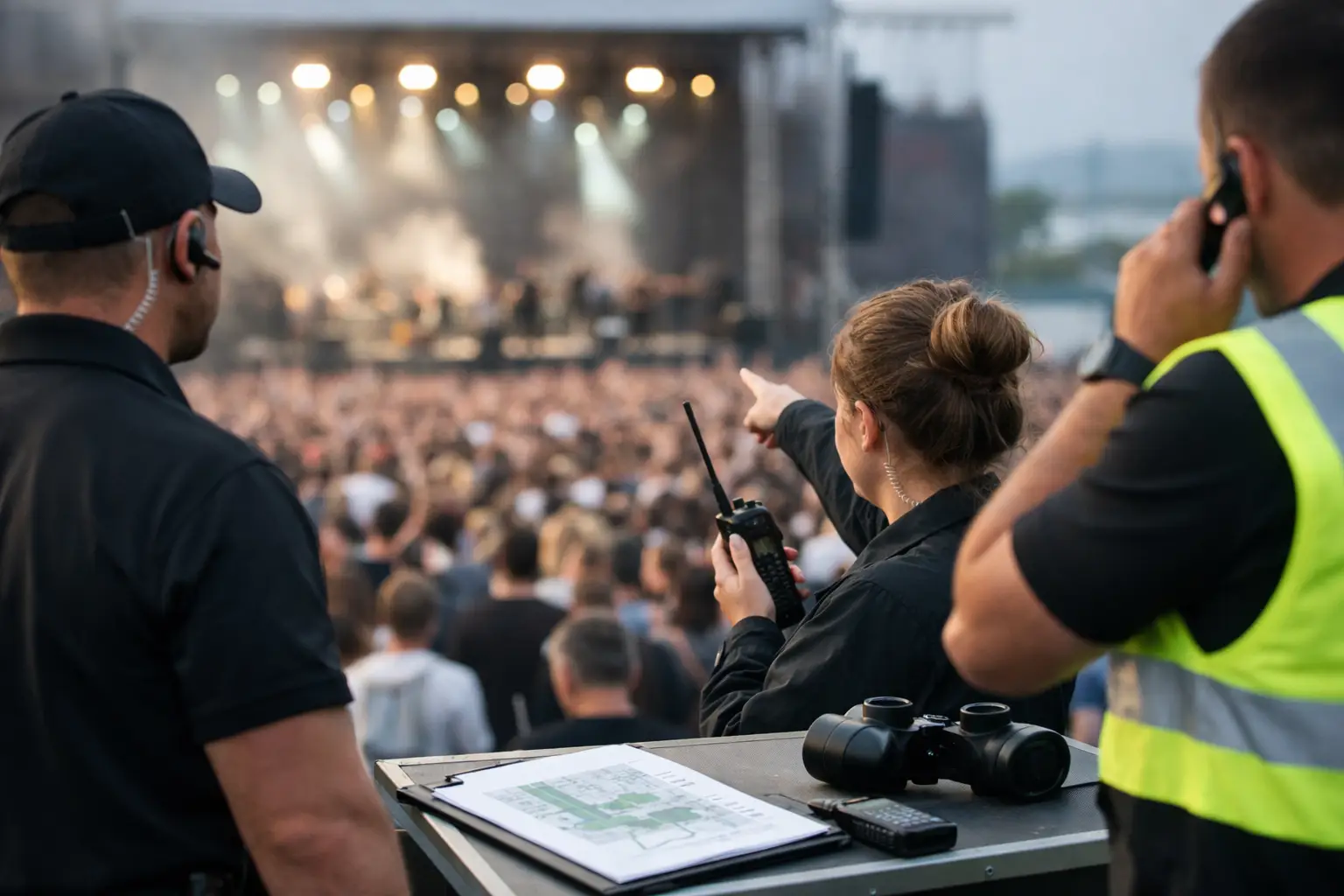
A great concert can change pace in seconds. Doors open, a popular artist takes the stage, rain moves guests under cover, or one blocked pathway creates pressure where there was none a minute earlier. A concert crowd management plan gives organizers, venue teams, security, and production crew one shared operating picture before those moments arrive.
For corporate brands, promoters, and organizations producing public-facing live music experiences, crowd management is not a security add-on. It shapes the guest experience from the first queue to the final exit. The goal is to help people move confidently, find what they need, enjoy the show, and leave safely – without making the event feel overcontrolled.
Start the concert crowd management plan with real capacity
Capacity is more than the maximum number printed on a venue license. A practical plan begins with usable capacity: how many people can safely occupy each zone after the stage, FOH position, camera platforms, barricades, concessions, sponsor activations, accessible viewing areas, and emergency lanes are in place.
Map the site into clear operational zones. This usually includes external arrival areas, bag-check and ticketing lanes, entry points, the main audience bowl, VIP or hospitality areas, food and beverage zones, restrooms, back-of-house access, medical posts, and exit routes. Each zone should have an identified owner, expected occupancy, entry and exit points, and a defined response if it becomes congested.
The right capacity depends on the audience and format. A seated corporate concert has different movement patterns from a standing general-admission show. A family audience may arrive earlier and move more slowly. A fan-led concert may see a major surge at doors, during a headline act, and immediately after the final song. Build the plan around likely behavior, not only the venue diagram.
Design for movement, not just space
Guest flow should remain intuitive even when the site is busy. Separate incoming and outgoing traffic wherever possible, especially near doors, stairwells, elevators, and narrow corridors. Keep emergency routes physically clear rather than relying on signs alone.
Wayfinding, barriers, and staff positions should guide movement before guests need to ask. Well-placed directional signs can reduce confusion, but they cannot compensate for a poor layout. If a queue crosses an exit path or a merchandise line spills into a main walkway, redesign the footprint before show day.
Build arrival and entry around the peak period
The first impression of a concert is often formed outside the venue. Long, unclear queues create frustration before the opening act begins, while rushed entry can lead to crowd compression and disputes at screening points.
Work backward from the stated door time. Estimate how many guests must be processed during the busiest 30- to 60-minute period, then test whether the number of ticket scanners, bag-check lanes, security personnel, and queue space can support that volume. A plan that works on paper across three hours may fail if most attendees arrive in the final 20 minutes.
Use distinct lanes where appropriate for ticket types, guest lists, accessible entry, VIP guests, and guests without bags. The choice depends on expected volumes. Too many lanes can confuse attendees and leave staff underused; too few can create avoidable bottlenecks. Clear pre-event communications about arrival time, permitted items, transport options, and entry requirements reduce pressure at the gate.
Queue design also needs a weather and welfare plan. Consider shade, rain cover, water access, lighting, and a process for assisting guests who need additional support. These details protect comfort and make the operation feel considered from the first point of contact.
Set roles, decision rights, and communication channels
A crowd plan only works when every team knows who can make a decision. Event organizers, venue operations, security, medical providers, artist management, stage management, ushers, and production crew all have different responsibilities. Without a clear command structure, teams can lose valuable time seeking approval during a fast-moving situation.
Before doors open, hold a joint operational briefing. Review the site map, showflow, crowd triggers, emergency routes, radio channels, escalation process, weather conditions, and any artist-related moments that may affect audience movement. This includes planned confetti drops, guest appearances, meet-and-greets, giveaways, or post-show photo opportunities.
Your communications plan should identify the event control point and a primary decision-maker for crowd operations. Radios need disciplined use, with separate channels or agreed call signs for security, production, front-of-house, and medical coordination. Everyone should know how to report an issue clearly: location, nature of concern, immediate impact, and assistance required.
Identify pressure points before they become incidents
The strongest concert crowd management plan anticipates where density may build and what the team will do at each threshold. Monitor crowd conditions at entrances, the front-of-stage area, popular food vendors, restrooms, stairways, transit pickup points, and any limited-access activation.
Front-of-stage management deserves particular attention for standing shows. Security and pit teams should watch for visible discomfort, blocked sightlines that encourage pushing, guests climbing barriers, and fans attempting to move forward during high-energy moments. Water distribution, visible staff, controlled access to the pit, and a reliable extraction route for distressed guests all contribute to a safer audience environment.
Use a simple escalation model. When a zone begins to fill, staff can redirect arrivals and open alternative routes. If density continues to rise, temporarily pause entry into that area, communicate the change to relevant teams, and adjust the guest route. More serious concerns may require a pause in the show or a partial evacuation, depending on guidance from venue leadership and relevant authorities.
The point is not to create alarm. It is to make decisive, proportionate action possible when conditions change.
Connect the showflow to crowd behavior
Production choices influence guest movement. A late gate opening, delayed support act, extended intermission, or sudden announcement can all send large numbers of people toward the same place at once. Crowd planning and show production should therefore be developed together, not handed off between separate teams.
Review each showflow moment that could change audience behavior. If the artist asks guests to move closer to the stage, how will the pit team respond? If a sponsor activation has a timed giveaway, is there room for a queue? If a performance ends earlier than expected, are exits, transport, and post-show staff ready sooner than planned?
Lighting and audio also support operational control. House lights, public-address announcements, LED screens, and pre-show messaging can direct guests calmly during entry, exits, weather holds, or emergencies. Messages should be prepared in advance, but the team should also have the authority to adapt them to the real situation on site.
Plan the exit with the same care as entry
A well-run concert should not unravel at the final encore. Post-show exit is one of the highest-volume movement periods, particularly when guests are trying to reach parking, rideshare zones, public transit, or a nearby after-party location.
Open all suitable exit routes where safe to do so, deploy staff at key decision points, and prevent guests from stopping in narrow pathways to wait for friends or take photos. Coordinate with the venue and transport partners on pickup zones, pedestrian crossings, traffic control, and accessible departure options.
For larger shows, staggered release may be useful in certain areas, though it must be communicated carefully. The best approach depends on venue layout, local transport infrastructure, and audience expectations. Guests will accept a short wait when they understand where to go and see that the operation is moving.
Rehearse, document, and improve
A site walk-through is essential, but a scenario-based rehearsal is even better. Test the route from the control point to the audience bowl. Walk an extraction path from the front barricade to medical. Check that emergency gates open, signage remains visible after staging is installed, and radio coverage works in crowded areas.
After the event, gather observations from security, front-of-house, venue operations, production, and client stakeholders. Record where queues formed, which messages worked, how long entry and exit took, and whether staffing levels matched demand. These notes become valuable operational intelligence for the next show.
At Teamup Event, crowd planning sits alongside creative direction, AV production, staging, artist coordination, and on-ground show control. When those elements are planned as one operation, guests experience the result as something simple: a concert that feels effortless, memorable, and beautifully run.
The best closing moment is not only the final applause. It is the point when every guest can leave the venue safely, clearly, and still talking about the performance.