
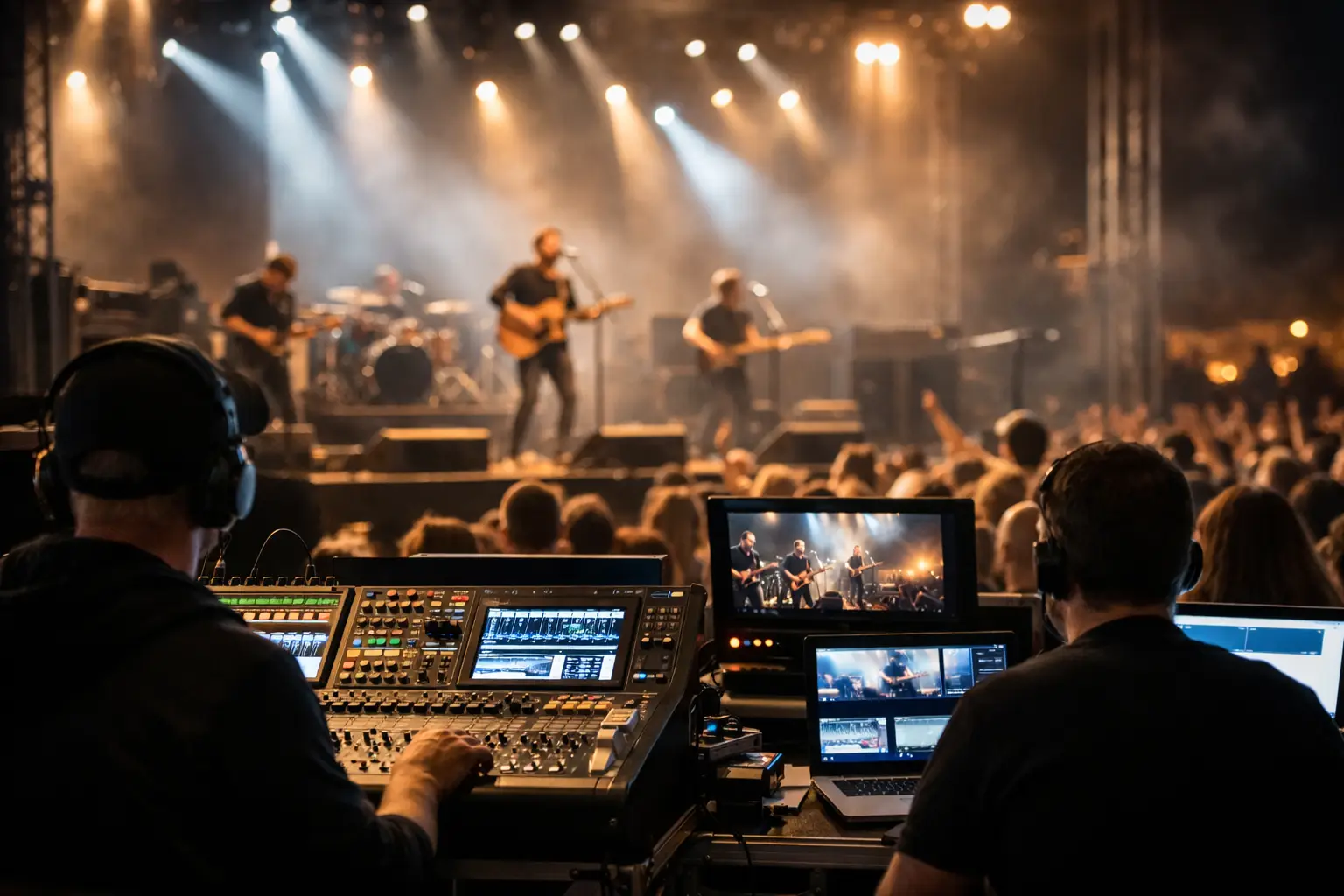
A concert can look effortless from the audience floor while dozens of moving parts are being managed behind the stage. Effective live music concert production is the work of turning an artist, a venue, and a crowd into one shared experience – while keeping sound, timing, safety, and guest flow firmly under control.
For brands, corporate organizers, and entertainment teams, the standard is higher than a functioning stage and a familiar headline act. The concert must reflect the occasion, protect the brand’s reputation, and give every guest a reason to stay engaged from arrival through the final encore. That calls for creative thinking backed by disciplined planning.
What Live Music Concert Production Really Involves
Live music concert production connects the creative vision with every operational decision required to deliver it. It begins with defining the concert’s purpose. A public ticketed show may prioritize audience energy, artist appeal, and crowd capacity. A corporate concert may need to support a product launch, customer appreciation program, employee celebration, or brand campaign.
That purpose shapes the venue, format, artist lineup, production design, and showflow. An intimate acoustic set in a hotel ballroom requires a very different approach from an outdoor festival-style concert with multiple performers, LED screens, food vendors, and thousands of guests.
The production team turns the brief into a practical plan. This includes venue sourcing and site assessment, stage design, sound and lighting specifications, artist and vendor coordination, permits where required, rehearsal schedules, transportation, crew deployment, and show-day command. Each part affects the next. A late change to the stage footprint, for example, can alter audience sightlines, cable routes, lighting positions, barricade placement, and emergency access.
Start With the Audience Experience
The strongest concerts are designed from the audience’s point of view, not only from the technical rider. What should guests feel when they enter? Where do they collect their credentials or tickets? Can they find food, restrooms, and entry points without creating bottlenecks? Will guests at the back still see and hear the performance clearly?
These questions are particularly relevant for corporate and brand-led events. A live concert may be the main attraction, but the guest experience begins earlier. Pre-event communications, arrival signage, registration, hospitality areas, sponsor visibility, and transitions between program segments all influence how polished the event feels.
A good production plan also accounts for different guest needs. VIPs may need a separate arrival route and holding area. Media teams may require controlled access for photography and interviews. Guests with mobility needs need practical routes, suitable viewing positions, and clear support from the ground crew. These details do not dilute the concert atmosphere. They make it easier for people to enjoy it.
The venue is part of the performance
Venue selection is often treated as a logistical decision, but it is also a creative one. Ceiling height, load-in access, power availability, acoustic behavior, curfews, weather exposure, and neighborhood restrictions can all affect what is possible on stage.
An outdoor venue can create scale and excitement, particularly for a community concert or brand activation. It also introduces variables such as rain plans, wind ratings for structures, ground protection, generator capacity, and noise restrictions. Indoor venues offer greater environmental control, though limited rigging points, lower ceilings, or narrow loading bays may constrain staging and equipment choices.
The right answer depends on the concert format and risk profile. The most impressive venue is not always the most suitable one. A site that allows adequate production time, safe crew access, clear audience circulation, and dependable technical infrastructure can deliver a better show than a visually striking space with difficult operational limits.
Build the Technical System Around the Show
Sound, lighting, video, and staging should serve the performance rather than compete with it. The technical design starts with the artist requirements, expected audience size, venue conditions, program timing, and desired visual identity.
Audio production is more than making the music loud. The system must deliver clarity across the room or site without overwhelming nearby areas or exceeding venue limits. Engineers need time for line checks, sound checks, monitor mixing, and adjustments once the audience fills the space. A system that sounds excellent in an empty venue can behave differently once hundreds of people are present.
Lighting establishes energy, focus, and pacing. It can shift a corporate program from formal welcome remarks into a full concert atmosphere within seconds. Video screens and LED walls can extend the performance to guests further from the stage, carry branded content, and support camera feeds. Yet bigger screens are not automatically better. Screen placement must preserve sightlines, work with the stage design, and remain appropriate for the venue scale.
Technical redundancy is where experienced planning pays off. Critical systems need backup thinking: spare microphones, alternative playback devices, protected power distribution, duplicate show files, and clear communication channels between the stage manager, technical director, front-of-house team, and artists. Not every event requires the same level of contingency, but every event needs a considered response to likely points of failure.
Artist Coordination Requires More Than Booking
Booking an artist is only the beginning. Once the performer is confirmed, production teams must align contract details, hospitality, transportation, call times, technical riders, backstage requirements, rehearsal needs, and performance cues.
A clear artist advance prevents avoidable show-day friction. It confirms details such as set length, arrival arrangements, dressing rooms, equipment requirements, sound-check timing, guest interaction expectations, and who is authorized to make decisions on behalf of the artist. For events with several acts, the advance also protects changeover time and keeps the program from slipping behind schedule.
It is equally important to manage expectations between the artist and the client. A brand may want a performer to appear during a specific launch moment, mention a campaign message, or participate in a meet-and-greet. Those requests need to be discussed early, agreed appropriately, and built into the showflow without disrupting the artist’s preparation or the audience experience.
A Detailed Showflow Keeps Energy Moving
Concerts rely on rhythm both onstage and offstage. The showflow maps every visible and backstage moment: doors open, guests enter, hosts make announcements, opening acts perform, content plays, artists walk on, changeovers happen, and the audience exits.
A well-built showflow gives each department a shared operating document. The audio team knows when walk-in music changes. Lighting knows when to move from a keynote look to performance cues. Security knows when crowd density is likely to rise. The guest services team knows when to direct people toward exits or transport pickup points.
Timing should be realistic rather than optimistic. Changeovers, artist movement, VIP arrivals, and crowd entry all take time. If a program depends on a two-minute transition, it needs enough crew, clear responsibilities, and rehearsal to make those two minutes achievable. Where precision matters, a stage manager or show caller should lead cues through a dedicated communications system.
Show-Day Control Is the Difference Maker
On concert day, planning becomes execution. The production lead needs visibility across the full site: load-in progress, stage readiness, technical checks, artist status, security deployment, registration activity, weather conditions, and audience movement.
A central command structure helps teams make fast decisions without confusion. When a delivery is delayed, rain begins, an artist is running late, or an entrance becomes congested, there must be a known escalation path. The goal is not to eliminate every surprise. It is to resolve issues early enough that guests never feel the disruption.
Safety is part of the experience, not a separate checklist. Appropriate barricades, cable management, emergency access, crowd monitoring, security briefings, medical support, and evacuation procedures protect guests and crew while allowing the event to retain its energy. Requirements will vary by venue, audience size, and local regulations, so the production plan should be tailored rather than copied from a previous show.
Choosing the Right Production Partner
For internal teams, the challenge is rarely a lack of ideas. It is the volume of coordination required to make those ideas happen under a fixed deadline. A capable production partner should bring creative options, transparent planning, reliable supplier management, and calm on-ground leadership.
Ask how the team handles site visits, technical design, artist advances, contingency planning, and show-day communication. Request clarity on who owns each decision and how changes are documented. The best partner does not simply supply equipment or manage a run sheet. They connect every production element so the client can focus on guests, stakeholders, and the purpose of the event.
Teamup Event approaches concerts with that balance of creative storytelling and operational control, from the first brief to the final send-off. Whether the format is a company celebration, public-facing concert, or brand-led performance, the goal remains the same: create a show that feels exciting for the audience and confidently managed behind the scenes.
A memorable concert is not defined only by the final song or the size of the crowd. It is defined by the small decisions guests never need to notice – the clear entry route, the clean sound, the well-timed cue, and the team ready to act before a minor issue becomes a visible one. When those details are handled with care, the performance has room to do what it should: bring people together.